You’re reading Fix The News, the world’s leading source for solutions journalism. Thanks for supporting this project. We give away 30% of your subscription fee to charity. If you’d like to buy a gift subscription you can do that here.
I never expected this year’s Giving Update to begin in a restaurant booth overlooking Sydney Harbour. It was early April, and the Thursday crowd was making the most of a perfect autumn afternoon. Ferries glided, glasses clinked and the waterfront buzzed with the easy rhythm of people unwinding after work.
The conversation at my table could not have been more different. Felix Brooks-church from Sanku, and Ken Dachi, Rob Houghton and Paul Hines from Grain of Hope, were unpacking the logistics of getting Australian grain into war-torn Sudan. Milling capacity. Shipping routes. Packaging. It couldn’t have felt further removed from the postcard setting around us.
A month earlier, we’d published our story about Grain of Hope, a small group of farmers from New South Wales, Australia, with an audacious plan to send 500 tonnes of wheat to a war zone. They didn’t just want to ship the grain, though; they wanted to fortify it, ensuring they were delivering essential nutrition.
“I think I know someone who could help with that,” I had said, after that first phone call. Felix and his team at Sanku have been one of our giving partners since 2023; today, their machines reach more than 75 million people across three countries. Few people know more about fortifying grain in those kinds of settings. A few emails and one well-timed Easter long weekend later, they were sitting together, working out how to make it happen.
Driving home that night, I knew something had shifted.
In the last 12 months, Fix The News has given away just over US$100,000 to nine organisations in nine different countries. Each partnership has been a story in its own right; a women-led climate response in Vanuatu, anti-poaching dogs in Zimbabwe, 3D printed medical supplies in Gaza. In many ways, it’s felt like tending to a garden. Every grant carefully chosen, relationships nurtured, and one by one, watching these remarkable organisations grow.
But last year something unexpected happened. The garden was growing, just not in the direction we had imagined. Our subscribers started topping up the grants after listening to a podcast episode or reading about them in this newsletter. One act of giving was sparking another, individual donations turning into collective action. Little by little, what we’d thought of as a series of separate projects started to feel connected. The garden was becoming its own ecosystem.
After we published our story on Grain of Hope earlier this year, our subscribers chipped in with around US$7,000. Others reached out with contacts and offers of help. The story got picked up by ABC Landline. Our friends at Myriad Australia created a tax-deductible pathway for more people to give; financial donations eventually grew to almost US$95,000 and farmers around Australia piled in with more grain donations, reaching their original target of 500 tonnes.
We didn’t plan any of that. We were simply sharing what we thought was a great story. But by putting Grain of Hope in front of our readers, we were able to give it a kickstart, converting attention into participation. It proved a hunch we’ve had for a while: people want to give. The challenge is knowing where to give, who to trust, and getting past the idea that only big philanthropy moves the needle.
In the months following that meeting in April, Grain of Hope and Sanku have formed a partnership. “When we look at the phases we’ve already gone through as an organisation, the two critical game changers were Fix The News and Sanku,” Ken says. “Felix bought into the vision; we bought into his. It was symbiotic.”
Because so much of Sudan’s milling infrastructure has been destroyed by war, if everything goes to plan, the grain will be fortified in Australia before being shipped in pre-packaged bags and distributed across some of the most severely affected refugee camps. Sanku already works with thousands of mills across Africa, but this will be its first dosifier installed outside East Africa - in a mill in New South Wales, not far from where Grain of Hope is based.
For Felix, it’s a full-circle moment. He arrived in Australia in 2020 for a birthday party, with two weeks’ worth of clothes, when the borders closed. Six years later he’s still here, with a family, and that unexpected detour has resulted in a unique opportunity. “A Sanku dosifier in Australia, that will fortify grain from the Riverina with a premix produced by Tanzanians and then shipped to feed Sudanese people. We never dreamed of this as a possibility.”
Having spent the last few weeks reaching out to all our giving partners for this year’s update, I’ve realised that the dinner in Manly wasn’t an exception. It was the signal of a much bigger change.
In northern Uganda, the Te-Kworo Foundation runs three boarding schools for vulnerable girls and young mothers. In June 2025 we helped them buy 100 new bunk beds for their dormitories, which doesn’t sound like the kind of thing that changes lives, until we heard back from Lexi Hepworth, their philanthropy lead. She says that over the past year, Te-Kworo recorded its best-ever academic results, just as their first cohort headed off to university.
“It wasn’t just about space or dignity for the girls. Our headteacher Beatrice tells us that having a proper bed means proper sleep, and proper sleep has meant fewer girls getting sick, more room in the dormitories, and a real, visible lift in academic performance and wellbeing.”
On top of that, their appearance in this newsletter and on our podcast has led to some incredibly generous donations from our readers, including one gift of $10,000 to their Feed the School campaign.
A few thousand kilometres away in Timor-Leste, the Alma Nuns told us a similar story. The sisters there care for children with disabilities and orphans. In one of Asia’s poorest countries, where specialised services are scarce, they work almost entirely from donations to provide food, education, and a home for kids with nowhere else to go.
Using our grant, they bought much needed new mattresses and bunk beds. Sister Anastasia told us that for the first time, every child has a bed of their own and, with it, the chance for a proper night’s sleep.
“We only had really bad old and dirty mattresses where our children slept but this has changed thanks to our friends at Fix The News. It means our children now get their own beds and a good night’s sleep which makes our job a lot easier. Also for the first time we have wardrobes, tables, school books, pens, puzzles and games to play. These things make a huge different in the lives of our children who have so very little.”
Rest isn’t the first thing that comes to mind when you think about the impact of a donation. But it’s a reminder that when you get the foundations right, bigger changes become possible.
The same was true in South Africa. Phola is an incredible organisation that delivers free mental health support into some of Johannesburg’s most disadvantaged communities. Last year, when their mobile clinic finally gave out, we pitched in to help them get a new vehicle on the road.
The new van has made a very practical difference to the way they take Phola’s work into communities. It means they can travel together as a team, reach sites more easily, and carry the equipment and materials we need with them.
And now that the logistics are easier, Phola can get on with the much bigger work: supporting teachers, young people and communities dealing with trauma. As they told us, “Reliable transport is what turns a programme plan into a programme that can actually happen.”
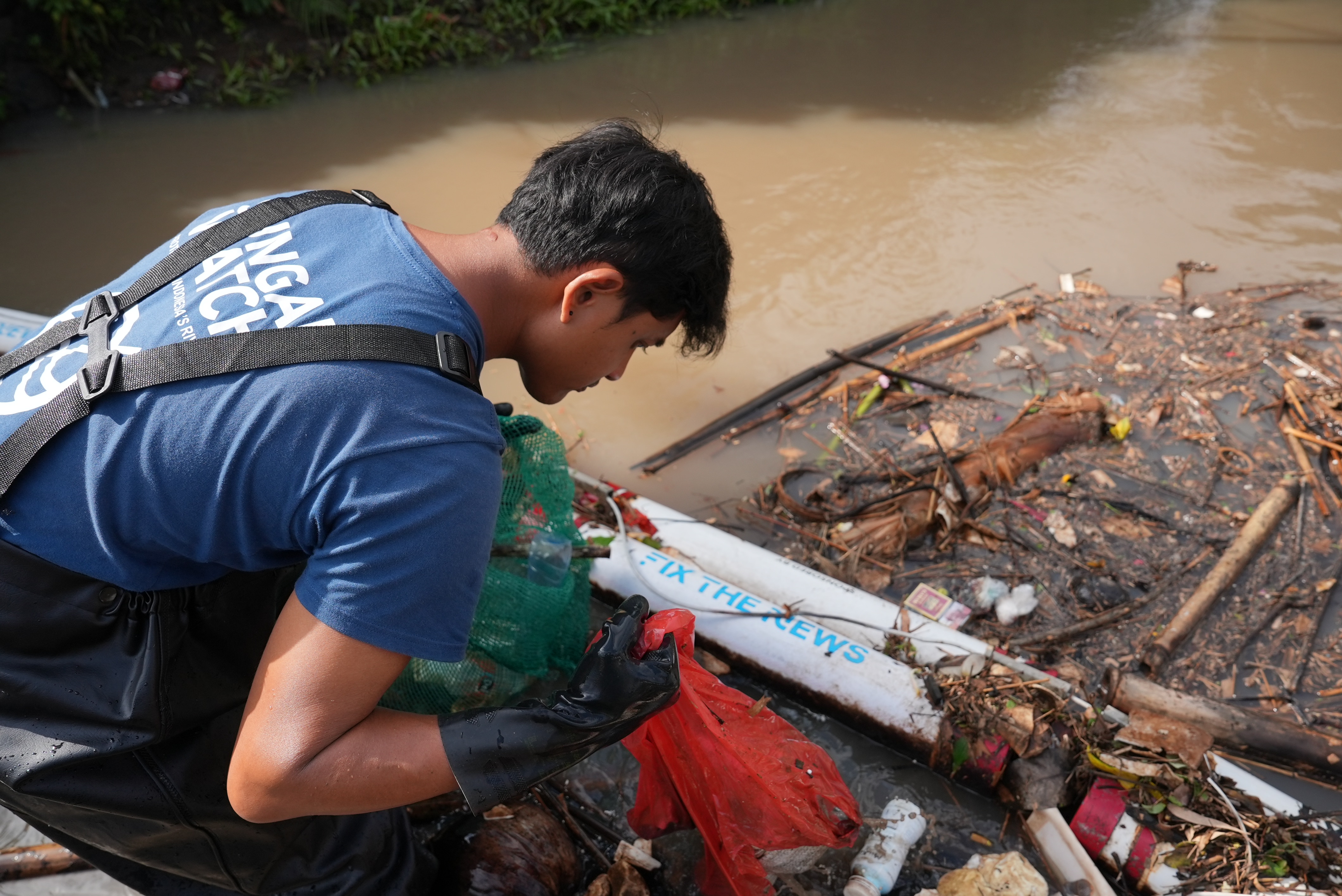
Meanwhile, in Bali, a simple barrier is creating all kinds of change downstream. Via Sungai Watch, we sponsored the installation of a plastic collecting barrier in the town of Lembah Sanggulan almost 18 months ago, and since then it has intercepted more than 7,750 kilograms of waste, improving water quality for the rice farmers who rely on the river for irrigation.
It hasn’t been straightforward. In June last year a flash flood swept the barrier clean away. Until it could be reinstalled, volunteers and staff kept turning up to clean the site by hand, and following the deployment of the new barrier, they started noticing something really interesting. Each time they returned to clean it, they were finding less household waste - a sign the surrounding community is changing how it treats the river.
In March we renewed that barrier for another 12 months and sent more money for a second project a few kilometres away, in Tabanan. A site there had been used as an illegal dump for over 50 years. The team have already pulled more than ten tonnes of waste out, and the plan is to turn it into a green space for the community, replanted with native trees.
These barriers are a tiny part of a much bigger story - Sungai Watch is now closing in on five million kilograms of waste intercepted before it reaches the ocean.
In rural India the missing piece wasn’t a bed, a barrier or a bus. It was medical equipment. For the first time, people living in remote tribal communities in Odisha are able to receive cataract surgery close to home, thanks to a new ophthalmic theatre at Asha Kiran Hospital.
We partnered with them in December 2025, and although getting the equipment and completing installation took longer than expected, the final pieces fell into place a few weeks ago. Their programme manager, Archana Udayagiri, told us that the first surgeries are expected to begin within the next few months.
“Seeing specialist services such as ophthalmology become a reality reminds us that meaningful change is possible, even in remote and underserved communities.”
We’ve always supported tangible projects, the kinds of things you can easily picture. Drones. Bunk beds. Kindles. We think that when people can see exactly where the support is going, it builds trust. But this year highlighted that sometimes the most powerful part of the story isn’t what the money buys. It’s everything that happens afterwards.
Take sea turtles in Costa Rica. When we first partnered with the Costa Rican Alliance for Sea Turtle Conservation and Science (COASTS) in 2023, our donation funded two satellite transmitters to track hawksbill turtles, and a drone to help monitor their habitat.
Their founder, Christine Figgener, told us that COASTS has now handed its sea turtle monitoring programme over to local community members trained through the project. For them it’s not the end of the programme; it’s a measure of its success. “The skills and knowledge developed during the programme remain within the community.”
And while the community handles the turtles, COASTS has been able to dedicate more resources to monitoring around 11,800 hectares of coastal waters along Costa Rica’s southern Caribbean coast, from the Río Sixaola to Playa Negra in Cahuita.
It was the same message from We Care Solar. Yes, they’re continuing to do incredible work installing solar systems in maternity clinics and supplying solar suitcases to power education across parts of Africa without reliable electricity. But alongside every installation now comes something less visible: training midwives, health workers and local technicians so the technology can be maintained and used long after the team has gone home. The equipment opens the door; local knowledge is what keeps it open.
Perhaps the clearest example of this came from a project that many of you helped us fund last year. Remember MiracleFeet? They’re on a mission to make sure every child born with clubfoot receives treatment early, so they can walk, run and play without a lifetime of preventable disability. Last year our readers helped raise money to expand their work in Pakistan, where 8,200 babies are born with clubfoot every year.
That donation has helped over 3,000 children begin treatment. The programme opened six new clinics, trained 18 groups of clinicians in the Ponseti method (a series of casting and bracing treatments that non-surgically corrects clubfoot) and equipped midwives, nurses and frontline health workers to identify clubfoot in newborns.
What’s more, Pakistan is now becoming a regional leader, sharing its expertise with other MiracleFeet programmes across South Asia. This kind of capacity isn’t something you can photograph. It’s less tangible than a new building or piece of equipment. But the impact is far greater, because when communities build local capability, the progress becomes self-sustaining.
That’s important, because sooner or later, everyone faces a difficult season.
Over the last 12 months, so many of our partners have found themselves on the frontlines of funding cuts, conflict, and political instability, all of which have threatened to unravel years of hard work.
Tacugama, one of the world’s leading chimpanzee sanctuaries, has held a special place in our hearts ever since we interviewed founder Bala Amarasekaran. This time last year, they were facing an uncertain future. Illegal encroachment of the Western Area National Park had crept so close that the sanctuary was forced to close its eco-lodge and visitor centre, cutting off a vital source of income.
In 2024, we sponsored the rehabilitation of two young, orphaned chimpanzees, Esther and Koba. Last year, as the encroachment crisis deepened, we followed that with an unrestricted grant, giving the sanctuary the flexibility to respond where it was needed most.
Bala told us that this funding, alongside almost 100 individual donations from subscribers, helped the team provide food, veterinary care and all the essentials needed to keep more than 120 rescued chimpanzees healthy and safe through the closure.
“Thank you for believing in our work and for standing with us through both the difficult moments and the hopeful ones. Your support has had a direct impact on the lives of chimpanzees and on every member of the Tacugama team who works tirelessly to give these animals a second chance.”
Tacugama reopened in November 2025, after the government committed to addressing the encroachment, and the team has since worked with local communities to plant more than 100,000 trees in the affected areas. Esther is thriving in the nursery group, where her best friends are Rio and Princess. Along with that welcome news, however, we learned that Koba recently passed away, unexpectedly - a heartbreaking reminder that even in the best hands, not every story turns out the way we hope.
It was also a tumultuous 12 months in Haiti. Our partners at Good Samaritan of Haiti faced corruption, gang violence and one of the worst droughts in recent memory. Thankfully, the island community of Île à Vache, where our grant was directed, has remained insulated from much of the violence.
Mandy Thody, their administrative director, says the funding bridged a gap between major donor grants, allowing food distributions and Cash for Work programmes to continue at a time when almost all other aid had disappeared. It also uncovered people who had fallen through the cracks, including a paralysed man and an elderly w…