Danielle with today’s write-up
Twenty-five years after September 11, 2001, the United States stands at a profound demographic and political crossroads. For nearly a third of the population, 9/11 is not a vivid memory, but a chapter in a history textbook. Yet for those who lived through it, the event remains an indelible line in the sand—a permanent dividing mark between a pre-9/11 idealism and a post-9/11 reality defined by heightened security, foreign intervention, and domestic polarization.
Looking back a quarter-century later, the immediate national unity that briefly emerged in September 2001 has long since given way to institutional transformation. The emergency measures enacted in the name of national defense—most notably the Patriot Act and the establishment of the Department of Homeland Security—realigned the relationship between the American citizen and the state. What was introduced as temporary crisis management evolved into a permanent framework for data collection, surveillance, and expanded executive authority.
The foreign policy response to 9/11 fundamentally altered global geopolitics. While initial military operations targeted those directly responsible for the attacks, the scope of the “War on Terror” rapidly expanded into long-term nation-building and secondary conflicts, most notably in Iraq.
The human cost of these operations extended far beyond initial calculations:
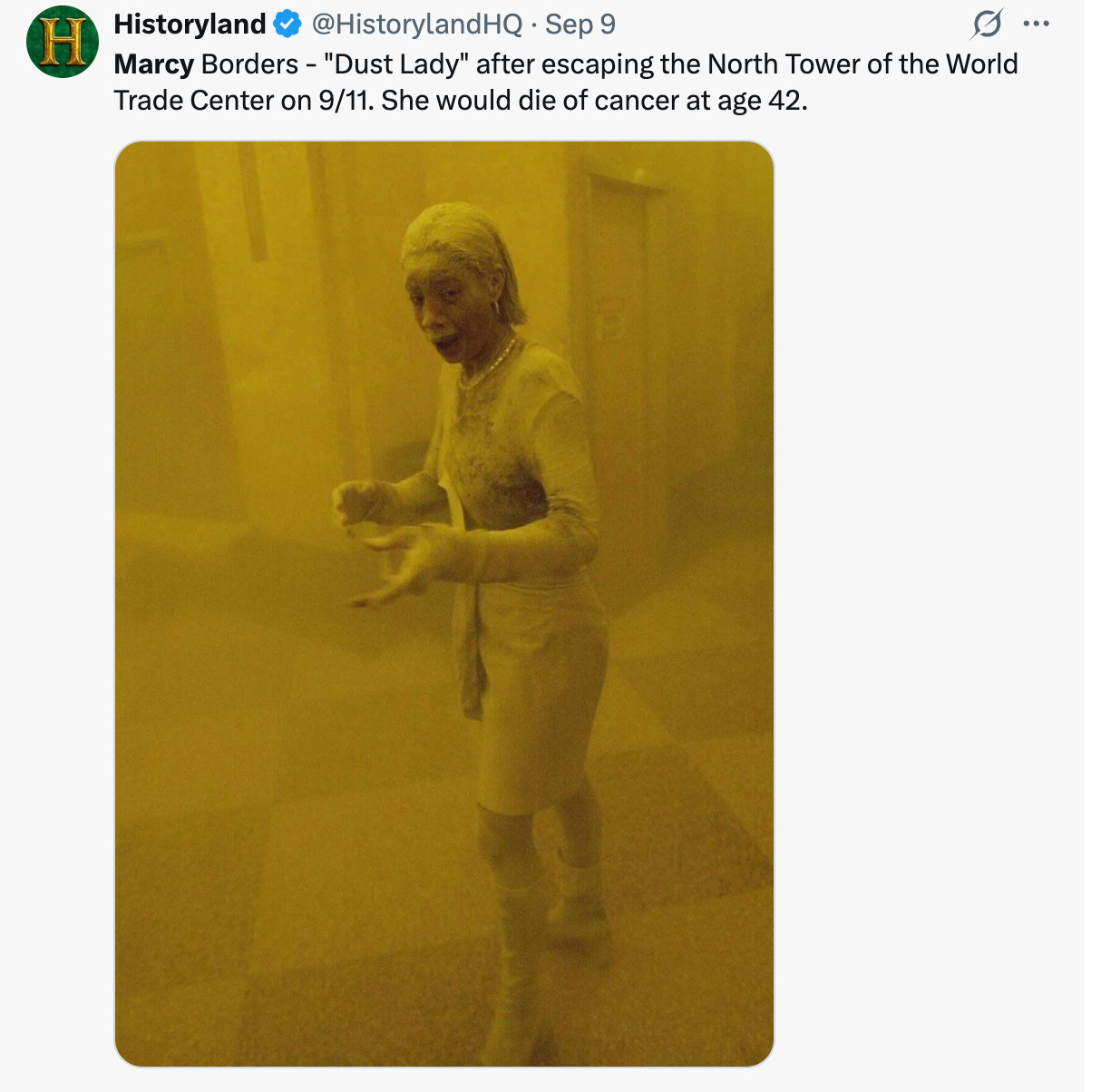
**Global Casualties:**Research from Brown University’s Costs of War project estimates that direct and indirect casualties from post-9/11 conflicts exceed 4.5 million people worldwide.**Military and Civilian Sacrifices:**Thousands of U.S. service members lost their lives, alongside hundreds of thousands of civilians in war zones.**The Domestic Human Cost:**Thousands of first responders, rescue workers, and lower Manhattan residents subsequently developed terminal illnesses, including cancers linked to toxic dust exposure at Ground Zero.
The struggle for long-term healthcare coverage for 9/11 responders highlighted a recurring tension in American governance: the gap between federal readiness to fund overseas military engagements and the political friction surrounding domestic veteran and first-responder care.
+-----------------------------------------------------------------------+
| THE POST-9/11 PARADIGM SHIFT |
+-----------------------------------+-----------------------------------+
| FOREIGN POLICY | DOMESTIC POLICY |
+-----------------------------------+-----------------------------------+
| • Pivot to multi-decade wars | • Expansion of federal surveillance|
| • Focus on counter-terrorism | • Institutionalization of ICE/DHS |
| • Human & financial capital drain | • Rise in targeted xenophobia |
+-----------------------------------+-----------------------------------+
Domestically, the immediate aftermath of 9/11 unleashed a wave of civil liberties compromises. Minority communities, particularly Arab, South Asian, and Muslim Americans, faced heightened scrutiny, government profiling, and a surge in hate crimes.
However, the infrastructure created during that era did not remain isolated to specific communities. The normalization of broad surveillance tools—from early communications tracking to modern predictive algorithms, license plate readers, and facial recognition technology—eventually expanded across the entire domestic landscape.
When the public accepts emergency exceptions to constitutional protections during a period of national shock, those exceptions inevitably become the baseline standard for civil governance. The post-9/11 national security apparatus established a precedent for data gathering that continues to influence modern debates around privacy, police power, and corporate data usage.
The political discourse surrounding 9/11 shifted over twenty-five years from national solidarity to strategic division. Fear-based messaging, initially utilized to rally support for foreign wars and national security legislation, ultimately migrated into domestic political campaigns.
The rhetoric that emerged in the early 2000s set the groundwork for modern political rhetoric:
**Out-Group Targeting:**Constructing political narratives around external and internal threats to heighten public anxiety.**Institutional Distrust:**Official reassurances—such as early claims regarding air quality in lower Manhattan—eroded public trust when conflicting evidence later emerged.**Conspiracy and Polarization:**The normalization of scapegoating minority populations created a political playbook that continues to drive partisan division today.
As the nation marks twenty-five years since the fall of the Twin Towers, the core question is no longer just how to remember the victims, but how to evaluate the choices made in the name of security. The legacy of 9/11 is visible not only in airport security lines or memorial plazas, but in the structural architecture of American democracy.
To preserve democratic institutions for future generations, national policy must balance security imperatives with a commitment to civil liberties, transparency, and human rights. Rebuilding public trust requires confronting the systemic missteps of the post-9/11 era—ensuring that national trauma is never again leveraged to undermine the foundational freedoms of the republic.
***Because I’m a terrible capitalist, here’s a great 25% off discount for new paid subscribers. It’ll only be about $3.75/month or $38/year.
There are no paywalls, and The Left Hook continues depending on the kindness of our readers
Thank you , , , , , and many others for tuning into my live video with ! Join me for my next live video in the app.