You did it!
There are still 11 days to go until Giving Tuesday, and the readers of this newsletter have already raised over $18,000 for our Turn On The Lights Campaign.
We are genuinely blown away. We’ve spent the past few weeks watching donations arrive from all over the world. Some of you have donated in lieu of Christmas presents. Others have told us that donating makes you feel more hopeful, and some of your messages have really stayed with us.
All this generosity has got us thinking... could we turn on the lights in two more clinics? Those two additional clinics would mean another 800 or so births every year taking place in facilities with reliable electricity. Over a decade, that’s nearly 8,000 births.
So, we’re stretching our goal to $27,000, enough to equip SIX maternity clinics in Nigeria with reliable solar power. More midwives able to see what they’re doing. More mothers receiving care in properly lit delivery rooms. And more newborns arriving in a world where the lights are on. All because the people reading this newsletter decided to do something about it.
We can’t thank you enough!
The death rate from the world’s deadliest infectious disease has dropped by 41% in a decade. The WHO’s annual report says there were 1.13 million tuberculosis deaths in 2025, down from 1.74 million in 2015. Adjusted for global population growth, the death rate fell by 41%, from 23.3 to 13.8 per 100,000 people. That’s about 600,000 fewer deaths every year compared to a decade ago. Funding has largely held up too. Donor funding fell by 14% in 2025 but governments covered most of the gap, raising their own spending from $4.9 billion to $5.6 billion.
Last week, three European countries widened access to reproductive rights. On 11 November Sweden’s parliament cast the second of two votes required, writing abortion into the constitution from 1 January 2027. On 16 November, England and Wales pardoned every woman convicted for ending her own pregnancy, with some cases going back to the 1800s. A day later, Hungary’s prime minister Péter Magyar said the government would scrap a 2022 rule forcing women to be shown foetal vital signs before an abortion; sell the morning-after pill without prescription from age 14, and ratify the Istanbul Convention on violence against women. Riksdagen / The Guardian / The Independent
California has emptied the largest death row in the Western Hemisphere. Outgoing governor Gavin Newsom has commuted all 548 death sentences to life without parole, about a quarter of everyone on death row in the United States. California hasn’t executed anyone since 2006, but its courts kept handing down death sentences. CalMatters / AP
Portugal has approved a 173,000 km² marine reserve in the Atlantic, roughly the size of Uruguay. It covers the Madeira-Tore seamounts and the Gorringe Ridge, home to Western Europe’s tallest underwater mountain, and protects cold-water corals, coral gardens and sponges. With this addition the country’s share of protected waters rises from about 19% to 25%. Reuters
🦈 Another week, another newly protected patch of ocean home to mysterious shark and ray behaviour. The Gorringe Ridge, which is now protected, lies around 250 km off the coast of Portugal. Its two peaks, Gettysburg and Ormonde, are a gathering ground for the marbled torpedo, a threatened electric ray that usually lives alone. Here, however, hundreds gather, piled up to five deep, and most are pregnant females. Divers have documented the gatherings since 1998, but scientists still don’t know why they come or what they’re up to. Nautilus
**Trickle-down economics in action! **Tax money from New York’s priciest second homes is about to start trickling down after the city sent its first pied-à-terre tax bills, to the tune of more than half a billion dollars. It applies to second homes worth more than $5 million unless the owner can prove someone lives there most of the year. The city warned about 17,000 owners in August, granted at least 8,900 exemptions, and is now billing roughly 8,100 properties, with payment due on 1 January. The money will go to childcare and safer streets (this is such an effective and elegant tax). Bloomberg Tax / 𝕏NYC Mayor
Eritrea has eliminated trachoma, the world’s leading infectious cause of blindness. It’s the 34th country to do it, two months after Timor-Leste became the 33rd. WHO
Electric tricycles are turning Zimbabwe’s women farmers into delivery businesses. Agefi Mutambo, 56, used to walk seven to ten kilometres to market, balancing a 20-kilogram bucket of tomatoes on her head that she sold for $6. Since 2021 she has driven an electric three-wheeler which she leases for about $30 a week. She now hauls 300 kg a few times a week, grossing about $80 a trip, and swaps the battery for $4. The money has paid for a teaching diploma, high school fees and primary school for five grandchildren. “Now we are the pride of the village.” AP
Bulgaria has banned fur farming. Parliament has outlawed keeping, breeding and slaughtering mink, foxes, chinchillas and raccoon dogs for their fur, with fines of up to $11,600 for companies. Neighbouring Romania’s ban on mink and chinchilla farms will start in 2027. World Animal News
**A few months ago you couldn’t move on the internet without coming across an ‘analyst’ insisting the Iran war would lead to chaos and crisis because of the second-order effects of energy, or food or fertiliser. **Those people did a great job of capturing our attention. As analysts though, they sucked. Since the war started, wheat is down — yes, down! — about 1%. Corn is up 1.5% from late February. Rice is up nearly 30%, but that’s because of a poor monsoon in the Indian subcontinent. And the infamous urea now costs 10% less than it did before the war.
Why? Because the world is complicated. Bottlenecks are real, but human beings aren’t passive recipients of events either. Off the back of previous food crises, billions of dollars got poured into irrigation, storage, farming machinery and credit tools in places like India, China, Morocco and Brazil. Those actions paid off, and kept the global food system resilient. We adapt. We get better. If only the armchair analysts were the same. Bloomberg
In 2024, at a conference in Colombia, a bunch of countries promised to protect children from violence, and for the most part, they’ve kept those promises. Over 100 countries made pledges, and their progress reports were made public ahead of a second conference this week in the Phillipines. 271 of the 309 pledges from 2024 are on track and 12 are complete. Czechia banned corporal punishment everywhere from January, Cuba now bans it explicitly in schools, and Mongolia has 754 new child protection teams.
At this week’s conference in Manila, governments added more than 230 new pledges. They include Tanzania’s planned $190 million investment in child protection; Nepal’s pledge to halve school violence by 2030; Chile’s commitment to protect more than 3.4 million children from school violence and cyberbullying; and Burundi’s pledge to ban corporal punishment by 2028. Center for Global Development / WHO
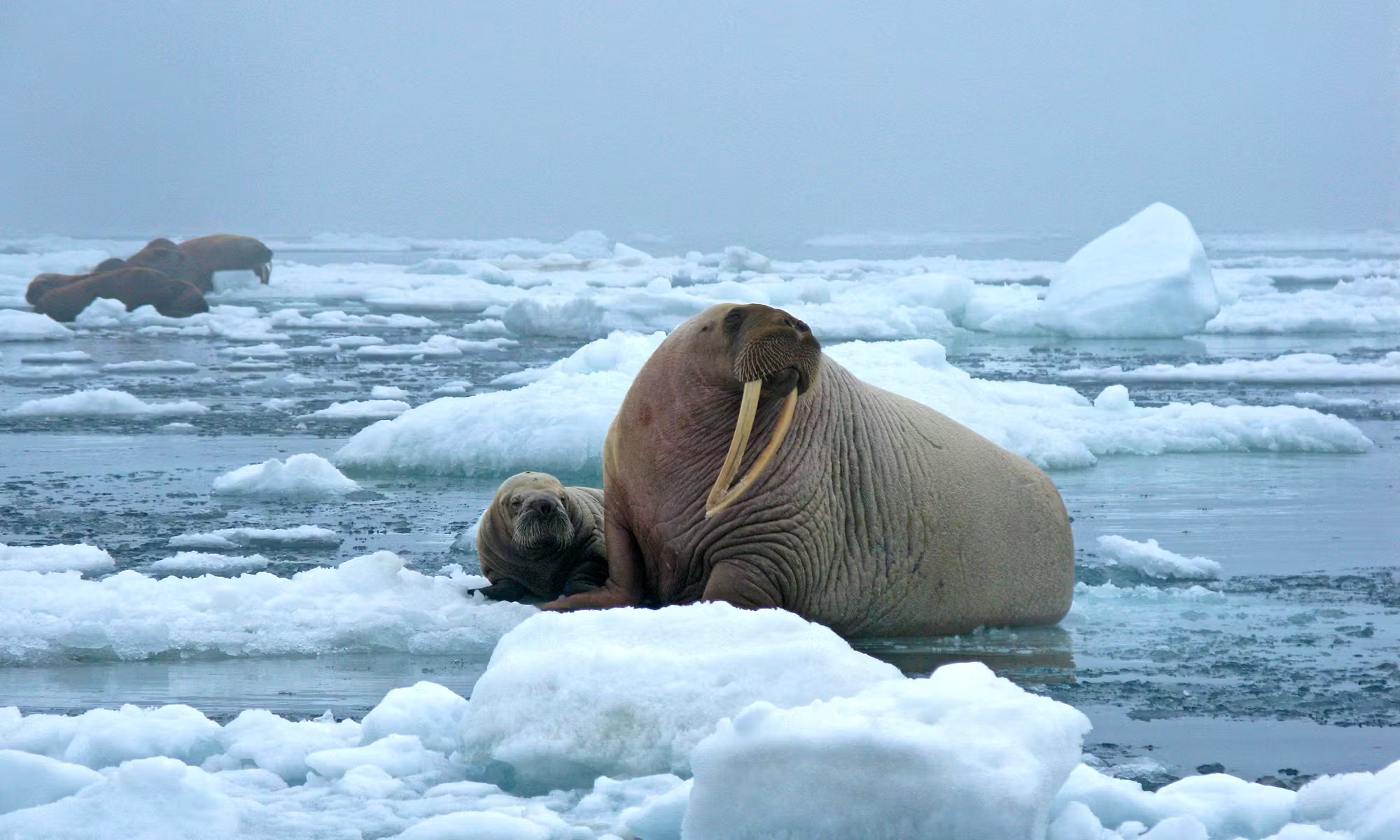
North America’s biggest walrus gathering is now permanently protected. Every autumn more than 200,000 Pacific walruses gather on the barrier islands near Point Lay in north-west Alaska, up from a few thousand in 2007, because the sea ice they used to rest on is gone. The Conservation Fund has bought a 192 km² easement from the Alaska Native corporation that owns the land, ruling out development, including coal and gravel mining. The Conservation Fund