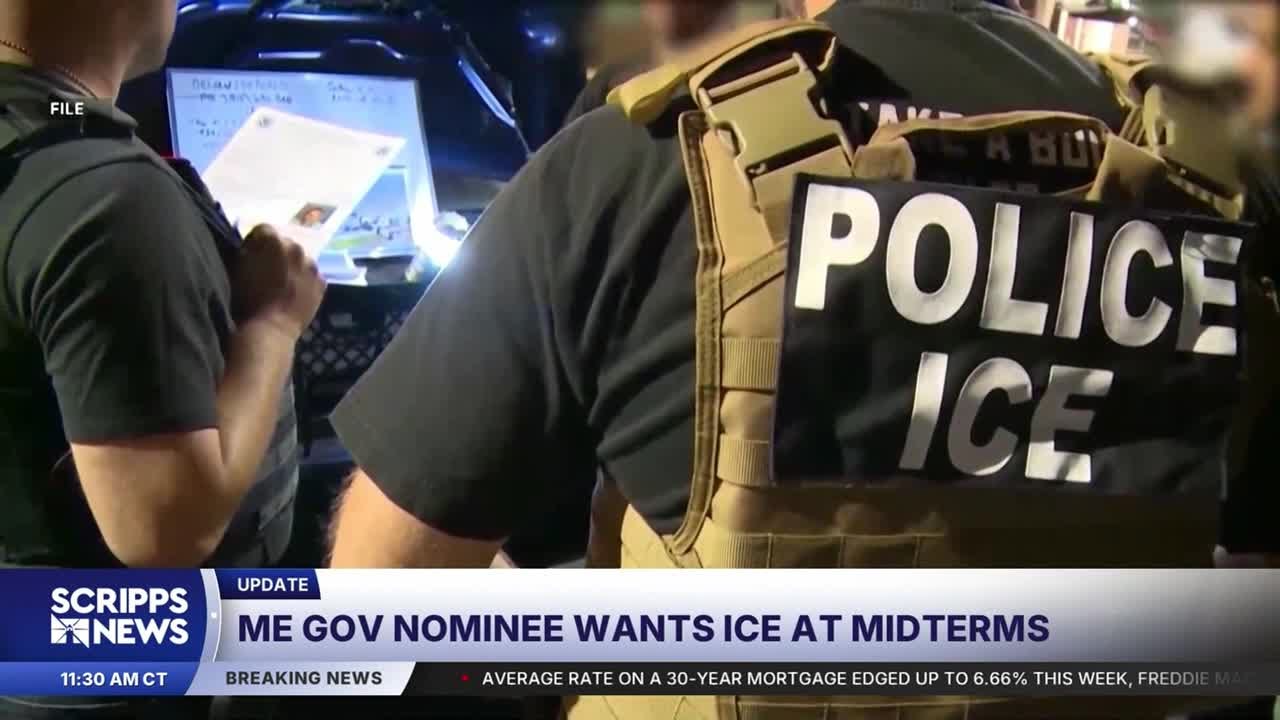
Election officials are preparing for a scenario that should sound absurd in the United States: federal agents appearing at polling places while people are trying to vote.
Reuters spoke with more than 50 state and local election officials about their preparations for the midterms. Officials in California have rehearsed a scenario involving agents at a voting site. Clerks in Michigan have received guidance about federal demands for voting equipment. That does not mean a deployment has happened or is planned. It means the people responsible for elections think they need to be ready. www.reuters.com
I understand why.
I was at the Capitol on January 6. I saw what happens when Trump convinces people that an election has been stolen and leaves everyone else to deal with the consequences. Now election officials are considering a different possibility: what happens if the people who arrive with weapons also arrive with government credentials?
I worked alongside federal agents as a deputized plainclothes narcotics officer. On a legitimate operation, somebody could tell you the mission, the legal authority, who was in charge, and where the limits were.
So if I’m a local cop called to a polling place and I see armed federal personnel near the entrance, “we’re federal agents” does not settle a damn thing. I want to know what they are there to do. Is there a specific threat? What authority are they claiming? Who gave the order? Why does this operation have to happen here, while voters are trying to get inside?
An actual emergency may require a law enforcement response near a polling place. A vague speech about “election fraud” is not an operational plan. It’s a giant fucking warning light.
There is a part of this conversation that cannot be left to the patrol officer who happens to answer the call.
State and local law enforcement leaders need to give their officers clear, written instructions before Election Day. They need to work with election officials and legal counsel on a response to an unprecedented confrontation between federal and state or local personnel. Every officer should know whom to call, who has command of the local response, what information to demand, how to protect the entrance, and how to preserve evidence.
They also need to explain the law in usable terms. Federal law addresses armed personnel at election sites and prohibits intimidation intended to interfere with voting. The application depends on who is present, what they are doing, and why. The Justice Department has itself described state and local police as having primary jurisdiction over polling places and the faster response capacity in emergencies. uscode.house.gov
An officer should not have to look all that up on a phone while two armed groups are facing each other and voters are standing in line.
The instructions must also cover an unlawful request for help. If a federal agency asks local officers to block voters, assist an intimidating deployment, or take some other action that appears unlawful, “they’re federal” is not a reason to comply. The officer needs a clear procedure: decline participation in the questionable act, notify a supervisor, bring in counsel immediately, document the request and the response, and continue protecting public safety and voter access. The federal government cannot simply command state and local officers to administer its program. LII / Legal Information Institute
And if a dispute escalates, leadership needs a plan to keep everybody from turning a legal conflict into an armed one. Nobody should be improvising that on a sidewalk outside a school gym.
A polling place is not the site for a jurisdictional dick-measuring contest. The immediate job is to protect people and preserve their ability to vote.
Identify the personnel and their supervisor. Establish the claimed authority. Notify election officials and police command. Record where armed personnel are positioned and what they say to voters. Preserve bodycam, dispatch records, radio traffic, written orders, and witness accounts. If people are turning away because they are afraid to enter, that fact matters.
A patrol officer cannot casually declare a federal warrant invalid. But “federal” is not a magic word that excuses intimidation, either. The officers on scene need to stabilize the situation while supervisors, election officials, and lawyers act quickly on the legal question.
That coordination should be practiced in advance. The first conversation among those people cannot happen in the parking lot on Election Day.
On January 6, officers were left to absorb the consequences of a political lie. That experience changed the way I hear “just follow orders.”
A cop’s oath is to the Constitution. If an order puts armed personnel at a voting site, asking what it requires and whether it is lawful is part of the job. So is documenting the answer. And if an officer is asked to help keep eligible people from voting, the officer needs to know that their department will back them when they refuse and report it.
I hope these plans are never needed. But hope does not tell a cop what to do when a federal agent gives an unlawful instruction, a voter says they have been threatened, and the polls are still open.
My message to police chiefs, sheriffs, and state leaders is simple: give your people the law, the chain of command, and a practiced response now. My message to anyone planning an operation at a polling place is simpler: if you cannot clearly explain why it is lawful and necessary, you have no fucking business bringing it to the door where Americans cast their ballots.