The first thing I did yesterday, after arriving in Gettysburg for the Lincoln Forum, was to head on over to the battlefield for an afternoon run. It was a brisk and windy run, but the battlefield was quiet, offering plenty of space to reflect.
As I am now immersed in my new book project, I couldn’t help but think about the thousands of enslaved laborers that were present during the battle as part of Robert E. Lee’s Army of Northern Virginia. My hope for the project is that I can offer readers a sense of their roles during the battle and, most of all, how they experienced the three-days of fighting that took place here.
I also couldn’t help but feeling overwhelmed by the challenges, given the layer upon layer of interpretation and myth that I need to peel back surrounding the fight here at Gettysburg.
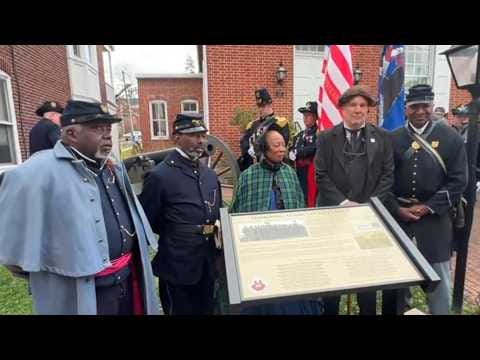
Later that afternoon, I was reminded that I am far from alone in trying to tell the story of how African Americans were impacted by the battle of Gettysburg and the war. The Historic Gettysburg Adams County Preservation Society dedicated a new wayside marker honoring the community’s Black residents, who volunteered to fight in the United States army beginning in 1863. The marker sits in front of the Grand Army of the Republic Hall.
I would love for my research and eventual book to result in the addition of a new wayside marker to the Gettysburg battlefield or at some key location on the invasion or retreat route of the Confederate army.
You can’t allow the presence of thousands of men to go unnoticed. The recognition of which will go far in situating the fight for slavery, not as some afterthought introduced by President Lincoln in November 1863, but as part of the battle itself.
If I had my choice, I would place this marker in the area along Seminary Ridge in sight of the Virginia monument, which features Robert E. Lee atop Traveller along with representatives of the civilian backgrounds of the rank and file below.
The monument is not only incomplete without reference to the presence of enslaved laborers in the army, it is misleading.
The institution of slavery was not some abstract “Cornerstone of the Confederacy.” It was essential to the Army of Northern Virginia and every other Confederate army operating during the Civil War. It’s not just that the monument is incomplete. The battlefield remains cloaked in a silence that prevents visitors from appreciating its full significance.
Thousands of enslaved men were forced to march into the free state of Pennsylvania, in the summer of 1863, as part of an army fighting to protect slavery.
Welcome to Gettysburg.