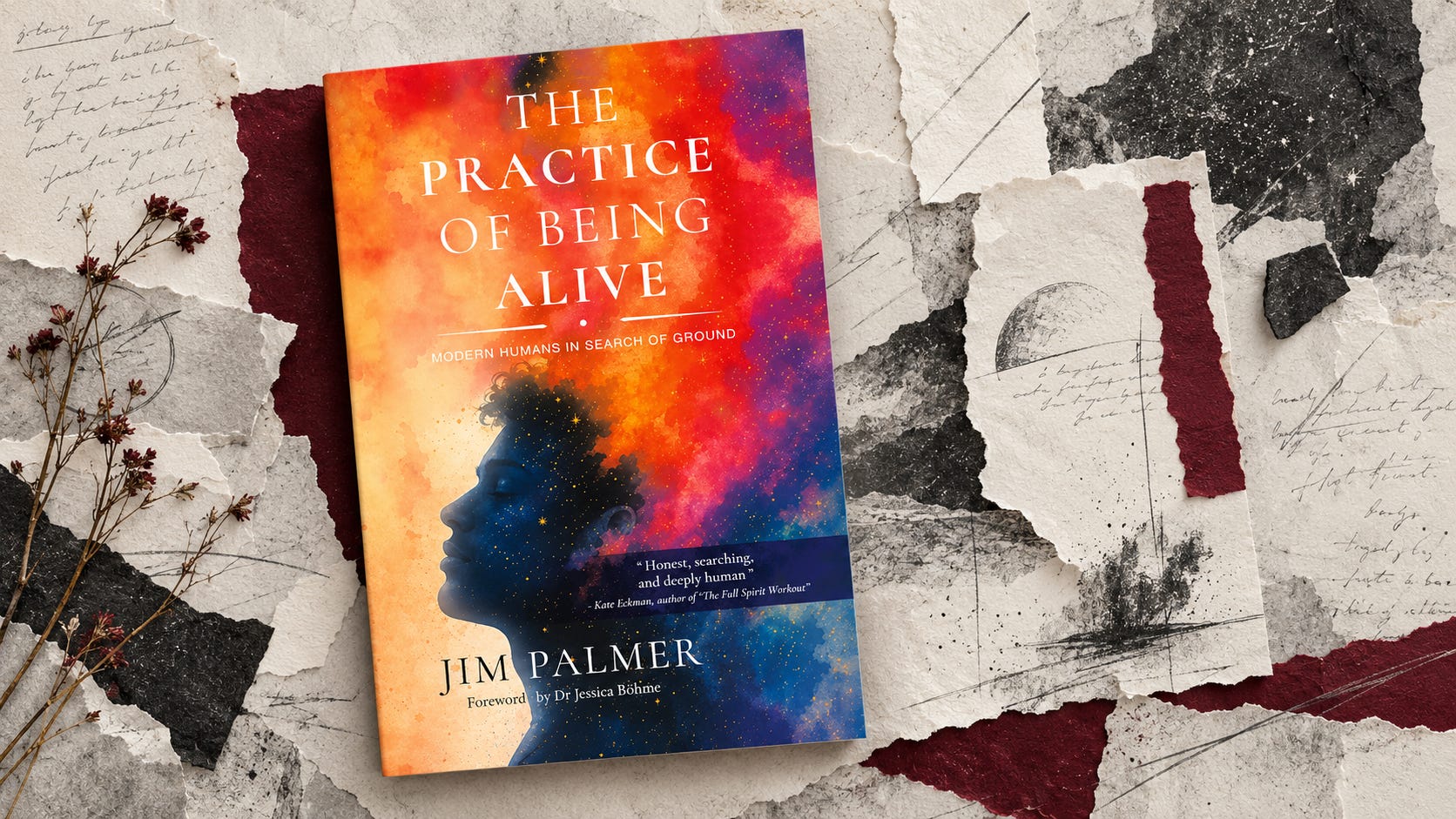
Publishing a book is not for the faint of heart. I’ve done it eight times and still alive to tell about it… barely.
Seeing my new book ahead of Nietzsche, Camus, and Machiavelli on an Amazon list was not something I anticipated, although being dead puts them at a disadvantage when it comes to posting on Instagram. Beneath my amusement, though, this release has stirred up more than I expected, and I wanted to step back and share some of it with you.
I’ve been thinking about how I stumbled into writing, the people whose lives have become part of these books, and how much it still hurts when someone takes a swipe at work I’ve put my heart into. Many of you have stayed with me through years of questioning and change. Before moving on to the next essay, I want to tell you a little more about what this moment means to me and how grateful I am that you’re here.
was released on October 13. Since its release, it has held the
Seeing the book reach that ranking has meant a great deal to me. But I wish I could sit across from the people reading it and hear what happens when something on the page touches their own experience. I’d like to know which passages felt familiar, where you disagreed, and whether you found words for something you have wanted to tell someone for years.
For so long, this book was something I was working on. Now someone I have never met is reading it in the middle of a divorce, after leaving a church, or during an otherwise ordinary week when they finally admit how far they feel from the life they want to live. I find that moving, and also humbling. I know what it means to reach for a book because you need someone to speak honestly about a place you are struggling to navigate.
That is the relationship I hope to have with you through these pages. Thirty years of writing have not put me beyond the questions I write about; they have made me more willing to speak openly about what they ask of us. If this book helps you feel less alone in those questions, or more able to make a choice you have been afraid to make, then something I care deeply about has happened between us.
You might know exactly why you struggle to trust yourself and still apologize every time you express a preference. You might understand how you learned to earn love and still exhaust yourself trying to remain indispensable. One of the hardest things I have learned is that understanding how we became estranged from ourselves does not automatically restore our freedom to live.
** Leaving religion** brought this home to me. I could explain why I no longer believed what I had once preached, but I still had to make decisions without the authority structure that had governed my life. The beliefs were easier to identify than the habits of submission they had left behind.
Even the effort to recover became complicated. I had spent years treating my humanity as something that needed correcting, and it was painfully easy to carry that arrangement into life after religion. Healing acquired the terms of salvation: more work to do before I was finally entitled to trust myself and live.
My work in existential health grew from confronting that postponement. We have a finite life, much of it uncertain, and no amount of insight exempts us from choosing how to spend it. Existential health concerns our capacity to participate in that life: to form commitments, exercise judgment, sustain relationships, and meet loss without requiring guarantees that existence will never provide.
That capacity also depends on how we are treated and what our circumstances allow. It is difficult to develop self-trust in a relationship where disagreement brings humiliation. Someone working two jobs to keep a roof overhead needs more than an invitation to discover their purpose. Any account of existential health that places the entire burden on the individual leaves the conditions shaping that person’s life conveniently unexamined.
I wrote The Practice of Being Alive because I wanted to address this whole human predicament, including the ways we turn our search for a better life into another reason to withhold ourselves from it. I have spent enough of my own life waiting to become someone qualified to live it. This book asks what becomes possible when we stop making our humanity the obstacle to our participation.
During the week of the release, I published a five-part series exploring several of the book’s central concerns. Those essays gave me an opportunity to approach the work through experiences readers would recognize in their own lives.
** Your Life Keeps Happening Without You** considered the gap between functioning and inhabiting a life.
The series continued with ** Loved for Who You Aren’t**, about the loneliness that persists when acceptance depends on maintaining a version of ourselves.
These pieces address a difficulty that reaches well beyond religion or any particular worldview. We learn to postpone participation until we have become sufficiently healed, certain, worthy, or prepared. Eventually, the conditions we place on living consume the time in which living was supposed to happen.
The essays offer several entrances into the book. Readers who have already begun it will recognize the questions, while those still deciding whether to read it will get a sense of the territory and the approach.
I’m especially grateful to ** Jessica Böhme, PhD**, founder of the Institute for Practical ekoPhilosophy, for writing the foreword. Jessica places the book’s questions within a larger conversation about our participation in the living world and the responsibilities that come with being part of it. I value the thought and care she brought to these pages, and I hope you will spend time with her own work.
I am also grateful to ** Kate Eckman** for her endorsement on the cover. Kate’s work addresses identity, belonging, loneliness, and the pressure to perform our lives. Her conviction that “staying human is the edge” speaks directly to questions I have spent years exploring, and having her words accompany this book means a great deal to me.
Psychotherapist ** Claudia Dommaschk**, philosophy professor
Since publication, I have received a steady stream of emails from professional marketers explaining what I am doing wrong. Apparently, there are many things, and several people stand ready to correct them for a fee. Reading these messages, I sometimes feel that I have published a book only to discover I have also enrolled in a course for which I missed every prerequisite.
Some of these people undoubtedly know their work. Books need visibility, and there are practical skills involved in helping them reach readers. Marketing is not my strength, and I have no interest in pretending otherwise.
What I do know is the relationship that has developed through years of writing here. People have stayed with this work, questioned it, shared it, and brought their own experience into the conversation. My actual marketing strategy rests largely on those relationships: people like you who know my work and are willing to pass it along when it means something to you.
There is an important human judgment involved in that act. When you send someone an essay or recommend a book, you are making a connection between something you encountered and someone you know. You remember a conversation, recognize a question they have been carrying, or think a passage might meet them where they are.
That kind of recommendation has a depth no writer is entitled to expect. Your relationships and credibility belong to you, and when you choose to introduce my work into them, I understand that you are extending trust. I am grateful for it.
I am grateful for people like ** **and many others who have shared the book and took the time to write an Amazon review.
I would like this book to reach people. I also want the way it travels to remain connected to the reasons I wrote it: a concern for human agency, an appreciation for honest inquiry, and respect for the reader’s own discernment.
Becoming an author was never a goal of mine. An editor at a publishing house found my blog and asked whether I would consider writing a book. That invitation became , and a career I had never planned began taking shape around questions I was trying to answer in my own life.
The practical details are less distinguished than the phrase ** “writing career”** suggests. My best writing time is around four in the morning, usually with music playing. After all these books, I still type with my middle fingers using a hunt-and-peck method that would give a typing instructor considerable cause for concern.
Writing has changed me in ways I did not anticipate. I wrote my second book, , because recognizing what was wrong with religion had left me with the responsibility of discovering how to live beyond it. That responsibility has followed me through the books that came afterward and eventually into my work in existential health.
Some of that development cost me a place in the world that first published me. My publishing contract for was canceled after its content was judged to fall outside biblical orthodoxy. There is a particular difficulty in being invited to tell the truth about your experience and then discovering the invitation had boundaries you were no longer willing to honor.
grew out of entries I wrote by hand in a black spiral notebook. I eventually disposed of that notebook because I did not want to become attached to my own beliefs and concepts. Having spent years questioning the authority of other people’s words, I wanted to remain free to question my own.
With , the hostility became especially personal. Some responses compared me to David Koresh and Jim Jones, accusations that were painful to receive. I wish I had thicker skin, but writing honestly has never made me less sensitive to how people respond. It has required me to decide whether avoiding their disapproval was worth withholding what I had come to see.
Alongside those published books are three I never formally published, which I offer free through the ** Center for Non-Religious Spirituality**:
Other experiences have given me lasting pleasure. I offered feedback on William Paul Young’s manuscript of The Shack and wrote its first endorsement. Through my books, I have also had the opportunity to know novelist Anne Rice, professional athletes, entertainers, and others whose work reaches people in very different ways.
Those encounters have deepened my appreciation for the human lives behind public recognition, with all their uncertainty, vulnerability, and longing. I have also helped six authors develop books that went on to become New York Times bestsellers, and their success remains a source of happiness for me. Helping someone find their voice and bring their work into the world is one of the most satisfying parts of my own writing life.
But the encounters I return to most often have little to do with publishing success. I think about signing books for parents of terminally ill children at the Ronald McDonald House and for incarcerated men who had been permitted to form a book club around my writing. I also remember a young man dying of cancer who asked for a signed copy of Divine Nobodies to give his father. The letter I placed inside that book remains among the most important things I have written.
Experiences like those shape what I hope for when I send another book into the world. I want the writing to be useful where a person’s life is actually happening, especially where familiar explanations have stopped helping. Whatever else comes with being an author, I remain grateful that someone might trust my words enough to bring them into such a moment.
There is another part of this update that is harder to write. I received word that a group of people is targeting the book with one-star ratings intended to damage its reception. I do not have a way to establish who is responsible for particular ratings, but the report itself has been painful, and it has affected how I experience those unexplained judgments.
Disagreement is part of publishing. A reader is free to find a book unconvincing, dislike its argument, or explain where it fails them. Deliberately trying to discredit someone’s work out of spite belongs to a different kind of activity, one that substitutes punishment for engagement.
I have been writing professionally for thirty years, and I still do not experience my work as something cleanly separated from my life. These pages grew out of commitments, difficult revisions of belief, encounters with other people’s suffering, and my own efforts to understand what helps us live. The prospect of someone treating that work as an object to damage hurts.
An accusation or a rating does not determine the value of a book, but knowing that intellectually does not make a person invulnerable. I would be dishonest if I presented myself as untouched by it. Public work is still made by a person who has to absorb what happens and decide how to continue.
This experience also brings me back to something central to existential health. Self-trust involves remaining open to what we need to learn while discerning which judgments deserve authority in our lives. Criticism that engages the work offers something to consider; hostility that seeks only injury makes a different demand on our attention.
I am trying to practice that discernment myself. I want to remain available to readers and serious disagreement without allowing cruelty to become the organizing force of my writing.
In November, I will begin a six-week course based on The Practice of Being Alive. We will meet on Wednesdays beginning November 11, with live sessions at 6:00 p.m. Central and recordings available afterward. The course will bring reading, conversation, practice, and reflection into a shared space. The course is $249; all Substack subscribers can enroll for $199 with the code ALIVE50 through October 25.
Explore the course and enroll here.
A book gives us room to pause with an idea privately. A course introduces the complexity of other people’s experience, where the same passage lands differently depending on the life someone brings to it. A question about self-trust sounds different when voiced by someone rebuilding after religion than it does from someone facing a decision within a long marriage or an exhausting profession.
I want us to work with that complexity. What does participation look like in an ordinary week? How do we recognize when responsibility has become self-erasure? Where does reflection help us respond more freely, and where has it become a means of keeping ourselves under surveillance?
These questions deserve time and company. The course is an opportunity to explore how the book’s ideas take shape in the circumstances people actually inhabit, where choices have consequences and clarity rarely arrives all at once.
I have also written a ** FAQ article** about the book for readers who would like a clearer sense of its scope and approach. Alongside the essay series, it offers another way to become acquainted with the work and decide whether it speaks to questions you are carrying.
If The Practice of Being Alive has meant something to you, I would be grateful if you helped someone else discover it. That might happen through a personal recommendation, sharing one of the related essays, or leaving an honest Amazon review grounded in your reading. A few specific sentences about what you encountered give another reader something useful when deciding whether to pick it up.
I want the book’s public reception to reflect the experience of people who have actually spent time with it. Readers deserve that, and so does the work. Your response has value because it comes from your encounter with the pages and your judgment about what they offer.
For those who have read, r…