It’s not when things are bad. It’s when things are good.
Revenue’s coming in. Jobs are flowing. Nothing feels urgent. All gravy, baby.
So spending creeps up. Decisions get a little looser. And anything that doesn’t quite line up gets pushed off with a quiet “we’ll fix it later.”
That works… right up until it doesn’t.
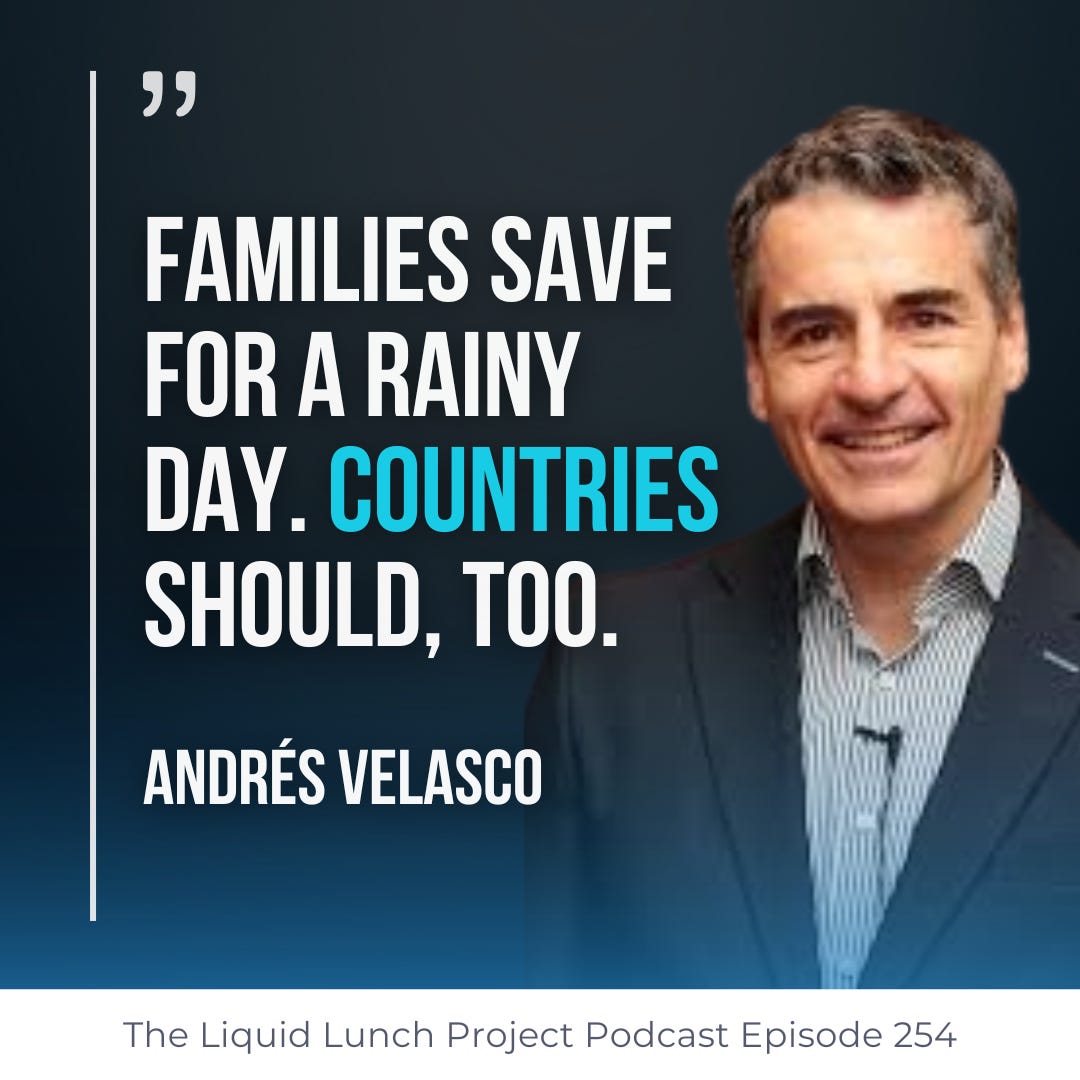
We got into this exact idea on this week’s episode with Andrés Velasco, former Finance Minister of Chile and now Dean at the London School of Economics.
He’s been the one making those calls at a country level. Example: When Chile hit a massive copper boom, they had the same option a lot of businesses have during a good run: Treat it like it’ll last… or assume it won’t.
They went with the latter. They saved. They took criticism for it. They looked overly cautious at the time.
Then the cycle turned… and they weren’t the ones scrambling to clean it up after the fact.
Because the same pattern shows up in business all the time… just on a smaller scale.
What actually happens when easy money disappears
Why “we’ll deal with it later” gets expensive
Tariffs, deficits, and policy decisions without the usual spin
Why these cycles tend to end the same way
**If things feel smooth right now, this is probably the right time to listen. **That’s usually when the decisions get made that show up later.
About Our Guest:
Andrés Velasco is the Dean of the School of Public Policy at the London School of Economics and former Finance Minister of Chile. He’s widely known for steering Chile through a global downturn by saving during a commodity boom instead of spending through it.
🔗 Links + Stuff
Download “The London Consensus” for FREE:https://press.lse.ac.uk/books/e/10.31389/lsepress.tlcLondon School of Economics Profile:https://www.lse.ac.uk/school-of-public-policy/people/Andr%C3%A9s-Velasco
🎧 Find all episodes of The Liquid Lunch Project on all major platforms, including our website, Apple Podcasts, Spotify, Audible, and YouTube.