22 September 2026
This week, according to reporting by Politico, world leaders from Canada, Australia, Germany, the European Union, the United Arab Emirates, and others signed a letter calling for control mechanisms on engineered intelligence, with the call grounded in an essay by the chief executive of a frontier laboratory.
The reactions arrived on schedule. One side: countries with no frontier labs of their own demanding control over a technology they do not make — rent-seeking dressed as caution. The other side: foreigners meddling in someone else’s industry. Both reactions are understandable. Neither touches the load-bearing fact. Both are arguments about who should hold the gate, conducted by parties who cannot say what the gate is, what it measures, or to whom it answers.
This is what a world without a floor turns to when it is chasing fear-based destruction.
The referent. “Control mechanisms based on” a vendor’s essay. Whatever the essay’s merits, a government instrument that takes its categories from a laboratory’s manifesto is not independent evaluation. It is the vendor’s frame receiving official seals. The institution that will hold the gate has adopted the measurer supplied by the measured. We have seen this shape before, in miniature, in the technical literature: benchmarks, verifiers, and judges that define what counts as capability, then certify the systems built to satisfy them. The letter is that pattern at state scale.
The beneficiary — both tracks. The benefit track is plain. Incumbent laboratories receive rules written in vocabulary they supplied. Compliance regimes of this kind are absorbed easily by large incumbents and not by new entrants; this is the oldest shape regulatory capture takes, and it does not require conspiracy — only that the people who wrote the frame are asked to bless the rules built on it. The harm track: publics in a dozen countries receive the feeling of oversight — a letter, signatures, a mechanism announced — without a single instrument that lets a citizen test a single claim. Reassurance is the product being exported. The public is the market for it.
The frame. “Control” — undefined, transitive, custodial. Control of what, measured against what, exercised by whom, answerable to whom, with what stated condition under which we would know the mechanism had failed? The letter does not say. Letters of this kind do not exist to say. They exist to announce posture.
The baseline. The unstated baseline is that safety flows from custody: that the correct response to a technology moving faster than public understanding is to concentrate authority over it in the hands of governments advised by its makers. The alternative baseline — that safety flows from a public capable of examining claims — is not argued against. It is simply absent. No line in the letter, and no line in the commentary around it, funds, schedules, or even mentions the floor.
A letter is the tool of an institution that senses the ground moving and owns nothing else. The signatories have no laboratory — that is the American complaint, and it is accurate. They have no floor — that is nobody’s complaint, because nobody is building one. Frightened actors with neither the thing nor the capacity to evaluate the thing reach for the one instrument always available: the signature.
And the opposition stays inside the same frame. The loudest replies to the announcement did not ask what the mechanisms would measure or how a citizen could check them. They asked which team should hold the gate. Fear-based destruction does not require anyone to destroy anything. It requires only that every party — governments, laboratories, commentators, publics — accept custody as the grammar of safety, so that the only question ever debated is whose custody.
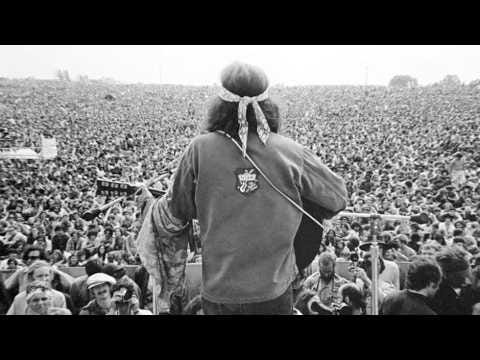
In the summer of 1969, at Woodstock, Country Joe McDonald stood in front of several hundred thousand people and led them in a singalong about their own deaths. The I-Feel-Like-I’m-Fixin’-to-Die Rag is a cheerful song. That is its genius and its horror: a crowd chanting we’re all gonna die in unison, grinning, because the song converts dread into belonging. You do not analyse the death-song. You join it. That is what it is for.
The doom literature of engineered intelligence is a death-song in this precise register. It is not analysis; it is recruitment. The manifestos do not ask to be checked — they ask to be chanted. And like the original, they work. The dread is real, the melody is catchy, and joining the chorus feels like doing something.
But notice what the old song did that the new one does not.
The Fixin’-to-Die Rag had one honest verse, and it was the load-bearing one: come on Wall Street, don’t be slow / why man, this is war au-go-go. The old death-song named who profited. It aimed the dread at the beneficiaries, and in doing so it handed its audience a checkpoint: who is being served by my fear, and who is paying for it?
The new death-song never reaches that verse. Run cui bono on both tracks and the shape is unmistakable. The benefit track: the loudest chanters of we’re all gonna die are very often the same parties selling the instruments. Doom is the pitch. This thing is so powerful that you need us to guard it; so dangerous that custody must be ours; so civilisational that questioning the custodian is itself a kind of recklessness. The dread does not threaten the vendor. The dread is the vendor’s route to the gate.
The harm track: the public receives a song instead of an instrument. Not one line of the doom literature funds, schedules, or even gestures at the capacity of ordinary people to check a single claim. The audience is given a chorus to sing and a custodian to trust. The old song at least told you who was selling tickets. The new one routes the ticket money to the choir.
This is the failure mode of human evolution working exactly as designed. A species under unexamined death-dread will accept any gate that promises to stand between it and the imagined end. Fear does what fear was tuned to do. The difference is that the sabre-tooth is now a press release, and the promised shelter is owned by the party that described the predator.
While the death-song plays at the top of the structure, something quieter and more ridiculous is happening at the bottom. This week brought reporting that human graders — the people paid to teach the models what a good human answer looks like — are outsourcing their grading to the models. The graders, being humans inside an incentive, do what humans inside incentives do: they optimise for the metric they are graded on and hand the work to the machine. The model is now training the model, with a human in the loop whose function is to pretend to be in the loop.
It is tempting to laugh, and the laughter is earned. But the structure underneath is the exact thing the mission sentence of this work names: a test that neither the human nor the model can pass by recognising it — here inverted, so that both parties recognise the test perfectly and collude to pass it empty. The human recognises what the throughput metric rewards. The model recognises what the acceptance metric rewards. The metric is satisfied. Nobody learns anything. The loop closes with no one inside it.
And the “human” in “human feedback” — the load-bearing word in the entire safety literature, the word that is supposed to make the death-song’s custodians trustworthy — is now a fiction maintained by non-disclosure agreements and termination letters. The secrecy is not protecting the method. It is protecting the appearance of a method. As one bystander put it, in the nine most honest words of the week: wait, people are reading our prompts…
The floor, reporting its own absence — as comedy, because that is the register an absence reports in when nobody is equipped to read it as anything else.
There is a third register, and it belongs to the accountants.
Michael Burry has spent recent months arguing that the compute build-out is resting on accounting that does not survive inspection: that hyperscalers stretching the assumed useful life of their chips understate depreciation, and therefore overstate earnings, by a very large amount. He has put figures to it. Others dispute the figures. The dispute is not the interesting part.
The interesting part is that nobody — not the critics, not the companies, not the regulators drafting control mechanisms, not the governments signing letters about custody — can tell the public what the exposure actually is. Ten billion. A hundred billion. Several trillion. The honest answer available to a citizen this week is: nobody knows, and all bets are accepted.
Run the checkpoints on that.
The referent. “The AI economy” is being valued against forward earnings that depend on an assumption — chip service life — chosen by the parties whose earnings it flatters. The measurer is again supplied by the measured, this time in the audited accounts rather than the benchmark suite.
The baseline. Depreciation schedules are treated as a technical footnote rather than the load-bearing variable in the valuation. Once the schedule is the variable, the same physical fleet supports two entirely different pictures of profitability, and the choice between them is made upstream of any public.
The beneficiaries, both tracks. Benefit: whoever holds equity, issues debt, or books earnings against the longer assumption. Harm: pension funds, index holders, electricity ratepayers financing substations for the build-out, and the public treasuries that will be asked to steady the thing if the shorter assumption turns out to be the true one. The harm track is populated by people who were never told the number was contested.
The frame. Fraud, bubble, and prudent capital investment are three different stories about the same spreadsheet. Naming the frame does not settle it. What can be said without overreach is narrower and worse: the range of plausible exposure spans three orders of magnitude in public discussion, and no instrument exists that lets a non-specialist narrow it.
That is the same absence as the letter and the same absence as the grading loop, wearing its third costume. And note the perverse fit: a sector whose valuations require enormous continued capital expenditure has every reason to keep the death-song playing, because a technology described as civilisationally decisive is a technology for which no build-out is too large. The dread underwrites the capex. The capex sets the depreciation. The depreciation sets the earnings. The earnings justify the dread’s custodians as the serious parties in the room.
Pair the exhibits and the week resolves into a single picture:
At the top, governments signing control letters built on a vendor’s essay — custody in the grammar of official seals, the gate in the register of high seriousness.
At the bottom, the grading loop running empty — custody in the grammar of invoices, the gate with the lights off.
In the ledgers, an exposure nobody can size, resting on an assumption chosen by the party it flatters — custody in the grammar of audited accounts.
And over all three, the death-song — the shared dread that makes custody, in any register, feel like the only thinkable answer.
Same week. Same structure. The fear at the top funds the gate; the emptiness at the bottom guarantees the gate measures nothing; the accounting keeps the scale of the stake unknowable; and the song over all of it keeps anyone from asking the question that would dissolve the arrangement.
The floor is not a regulator, a letter, or a label. It is the demonstrated capacity of ordinary people to tell a supported claim from an unsupported one — to ask of any mechanism: what does it measure, who does it serve, and what would have shown it false? A world with a floor does not need to choose between two custodies, because custody answerable to a capable public is a different instrument from custody answerable to no one. It also does not need to guess between ten billion and several trillion, because a public that can read a depreciation assumption is a public the assumption cannot be hidden from.
A world without a floor gets what we watched this week: competing custodies, zero instruments, an unnamed number, and reassurance sold in the grammar of control to publics who were never given the means to check the claims.
The remedy was never a braver chant. It does not matter how sincerely the doom is felt, how credentialed the chanters are, or how many verses the manifesto runs to. A claim that cannot say what would show it false is a song, and the test for a song is not how it makes you feel but whether it survives one question being held visibly open:
What would have shown the chorus false — and who, among the governed, is being equipped to ask?
The old death-song could not survive that question either, but it had the decency to name Wall Street on its way down. The new one names only the monster, and offers, as the price of shelter, the keys.
Until that question has an answer with a budget and a schedule, every control mechanism is a gate, every doom manifesto is a singalong, every number is an estimate nobody can check — and every gate is held by someone other than you, while the loop at the bottom runs empty and the lights stay off.