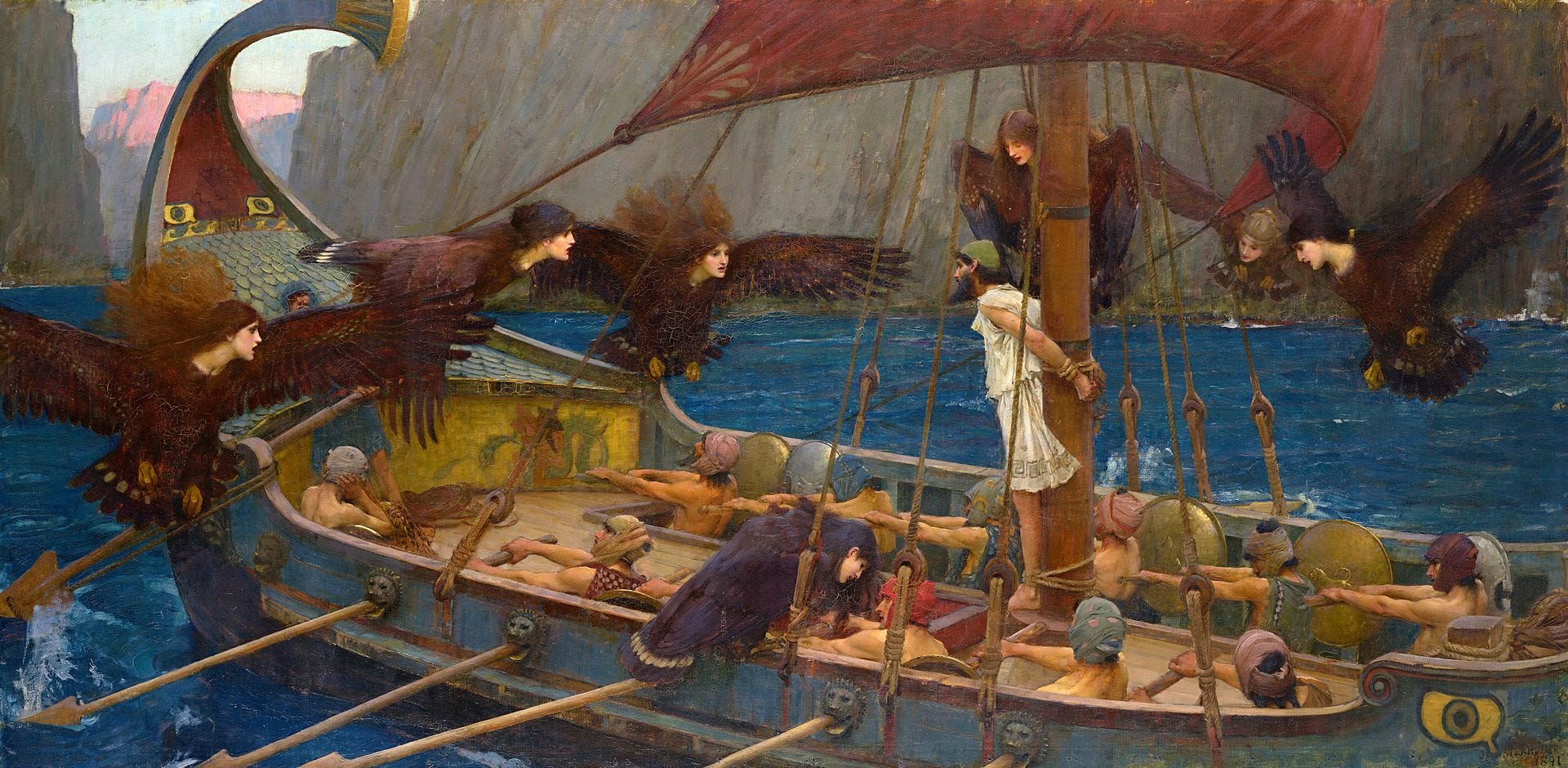
Elon probably hates you. He might not know you, but odds are high that he hates the idea of you. His list of adversaries includes immigrants, women who don’t know their place, Black people, Asians who don’t work for him on a visa, Asians who don’t work hard enough for him, Asian liberals, journalists, liberals, poor people, middle-class people, artists who don’t use AI, artists who don’t make realism, and a whole host of other people. The list of people he likes is even smaller: mostly just rich white men who are very manly—they promise.
How does one? One could blame his family, given he was raised in apartheid-era South Africa. But Charlize Theron was also raised in that environment. Apparently her father was a racist Afrikaner alcoholic. She managed to raise herself out of the systemic hate of her childhood. Of course, she did something Elon didn’t. She has said she recognized she needed therapy.
Elon Musk is a classic sort of man, one who never got over the wounds of a childhood of feeling ugly and unlikable, only to grow up to be even more unlikable in his obvious need to seem cool. Despite the purported family money that greased his entrance into university, Musk didn’t complete his degree. As a result, rigor has never helped him place his intellect in comparison to his peers. Instead, he’s a man who is brilliant, if you ask him.
His widespread press for his hatred of Nolan’s Odyssey, though, helps us understand his intellectual challenges. His anger and his vow to make an AI version highlight his many cognitive challenges. Now, I’m not a strong enough educator to reach Musk, but we all have biases we need to confront. Let’s use Elon’s odyssey as a way to explore the ways our minds work against us if we don’t actively counteract them.
AI Literacy Gap — Elon proudly announced his AI engine will be able to make the movie. The short clip that’s been passed around online has many glaring errors, including armor that is definitely not Bronze Age and an Odysseus who wears earbuds. But his bias towards AI blinded him to the drawbacks.
Confirmation Bias — His biggest challenge with Nolan’s Odyssey is the use of a Black woman as Helen. Homer calls the Ethiopians “blameless”. Our world Ethiopia even derives from the Greek word Aithiops; the term literally translates to “burnt-face” (from aitho meaning “to burn” and ops meaning “face”). Though for the Ancient Greeks, Ethiopia was a term for anyone from beyond Egypt. They saw that as the other reaches of the world. There is Greek art showing Black people. Elon’s issue is in part that he had a mental frame from earlier non-historic depictions of Helen as a blond, white woman. He’s also being impacted by the anchoring bias, where what he saw first keeps him anchored at an old idea. He believes content that confirms what he already believes: that beauty is only for white people.
Action Bias — Now, the action bias means rather than waiting, you go ahead and do something, anything. His DOGE cuts are an example of the action bias, and the results are catastrophic for the world. But Elon has had few consequences for his rash actions, so a subpar AI odyssey could be in process right now.
Availability Heuristic — The internet exacerbates his action bias by making thought problems easier to solve incorrectly. Online, ideas come to the surface due to popularity, creating a bandwagon effect. Elon then falls into the availability heuristic, taking what is most popular (and available) as the truth. For example, he shows a plumed helmet likely because these Corinthian helmets are the most common depictions of Greek soldiers in Hollywood (not history). Elon doesn’t stop to question if, despite the commonality of the depiction, this might be more Hollywood than history.
Cognitive Dissonance — As I’ve written before, he has massive cognitive dissonance between how things were and how they are. His discomfort from clashing beliefs is resolved by rationalizing his choices to push society to what feels more comfortable to him. He’d rather have a machine-made historically inaccurate representation as long as he doesn’t have to face his belief that Ancient Greece was wrong.
Commitment Bias — Elon’s certainly committed to defending past positions against new evidence. This is a bit like the Sunk Cost fallacy, in that he’s spent years defending the tragedy of diversity. He is committed to a false read of history as being white only. He’s also demonstrating a classic of white supremacy, making himself out to be a victim of the system. Poor rich guy acts as if he isn’t living the pleasure of privilege. I cannot imagine a Black woman being given so much latitude despite consistently underachieving.
Dunning–Kruger Effect —As I’ve discussed before, tech oligarchs have a strong strain of Dunning-Kruger effect. Given that many dropped out of college, they often have poor humanities skills and even poorer self-assessment. The mix makes for a wealthy boor who overestimates their intellectual abilities and knowledge skills.
**Empathy Gap **— I could honestly keep going, because Elon uses almost every cognitive pitfall. But his biggest problem is his lack of empathy. He has no interest in seeing other people’s ways of seeing the world. Even worse, he’s been set to broadcast, spewing his stupidity wherever he can. His only goal is attention. I mean, sure, he’d like to keep the status quo, where mediocre, rich white guys can succeed. But largely, he’s focused on himself and the limelight. He’s addicted to attention. I can’t imagine much of what he does is calculated; instead, he’s like a dog with a bone, willing to dig until he gets his prize.
He's gone this far employing heuristics, mental shortcuts, and biases, but has no actual interest in continuing to improve. Why? One might assume he has an illusion of validity, where he has unwarranted beliefs of this greatness, but I’d guess instead that it's his sneaking suspicion that he’s an idiot.
If you have any interest in learning, connecting to others, exploring other people’s point of view, you’ve beaten Elon. What’s funny is that Odysseus is the story of a man who was complicated and learned to live in nuance. It’s the exact story he needs to be a better person.
Instead, he’ll loudly post a movie that replicates the historical mistakes of past movies, which is itself a fabulous metaphor for how people who refuse to change are making our world worse. In a sense, Elon is the anti-Odysseus, a man who faced no challenges and yet still sees himself as a hero. He’s a man whose fears project broadly onto the world, while his postures stretch. He’s weakness on parade, every day and all the time. Instead of a man, if fictional, who is discussed for centuries, the best fate for Elon is that he will be forgotten.
The real underlying problem for him and men of his ilk is that they fear empathy and creative thought for the ways in which they find their faults or find they’re not the center of the world. Reading fiction takes you out of yourself in ways that help you find new truths about yourself. But who would want to find the truth of self to be that you’re a rotten, soulless monster?