by CÉDRIC KARLIKOWSKI of CELLULE 51
June 22, 2022. On his birthday, Ukrainian television host Serhiy Prytula asks the public for 500 million hryvnia in seven days, the price of three Turkish combat drones. Two days later, it’s done. Ordinary Ukrainians send 600 million, about 20 million dollars at the official rate, enough for four aircraft. The manufacturer then refuses the money and donates the drones. The cash buys a satellite instead.
We publish this newsletter every day at 9:05am NYC time / 4:05pm Kyiv.Your subscription fuels our work.
July 2026. The European Commission, the executive body of the European Union, commits 35 million euros to have six young European defense firms evaluated against scenarios drawn from the war in Ukraine, with Ukrainian experts among the judges. Four years separate the two scenes. In between, the direction of the flow reversed.
This article explains one thing: how proof earned in Ukrainian combat became a resource Europe now pays for. It does not claim the money is enough, and it does not excuse how slowly Western equipment still arrives.
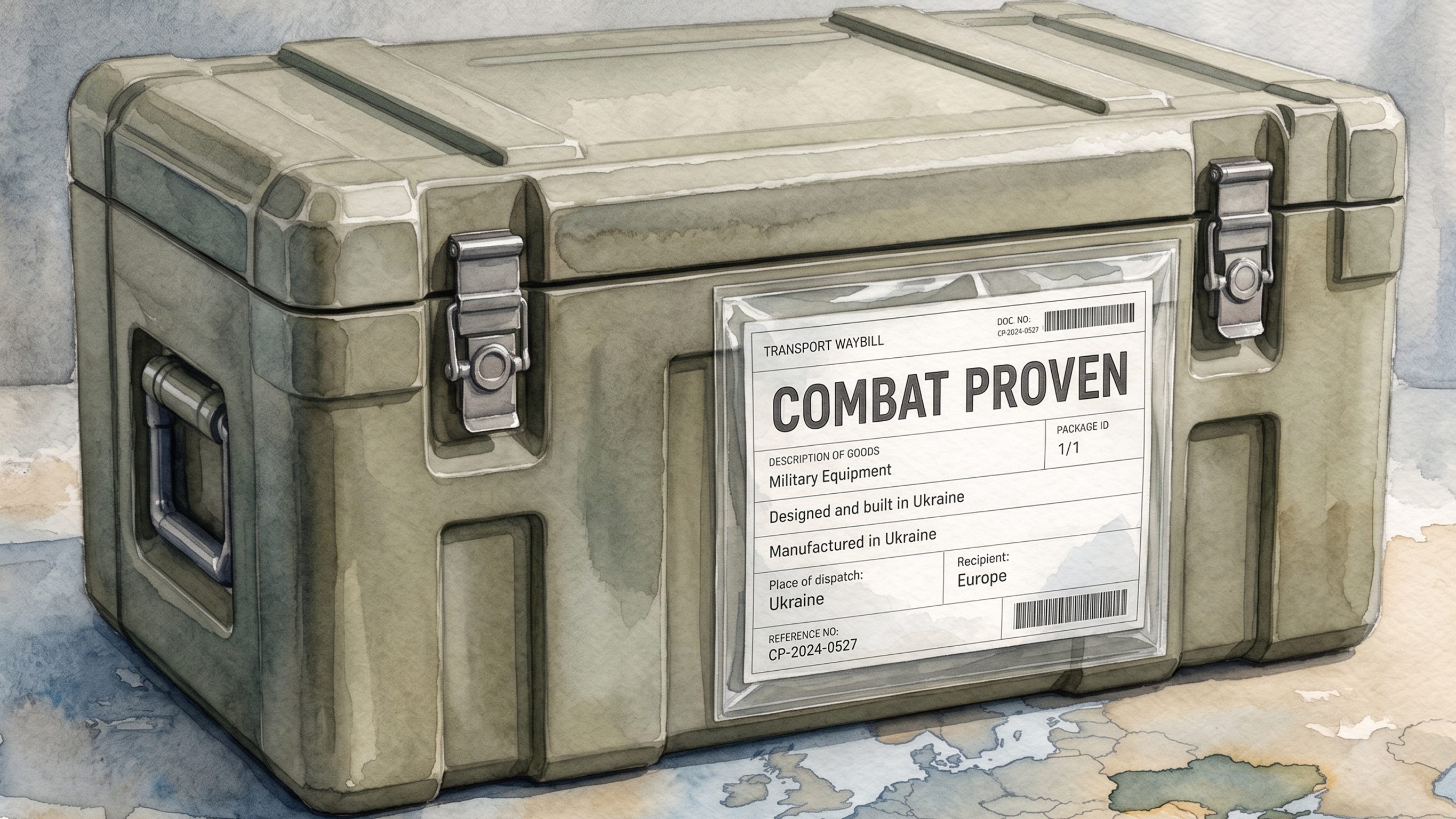
It concerns you for a precise reason: a country the West has mostly been asked to give to has begun to sell, and Europe has started paying. If someone around you calls aid to Ukraine a bottomless pit, what follows is a usable answer. The thread from here to the end is one word, ownership: who holds it, who pays for it, and what it changes for the men doing the fighting.
The technical part rests on a single idea, and here it is in plain terms. When a country receives a howitzer, it owns a howitzer, and the transaction ends at delivery. When a country lets others build what it designed, nothing ends: there is an owner, a defined object, written conditions, and money that keeps coming back.
That arrangement has a name: a license. Nobody licenses charity. A license is what you sign when the other side owns something you cannot produce on your own. Keep that distinction in hand; everything below is one country moving from the first column to the second.
Proof earned under fire has become an asset, and Europe is the buyer.
The TV host’s fundraiser was not an outlier. It was a template: a public figure names a weapon, a counter climbs in the open, and private emotion converts into hardware in front of the whole country.
The counter mattered as much as the money. Every donor could watch his own contribution join a number that ended in an aircraft, and that visibility is what kept trust alive while the state’s institutions were fighting for their lives.
Those campaigns bought more than drones. They proved, in public and on a deadline, that a nation’s anger could be converted into weapons, and the whole world watched the receipts come in.
The template repeated for two years. In February 2024, a campaign of the same kind was funding Sea Baby naval drones: same open counter, same direct conversion, a weapon at the end of the line.
It was generous, it was fast, and it had a ceiling. A campaign ends when the counter stops; it leaves no owner, no written conditions, no claim on what the weapon becomes next. The collection era produced weapons. It produced no property.
Then the scale changed hands. Foreign funding for Ukraine’s defense industry rose from 600 million dollars in 2024 to 6.1 billion in 2025, according to Ukraine’s defense ministry. Ten times more in a single year, and no telethon in sight.
The soldier becomes an author, in the property sense of the word.