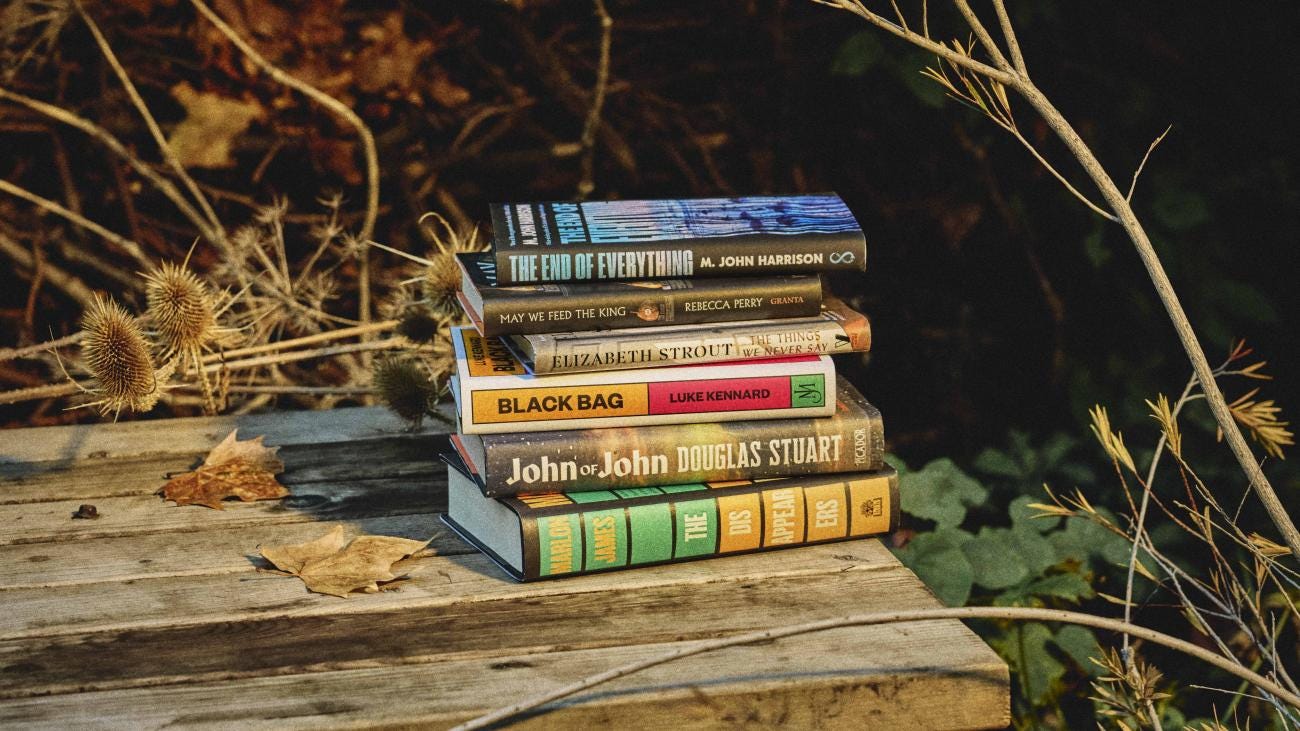
The Booker shortlist is here! Which effectively means that it is time for bookworms to get to reading. For the real ones, that race started much before, when the longlist dropped. Because now is the time to note which titles made the shortlist and which didn’t. Which effectively also means trying to pick out what made the judges choose these rather than the ones that had Bookstagram raving endlessly. This year’s shortlist for the Booker includes two former winners, a previous shortlistee, and three authors who are new to the prize. From a campus novel to science fiction, the variety here is wide and diverse.
I, for one, am more or less satisfied with the shortlist, even though the omission of Emma Cline’s hypnotic and devastating Switzy still makes me a little confused. It follows David Hastings, a 70-year-old American businessman who has been diagnosed with advanced Alzheimer’s disease. Switzy takes the reader on a feverish tour, rendered in a frantic stream-of-consciousness style that made me swell with wonder and astonishment. Its absence from the shortlist makes me feel the opposite.
If there was one author who I knew would make it to the shortlist for sure, it was Marlon James. After A Brief History of Seven Killings, the Jamaican author is back with The Disappearers, and he might as well win his second Booker, too, to no one’s surprise. It follows eight closeted gay men in late-1980s Kingston, Jamaica, who gather in secret to rehearse John Herbert’s 1967 play Fortune and Men’s Eyes. Early on, they are targeted by a violent, homophobic mob- that leaves one actor dead and two missing. James charts their journey with unflinching and often shocking detail, opening up a rich and fantastical plethora of voices and styles that collide and jostle for space. It shocks, illuminates and moves at a propulsive pace, and true to the mastery of James’ control, The Disappearers announces itself as a deeply human account of love and identity.
Rebecca Perry’s debut, May We Feed the King, redefines the historical novel in fascinating new ways. We meet an unnamed present-day museum curator who becomes obsessed with the tragic, passive life of an obscure medieval monarch. What happens next? She takes a commission to arrange historic replica feasts, paying attention to every detail. The life around her blurs, as the reader is confronted with the unnamed ruler who inherits the throne unexpectedly after his older brothers die. But he has no hunger. The dual narrative presents a meditation on objectivity versus historical memory and on the ways it can completely isolate the past from the present.
Will third time be the charm for Elizabeth Strout? The American author makes a departure from her interconnected Lucy Barton novels to set her gaze squarely on the domestic stillness and isolation of a certain 57-year-old high school history teacher in the wake of a secret that will change his life forever. Artie Dam is a magnificent creation, shaped with an emotional truthfulness about his reaction to the personal as well as the political (he reacts to the 2024 US presidential election and reads Elon Musk’s biography). Strout writes with a clear vision, where not a single sentence is wasted in mining the interiority of this man as he finds himself anguished over the contemporary state of the world. It is a beautiful, quietly moving book from Strout and would make for a lovely win.
After the unforgettable Shuggie Bain, Douglas Stuart has set his aim firmly on another Booker. The Scottish writer returns with an epic, richly written work on gay experience spanning generations. It makes for an uneasy homecoming when 22-year-old art school graduate John-Calum ‘Cal’ Macleo returns to the Isle of Harris. Both father and son share the same secret about being gay, and find themselves trapped in a emotionally repressed dynamic. It is not just that, Stuart suggests that the gay experience inherits something much more heartbreaking, a sort of generational silence and miscommunication. At 416 pages, John of John is fueled by an atmospheric slow burn style that Stuart excels in, where unspoken words threaten to tear the family apart. It is the kind of book to shed tears on. It is the kind of book that wants to leave the gays with some closure.
The end is near, and what can we do but wonder? At 81, Harrison, widely known for his genre-defying science fiction, fantasy, and literary works, has delivered a stunner. Set in a near-future, post-apocalyptic south-east England, The End of Everything takes the reader to accompany a middle-aged beachcomber, Phillip Tennent, who makes a living collecting weird biological artifacts. The system is barely functional and London is inhabited by enigmatic entities known as the iGhetti. Tennent will come across one such shape-shifting biological object that will transform his grasp on reality forever. This is a book that invites readers for a disorienting and bleak study on eco-catastrophe, and Harrison refuses neat conclusions as language falls short in imposing upon the ambiguity of a shifting reality.
Every year, the Booker shortlist includes one such title that is a little adrift, a little off the hook. Black Bag is that book. This satirical campus novel by the British poet revolves around an out-of-work actor who takes on the job to appear at Dr Blend, a university professor’s lectures in a leather bag. This was a real experiment, which took place in the 1960s. But the book is more interested in exploring the often comical misunderstandings of masculinity that arise in the present day and age. Kennard best explained it, as quoted by the Booker Prizes library, “My narrator is a struggling actor, but I think it’s about trying to be an artist of any kind in the current moment, when arts and culture are so systematically undervalued, when the doubts seem to loom larger than the possibilities.” A hoot on Bookstagram, Black Bag has all the ingredients of a modern classic.