Your labs came back normal.
Your A1c is fine. Your fasting glucose is fine. Your cholesterol is “normal” or “acceptable.”
So why are you still gaining weight around your middle, crashing every afternoon, and wondering whether something is quietly going wrong?
Here’s what most people never hear. The hidden metabolic changes that lead to diabetes and heart disease can begin years before your standard labs show anything at all. The markers that reveal them are ones your doctor almost never orders.
Overloaded with prescriptions? You’re not alone, join over 65,000 subscribers who have already found a different path.
Sara was 58 when she came into the clinic for her follow-up visit. She sat on the edge of the exam table, purse still on her shoulder, and said, “I’m tired all the time, and I keep gaining weight around my middle. But my labs are fine.”
She wasn’t the patient anyone worried about. She didn’t smoke. She watched what she ate. She came in for her annual physical every year, without fail.
Her history looked good. Year after year, her annual labs looked the same:
**A1c:normalFasting glucose:normalTotal cholesterol and LDL:acceptableTriglycerides:**a little high, but “nothing to worry about”**Liver function:**fine
So she was sent home with the same advice as always, eat a little better, move a little more, see you next year.
Five years later, she was back in the same clinic, and this time her labs told a different story. Her A1c had crossed into the diabetic range. Her liver function tests had come back out of range. Her lipid profile wasn’t good either. Her CT scan showed significant plaque building up in her arteries.
She asked the question - *“How did nobody catch this? I did every test they asked for.”*She was right. Sara did everything she was told. The problem was what she was never tested for.
You get your labs. You show up for your physical. You follow your doctor’s advice.
But the standard annual panel was built to tell you where you are today, not where you’re headed.
Here’s what a typical annual physical includes:
CMP(comprehensive metabolic panel) - fasting glucose, kidney and liver functionBasic lipid panel:total cholesterol, LDL, HDL, triglyceridesCBC:your blood cell countsHbA1c:your average blood sugar in the last three monthsLiver function tests
These are useful tests. But they’re a snapshot, not a forecast.
Glucose and A1c only rise after your body has spent decades working overtime to hold them steady. During those years, your labs stay “normal” while the damage builds underneath in your blood vessels, your liver, and the cells that keep your blood sugar in check. Your pancreas has to work overtime to keep up with this.
By the time your annual labs finally flag a problem, you received a diagnosis that was taken place decades ago. There is no predictability of the current annual labs test.
Heart disease and type 2 diabetes don’t arrive overnight. They grow quietly for decades.
And they’re connected. The same hidden metabolic dysfunction that leads to diabetes also feeds inflammation, plaque, and high blood pressure. People with diabetes are about twice as likely to develop heart disease.
Every year your labs come back “normal,” you get one more year of reassurance. Meanwhile, the markers that could have warned you go unmeasured.
📊 “Normal” cholesterol doesn’t mean protected. An American Heart Journal analysis of 136,905 patients hospitalized with coronary artery disease found that almost half had an admission LDL under 100 mg/dL (2.59 mmol/L), and fewer than one in four had LDL above 130 mg/dL (3.36 mmol/L).
📊 Most people have no idea. CDC national data found that 88% of adults with prediabetes didn’t know they had it.
📊 By diagnosis, much of your beta cell function is already lost.
In the landmark UK Prospective Diabetes Study (UKPDS), people newly diagnosed with type 2 diabetes had already lost roughly half of their insulin-producing beta-cell function.
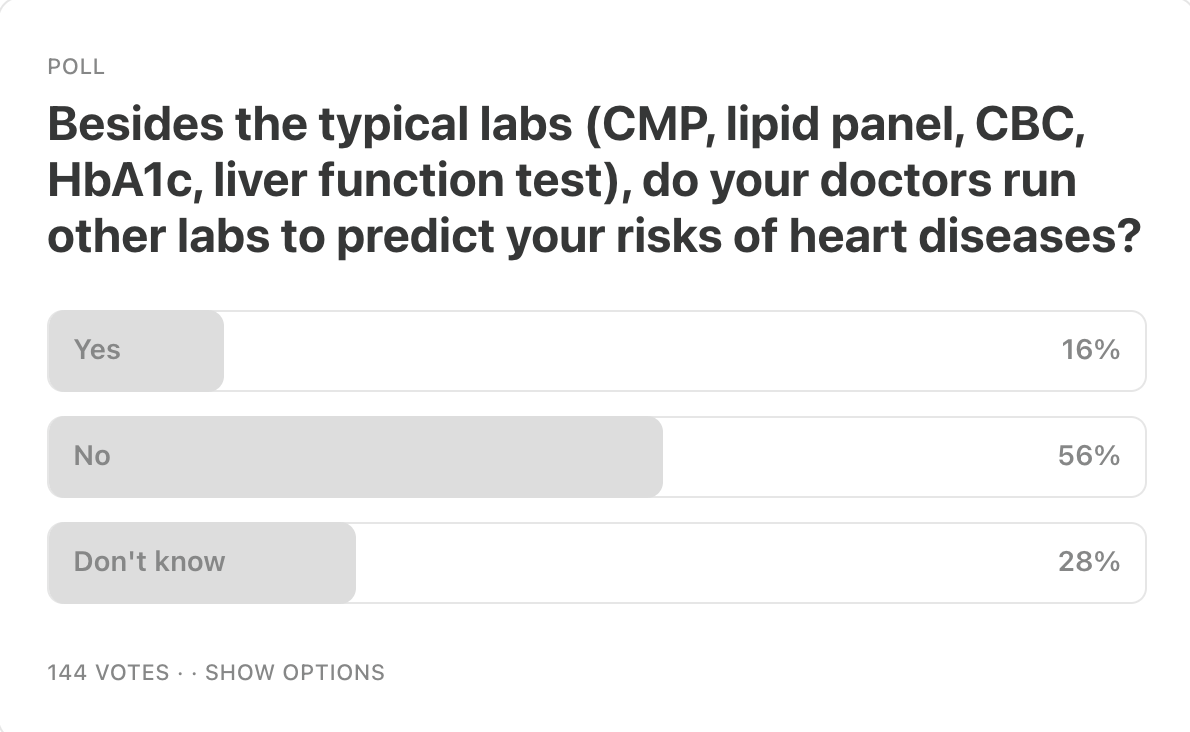
I asked all of you a simple question:
That means almost 84% of you either have never been tested for these life-saving markers or have never even heard them mentioned.
That’s not a personal failing. It’s a gap in how routine standard care works. But it means most of you are walking around with a blind spot, and that’s why I built this workshop.
Most people did everything right and were told they were fine, until the day they weren’t. I want you to see the problem while there’s still time to reverse it. Test, don’t guess.
In this live workshop, I’ll show you the blood markers your annual physical almost never checks, the ones that can flag insulin resistance and heart risk up to 10 years before your glucose, A1c, or LDL looks abnormal.
You’ll see real lab results side by side (normal, borderline, and optimal) so you know exactly what to look for on your own report, which tests to ask your doctor for by name, and the first steps to take if your numbers aren’t where they should be.
✅ The markers your doctor almost never orders, and why they matter more than your A1c, LDL cholesterol or total cholesterol.
✅ What each marker measures, and how they work together to show your real risk
✅ How to read the labs you already have (CMP, lipid panel, A1c, triglycerides) for early warning signs most people miss
✅ The difference between “normal” and optimal ranges
✅ Exactly which tests to ask your doctor for, or how to order them yourself
✅ Your action plan: what to do next, including lifestyle, nutrition, supplements, and the habits that move the needle
✅ Live Q&A, so you can bring your questions
“Normal” Lab Results? That Might Not Be the Full Story - A Case Study
Glucose Reset Protocol - How to Lower Blood Sugar in 4 Simple Steps -Backed by Research
They Lied to You About Cholesterol- The Real Culprit Behind Plaque Formation
The 10 Hidden Risk Factors for High Blood Pressure Your Doctor Probably Didn’t Mention -Why your blood pressure keeps climbing even when you’re “doing everything right” and what’s actually driving it
Forget LDL Cholesterol - This ‘Perfect Storm’ Is What’s Really Destroying Your Heart Health
The GLP-1 Mimicking Diet: How to Trigger Ozempic’s Fat-Loss Hormone Naturally - The food-based protocol that works with your body’s own satiety signal, no prescription required
What your A1c, fasting glucose, lipid panel, and liver test really mean, and what they can’t tell youThe tests you’ve probably never had, and the exact names to ask your doctor for or order yourselfYour “optimal” vs. “normal” ranges, so you can spot a problem while it’s still early and reversibleA short list of specific questions to bring to your next appointmentinstead of vague worryThe root causes behind abnormal markers, so you know exactly what to focus onA clear action plan for the next 30 days: what to eat and which supplements are worth considering
No more guessing. No more false reassurance.
Know your real risk years earlier, and you can act while it’s still reversible. Protect your heart, your blood sugar, and your energy before any of it becomes a hospital visit.
More years feeling strong. More years with the people you love. No more wondering whether “normal” was ever really normal.
The workshop is for general educational purposes only and does not constitute or replace medical advice, diagnosis, or treatment. It is not a substitute for professional medical care. Consult a healthcare provider before starting any new supplement, making any changes to medication, diet, exercise, or supplement routines. Always discuss lab testing and health decisions with your healthcare provider.