“Let light shine out of darkness,” God said (2 Corinthians 46)
Years ago, I was driving west from Chicago. The land spread out before me, flat and endless. A dark storm loomed ahead. There was no way out but through. The impending darkness felt almost more ominous than the sheets of rain I was driving through. I didn’t really experience the storm again until I was in the bright sunlight on the other side. With my heart pounding, adrenaline pumping through my veins, I realized I had driven through zero visibility.
Sometimes I feel like we are living in the eye of a storm. Every day there is more terrible news. Change seems implausible. The paralysis associated with the immense flood of bad news can be demoralizing.
But then something feels like it breaks through, a brightness through these dark days. The student protests in France feel like change is possible.
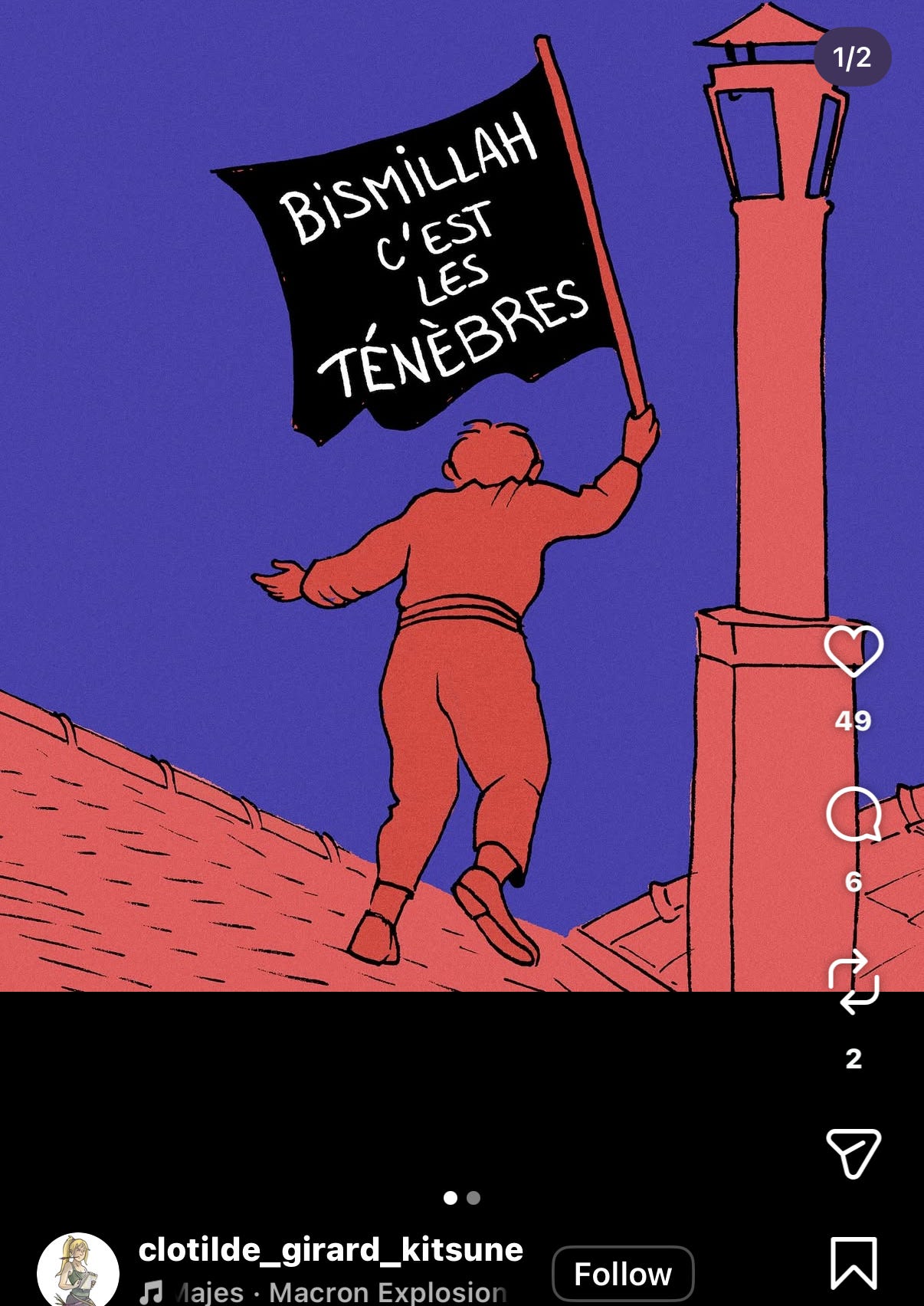
Take, for example, how students are turning the tables on the police. Have you seen signs that say Bismillah C’est le tenebre? These protests began because students wanted the government to address budget cuts to education and the already poor school conditions. The mass demonstrations have escalated often, focusing not just on educational funding, but also on the rising cost of living and the undue use of force by the police.
Student demonstrations largely began through social media organizing. Snapchat, with its ability to share content that then disappears, has been particularly useful for student activists. The French police reportedly are trying to infiltrate these student groups, posing as teenagers. One suspicious Snapchat screenshot included the phrase In the name of God, darkness is upon us. It’s been a long time since I was a teenager, but I’m fairly confident today's youth aren't dropping text that seems written by the likes of Nostradamus or a very emo person. The Snapchat exchange was particularly notable because the comments also used North African slang and an Algerian flag. While these protests started with teenagers, much of the counter-protest discourse has aimed to frame this civil unrest as being associated with immigrants. Basically, the statement seemed like a red herring and highlighted how the police are scapegoating immigrants.
The teenager quickly shared this message, and it became a slogan. The nonsensical phrase derides the police who can’t even infiltrate a group of teenagers without being racist. But in seeing the signs throughout the protest, it also highlights how unified the protesters are.
Much of the press coverage of the protests has focused on commercial losses. Many multinationals had major damage, as did small businesses. A municipal building in Limoges was destroyed along with the art inside. But as an art historian, I have read many times that iconoclasm, or the destruction of property, is part of the history of place and people. Destruction is as much a part of history as the voice of the people is in any nation, especially in France.
The negative press about the destruction makes me think of the art-history concept of tenebrism. In the Counter-Reformation, artists like Caravaggio focused on regaining people’s emotional engagement with Catholicism. Rather than the uniform brightness of Renaissance compositions, dark, moody compositions became popular. For example, in Caravaggio’s Calling of St. Matthew, the light of heaven breaks through the darkness, drawing the eye to the saint. Tenebrism refers to compositions in which light breaks through darkness.
As you think about these protests, you can focus on the destruction. You can focus on the foolishness of the police acting like teenagers. Or you can see the light in the students who stood up for themselves, the complicated, sometimes dark forces around them, and the possibility that this is the beginning of the end of this storm of negativity in global society.