We do love our sports. A case could be made that we love violence even more. In the same week that the nation marked the anniversary of the most violent terrorist attack in this nation’s history, the University of Kansas athletic department released a video highlighting its storied rivalry with the University of Missouri.
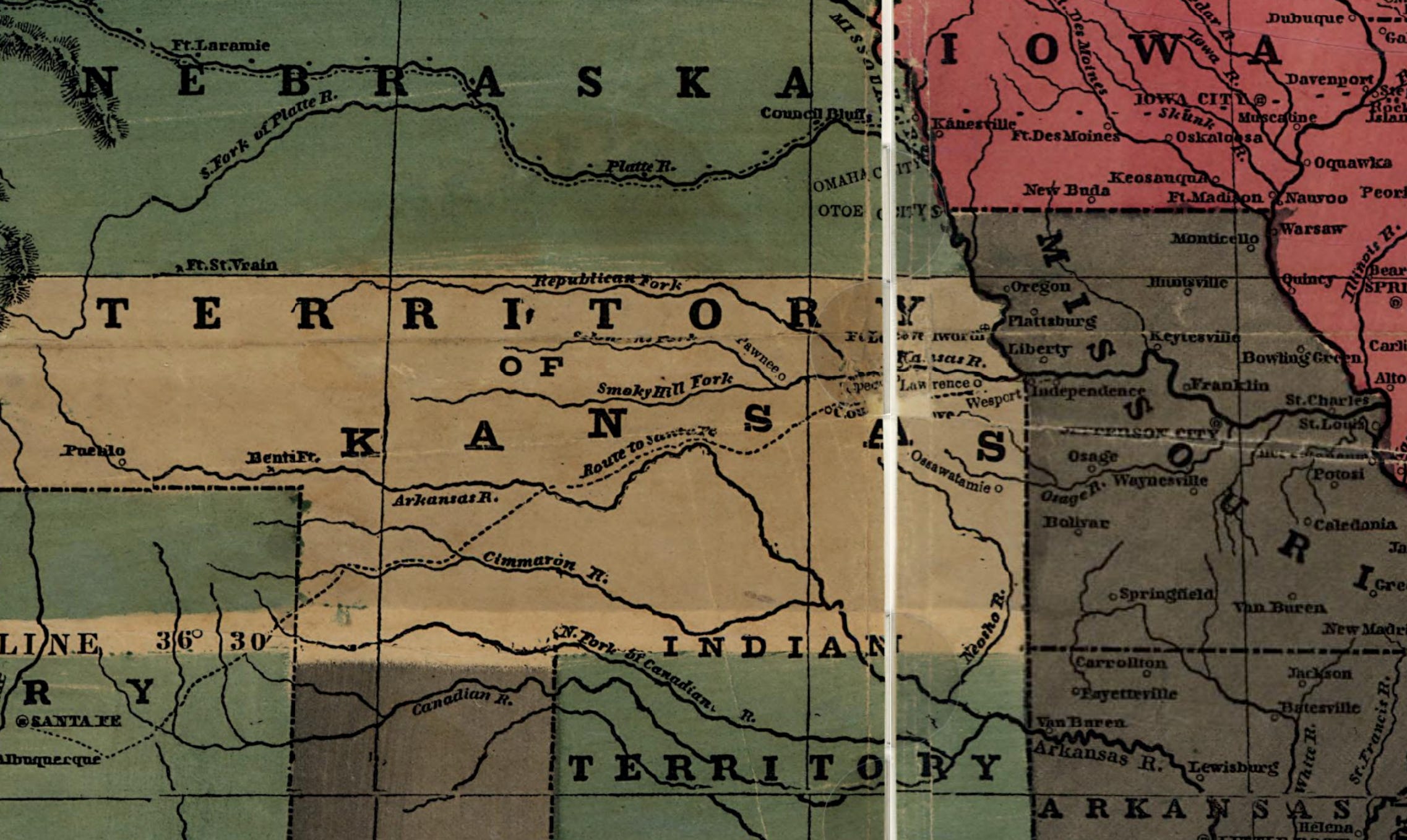
The video frames this football rivalry alongside the history of “Bleeding Kansas” in the mid-1850s, in which pro and anti-slavery forces battled for the future of Kansas. With the passage of the Kansas-Nebraska Act in 1854, the question of whether the territory would be a free or slave state would be decided by “popular sovereignty” or popular vote, based on which side had more supporters within its borders. People flooded Kansas from across the country" in Kansas.
Acts of violence became all too common. In 1856, John Brown led a raid on pro-slavery farmsteads at Pottawatomie Creek in Franklin County, where several pro-slavery settlers were hacked to death with corn knives. Just days earlier, a band of Missouri-based Border Ruffians had sacked Lawrence, a center of Free-soil sentiment. By 1858 the border between Kansas and Missouri had become the scene of a genuine guerrilla war, with pro-slavery Bushwhackers riding out of Missouri and anti-slavery Jayhawkers striking back from Kansas, each side raiding across the line into the other's territory.
The video, narrated by former Kansas defensive lineman Gilbert Brown, elaborates on the conflicts that preceded the start of this football rivalry. It’s titled “HEROES AND VILLAINS.”
“Love doesn’t exist here,” Brown said. “Neither does mercy. This rivalry is different. ‘Cause it’s built on something much deeper than just school pride. It’s fueled by hatred, passed down through generations. Our roots reach back to the Civil War, when blood was spilled over what you believed in, and which side you stood on.”
“There are heroes and villains,” Brown continued. “Only allegiance decides their legacy. There’s right and wrong. There’s Kansas and Missouri.”
What I find most striking about the video is the identification of slavery as the root cause of the problem in Kansas and by extension the Civil War along with John Brown as the hero of the story and William Quantrill as the villain. It certainly is a sign of how our broader Civil War memory has evolved in recent years.
As of yesterday, the video had over 16 million views on X and 11,000 views on Instagram. You could argue that the video did something more than promote a rivalry between two football programs. Millions of people now know something about the history of Kansas and the growing divide over slavery in the 1850s.
Don’t want to upgrade to a paid subscription, but want to support my writing and research? You can throw a couple dollars into my Venmo for a cup of coffee or two. You can find me: @Kevin-Levin-37. Thank you.
Still, I am a little uncomfortable with the way we so cavalierly manipulate stories of violence for the purposes of entertainment.
Interestingly, historian Jennifer Weber, who teaches at the University of Kansas, has demonstrated that historical memories of the Civil War era were not introduced into the athletic rivalry until the 1970s, and the historical angle did not seep into the popular imagination until the 1990s.
All of this is a reminder that Civil War memory is deeply embedded in long-standing college football rivalries. Rivalries like Georgia vs. Georgia Tech reflect the broader cultural friction between the “Old South” traditionalism and “New South” industrialization, using the football field to negotiate a path forward.
Regional college football matches, in the first half of the twentieth century, offered southern schools the opportunity to promote an identity that mixed martial pride with a need to answer military defeat in 1865 with gridiron victory. As historian John Coski has shown that fans at the University of Mississippi or “Ole Miss” began displaying the Confederate flag regularly beginning in the 1930s alongside the playing of “Dixie,” becoming one of the sport’s most pervasive symbols of southern distinctiveness.
Northern schools that traveled south or vice versa, were often described by sportswriters in the language of reunion. Of course, that reconciliation was selective and often involved northern schools, such as Michigan and Ohio State, benching their African American players. The Confederate flag waving in the stands and the benching of Black players reflected a broader cultural embrace of sectional reunion that helped to encourage national brotherhood between white northerners and white southerners.
I hope you enjoyed the game yesterday between Kansas and Missouri. Unfortunately, I can’t tell you who won. I just do history.