This is the fourth in a series of reflections on the Beatitudes. Read the previous reflection, “Blessed III: The Ones Who Put the Sword Down,” here.
Blessed are those who hunger and thirst for righteousness, for they shall be satisfied.— Matthew 5:6
In first-century Palestine, hunger and thirst were not metaphors. They were daily realities. Water was scarce, wells were few, and the next meal was never guaranteed. When Jesus stood on that hillside and spoke of hungering and thirsting, His listeners felt it in their bodies. They knew exactly what He meant.
In much of the modern Western world, we have largely lost that understanding. Most of us have never gone a full day without food or water. We experience hunger as mild inconvenience, thirst as something a water bottle fixes. And so this beatitude has been quietly domesticated into something manageable. A spiritual preference. A mild inclination toward goodness.
But Jesus was not describing a preference. He was describing a desperation.
The word translated “righteousness” here carries more than personal morality. Dikaiosyne (δικαιοσύνη) holds together two things at once: the right ordering of our own hearts before God, and the right ordering of the world. Justice. The state of things as God intends them to be. In a word: the kingdom, the world God dreamed of before creation itself.
The prophet Amos saw it: “Let justice roll down like waters, and righteousness like an ever-flowing stream” (Amos 5:24). Not a trickle. Not an occasional rain. A river. Unstoppable, uncontainable, reshaping everything in its path.
This is what Jesus is calling His people to long for: not just their own personal holiness, but the coming of a world where the poor are not crushed, the oppressed go free, and God’s order is fully restored. A hunger for the kingdom of God. A thirst for the day when everything wrong is made right.
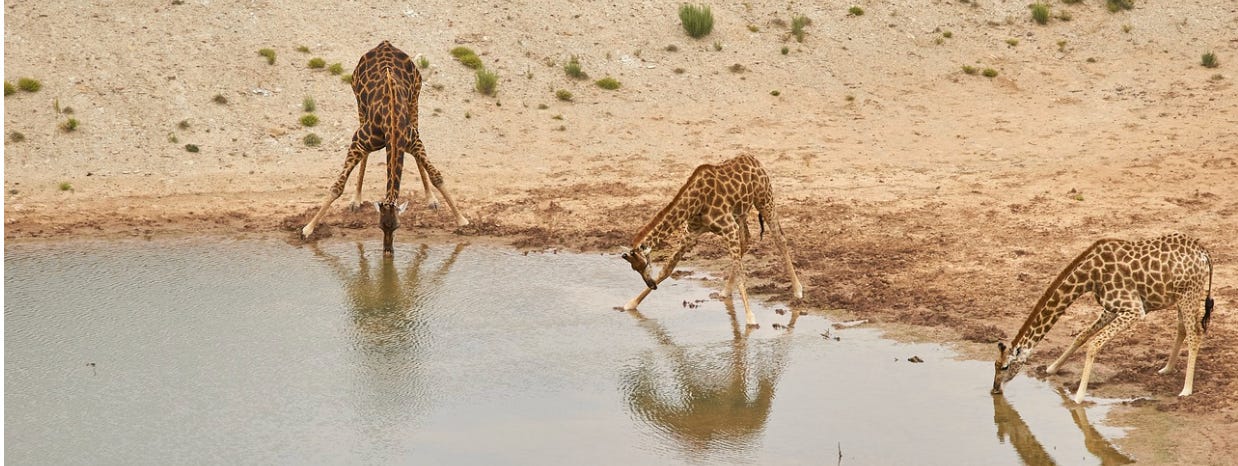
The Psalmist knew this ache. “As a deer pants for flowing streams, so pants my soul for you, O God” (Psalm 42:1). And again: “O God, you are my God; earnestly I seek you; my soul thirsts for you; my flesh faints for you, as in a dry and weary land where there is no water” (Psalm 63:1). This is not mild spiritual interest. This is a body failing without what it needs.
This is the mark of a true citizen of the kingdom: not someone who has checked all the religious boxes, but someone who cannot stop wanting what God wants. Someone whose deepest hunger is for the world to become what God always meant it to be.
Elie Wiesel, in his memoir Night, describes a scene from Buna, a labor camp attached to Auschwitz, that has never left readers who encounter it. Three prisoners were hanged: two adults and a young boy. The adults died quickly. But the boy, too light for his neck to break immediately, remained between life and death for more than half an hour. The prisoners were forced to watch.
Someone behind Wiesel asked, “For God’s sake, where is God now?” And Wiesel heard a voice within himself answer: “Where is He? Here He is. He is hanging here on this gallows.”
For Wiesel, it was the moment his faith broke open. Elsewhere in Night, he describes watching his own faith burn in the flames, and later calls himself the accuser and God the accused.
And yet that same voice — “He is hanging here on this gallows” — has been heard differently by others. Not as the death of God, but as His location. What if the God who seems absent is not standing safely at a distance, but has entered the suffering itself? The image of the boy on the gallows echoes the Christian image of the cross: not as an explanation for suffering, but as a proclamation that God has entered it.
The cross is God’s answer to the cry in the dark. Not an explanation, but a presence. Not a solution handed down from safety, but a body that hung, and suffered, and did not look away.
The hunger for righteousness is born in moments like that one. Not in comfortable places where everything is already working. In the places where a child hangs too long, where the prayer goes unanswered, where the verdict comes back wrong. Where the gap between what God promised and what we see with our own eyes becomes so wide that something has to give.
That something is not always faith. Sometimes it is everything we thought faith was supposed to look like. And what is left, stripped of its comfortable certainties, is something rawer and truer: the need that will not let go until it receives a blessing.
That is the hunger Jesus called blessed.
Jacob wrestled with God at the Jabbok River through the night, until his hip was wrenched from its socket, until dawn was breaking, until he refused to let go without a blessing. That is not a polite spiritual exercise. That is desperation. That is a man who had come to the end of everything he could manage on his own, and found that what he needed most could only be received, not taken.
The longing for righteousness looks like that. It does not give up when the answer is slow. It does not settle for less when the night is long. It holds on, even limping, because it knows what it is after.
And here is what the beatitude promises: those who hunger like that will be satisfied. Not someday vaguely. Satisfied: the word used for a shepherd who has led his flock to full pasture. Complete. Lacking nothing.
Jacob limped away from the Jabbok River. But he had his blessing.
The world offers an endless supply of things that almost satisfy. Comfort, achievement, distraction, pleasure, each one promising to fill the space, none of them reaching it. We keep eating and remain hungry. We keep drinking and remain thirsty. Because what we were made for is not any of these things.
We were made for the kingdom of God. For justice. For the world as God intends it. And the ache we feel, beneath the noise and the fullness and the busyness, is not a malfunction. It is a compass.
And those who hunger like this, who cannot stop wanting the kingdom to come, are the ones Jesus calls blessed. As He taught us to pray: “Your kingdom come, your will be done, on earth as it is in heaven” (Matthew 6:10). That prayer and this beatitude are the same longing, expressed two different ways.
Blessed are those who hunger and thirst for righteousness. They will be satisfied.
Not appeased. Not distracted. Satisfied.
Next: Blessed are the merciful.
Stay here for a moment. Maybe that someone holding on by a thread tonight is you, not because your faith is strong, but because something in you cannot stop wanting what only God can give. That wanting is not nothing. That is where He meets us. Stay with that.
Reflect
i. Wiesel stood in a place where the gap between what God promised and what he saw became unbearable. For him, it broke something open that never fully closed. Jacob stood in a similar place at the Jabbok River, and came out limping but blessed. Where do you find yourself right now, and what does your hunger tell you about where you stand with God?
ii. The beatitude does not say “blessed are those who have figured out what they want.” It says blessed are those who hunger. What is the hunger you have been managing instead of following?
A Prayer
Lord, I confess that I have made peace with things I should still be hungry for.
I have learned to manage the ache. To fill the space with things that almost work. To call the numbness contentment and move on. And somewhere in the managing, I lost the desperation that drives a man to wrestle through the night, that keeps a person searching when every answer has run dry, that refuses to let go until it receives a blessing.
I have been eating the wrong things for a long time. And calling it enough.
Make me hungrier than I am. Hungry for the world to be what You meant it to be. For justice that does not fail. For mercy that reaches the ones no one else sees.
I do not always know how to hold that hunger. Some days it feels like hope. Some days it feels like grief.
But I will not let go. Not without a blessing.
Your kingdom come. Your will be done, on earth as it is in heaven.
In the name of Jesus, who hungered and thirsted for righteousness and gave His life so that ours could be made right. Amen.
© 2026 Bible Portal. Free to share with attribution. Please keep the source and a link to Bible Portal intact. For other uses, contact us.