This is the fifth in a series of reflections on the Beatitudes. Read the previous reflection, “Blessed IV: The Hunger That Does Not Lie,” here.
Blessed are the merciful, for they shall receive mercy.— Matthew 5:7
Abraham’s servant had one task: find a wife for Isaac. He traveled far, and when he arrived at a well outside the city, he prayed a specific prayer. Let the woman who gives me water, and offers to water my camels too, be the one.
The servant was not looking for beauty. He was looking for someone who would give more than was asked.
Ten camels. Each one capable of drinking up to twenty gallons after a long journey. Rebekah did not know that when she arrived at the well. She saw a stranger, she saw a need, and she moved.
She gave him water. And then, without hesitation, she said: “I will draw water for your camels also, until they have finished drinking” (Genesis 24:19). She went back and forth to the well, again and again, until every camel had enough.
She did not know she was being watched. She did not know what was at stake. She was simply someone whose instinct, when she saw a need, was to meet it fully, generously, without calculating the cost.
That is mercy. Not the sentiment, but the action. Grace that does not stop at the feeling, but goes back to the well one more time, until the last camel has had enough.
The servant was looking for a bride for Isaac, the son of the promise. And what he found was a woman who would draw water for someone who could not draw it for himself.
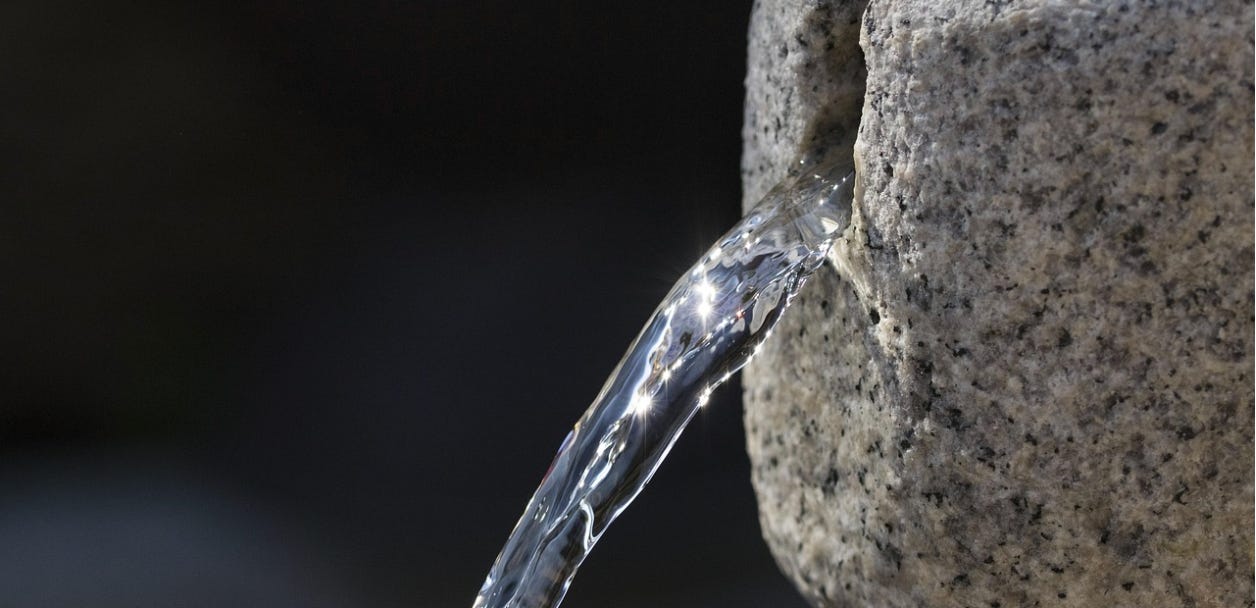
The well was not just a well. Water in Scripture is life. And the question the servant was really asking was this: who will give it freely, without being asked, to the thirsty ones in front of them? That is the question God is still asking.
Rebekah was chosen not despite her generosity but because of it. Her mercy was the evidence of something deeper: a heart shaped like God’s own. Hesed (חֶסֶד), the Hebrew word that runs through the Old Testament like a river, means steadfast love, covenant kindness, the mercy that does not stop when it has given enough. Rebekah had it. And it showed before she knew anyone was watching.
This is the woman who would become the mother of nations, the one through whom the covenant would continue. And God chose her not for her résumé, but for her character. Not for what she had achieved, but for how she treated a thirsty stranger and his ten thirsty camels.
And here is what makes the story complete. Who rode those camels to meet her bridegroom? Rebekah herself. The very camels she had watered carried her to Isaac. The mercy she poured out without knowing why returned to carry her to where she was destined to be.
Mercy has a way of doing that.
Jesus quoted Hosea twice in the Gospels, which is unusual enough to pay attention to. Both times, He said the same thing: “I desire mercy, and not sacrifice” (Matthew 9:13, 12:7, quoting Hosea 6:6).
This was a direct confrontation with the religious culture of His day. The temple system was built around sacrifice: elaborate rituals, precise offerings, detailed requirements. And the people had learned to be very good at the religious performance while remaining hard toward one another.
We have our own version of the temple system. We tithe, we attend, we serve on committees, we say the right things in the right rooms. And we can do all of it while remaining closed toward the person sitting next to us.
God, through Hosea, said: I never wanted the performance. I wanted the heart. And the heart I wanted was a merciful one.
We who have received grace without deserving it have no grounds for hardness toward anyone else. The one who has been forgiven much cannot afford to forgive little.
I once heard a story about a pastor who opened his door to strangers who came to share a faith he did not agree with. He could have turned them away. Instead, he invited them in and gave them juice. Just juice. They were so moved that they kept coming back. And through those conversations, he gently led them toward the truth.
He said afterward: if a cup of juice can open a door, why would you close it?
Jesus said something that cuts even deeper. When the King gathers the nations at the end of the age, He does not ask about doctrine or religious performance. He asks: when I was hungry, did you feed me? When I was thirsty, did you give me drink? When I was a stranger, did you welcome me?
Truly, I say to you, as you did it to one of the least of these my brothers, you did it to me.
— Matthew 25:40
The cup of juice was not given to a stranger. It was given to Jesus. The water drawn for the camels was not wasted effort. It was an act of mercy that echoed through generations.
The merciful shall receive mercy. This is not a transaction: give mercy, get mercy in return. It is something deeper: the person who lives with open hands finds that the world opens toward them.
And there is a warning in the reverse. James said it plainly: “Judgment is without mercy to one who has shown no mercy” (James 2:13). The hard heart does not only damage others. It hardens the one who carries it.
We know what it is to be thirsty. And we know what it is to be given water we did not draw ourselves. Jesus once sat at a well and offered a woman living water: “Whoever drinks of the water that I will give him will never be thirsty again” (John 4:14). That is the mercy we have been given. Not just kindness. Living water. The kind that does not run out.
Which means we have something to give.
Is there someone in our lives toward whom we have been hard? Someone we have withheld the cup from, not because they do not need it, but because we have decided they do not deserve it?
Rebekah did not wait to be asked twice. She did not calculate the cost. She saw the camels, and she went back to the well.
That is the life Jesus called blessed.
Next: Blessed are the pure in heart.
© 2026 Bible Portal. Free to share with attribution. Please keep the source and a link to Bible Portal intact. For other uses, contact us.