Gut issues and food intolerances are incredibly common in chronic illness, and especially for people with MCAS. For example, Histamine Intolerance is one we see in the majority of our clients. It simply means you aren’t able to break down as much histamine as you have in your body. And that excess of histamine leads to symptoms.
Intolerances to oxalates, lectins, and FODMAPS are also fairly common. Some people struggle with sulfur. Others with salicylates. Or other compounds in foods.
And mast cells can even react to just plain old food particles that make it into your gut without being properly broken down.
While there are a LOT of potential contributors, and it can get complex quickly, here’s what you need to know in a nutshell...
You might hear people use the words “allergy” and “intolerance” like they are the same thing. But even though symptoms can be similar, allergies and intolerances are different.
A true food allergy is where your body creates immune markers that trigger an attack every time you eat that specific food. And an intolerance is typically about how your body breaks down or processes food. Or rather, an inability to do it very well.
Unlike true food allergies that require immune therapy, there’s a lot you can do to help your body out with intolerances.
We want to make it clear that you should work with your practitioner to decide what is right for you.
With the right supports, many people see big improvements in symptoms and reactions from food intolerances. Sometimes, over time, they may even go away completely.
The process starts with supporting your digestion while you also address the deeper root causes behind your health issues. Here are some basics to get you started:
**Choose nutrient-rich foods.**We know in this community food can be a real struggle, so just do the best you can. And if you need some help, we have many free resources on our website, starting withour low histamine foods list.**Engage your senses.**Smelling and seeing your food triggers enzyme release and prepares your body for digestion. Starting with a few bitter herbs, like flat leaf parsley, can also help.**Chew slowly and thoroughly.**Breaking food down well (or blending it) means your body doesn’t have to work as hard. And you produce less histamine during digestion, too!**Give your digestive system extra support.**Most people with chronic health issues or gut issues can benefit from additional digestive support. And so can anyone over the age of 60.
Keep reading to learn how supporting your digestion can help you tolerate more foods and experience fewer flares over time.
Here are some important things to consider when you’re thinking about food intolerances.
**Stomach Acid **– many people don’t have enough. And a lack of acid means less food breakdown, less nutrient availability, and more pathogens (bad guys) getting through. That translates into worse gut health overall. HCL Guard+ is our preferred stomach acid support. If you struggle with ginger or licorice (both high salicylate) you may want to swap it for just HCL (hydrochloric acid) and pepsin.
**Did you know?**Reflux can be a sign of low stomach acid? Feeling "sluggish” or "overly full” after you eat, like your food just sits there, are other indicators your stomach acid isn’t meeting the levels you need to properly break down your meals.
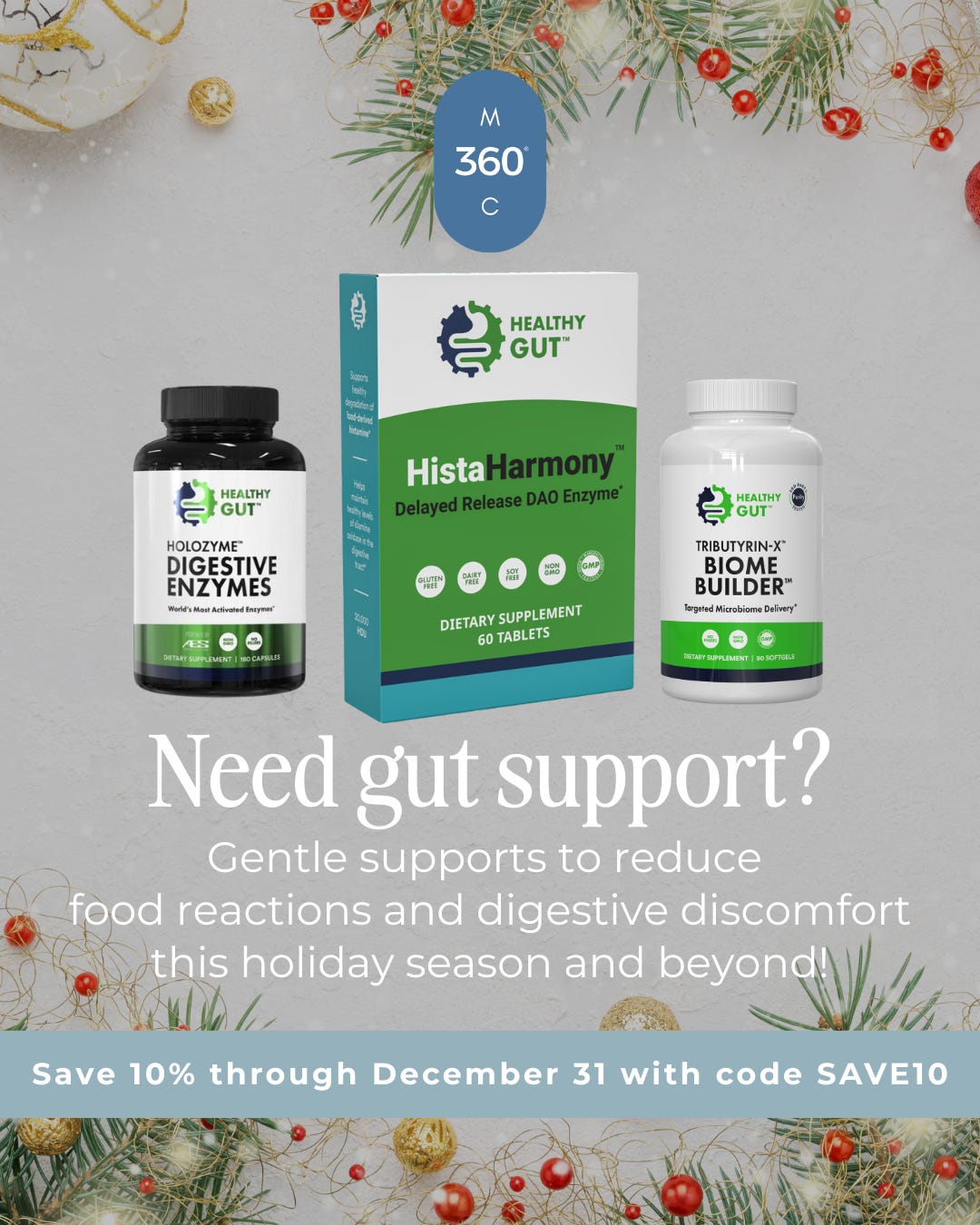
**Enzymes **– you can think of them as handy scissors that snip food into nutrient pieces your body can actually absorb and use! If you have gut issues, food intolerances, or are over the age of 60, extra enzyme support may be especially beneficial. HoloZyme is our favorite digestive enzyme complex because it contains all the co-factors needed to actually activate the enzymes, so they actually work. And it’s formulated with sensitive people in mind.
**Did you know?**Enzymes can help reduce mast cell reactions? Breaking down food into easy to use and recognizable particles means fewer things get through your gut wall that your immune system sees as “invaders”.
**Short Chain Fatty Acids (SCFA) **– these helpful compounds are produced naturally in your colon (large intestine). And one of the most important is butyrate. Butyrate fuels gut repair, supports a healthy microbiome (gut bugs), and helps calm mast cells. We prefer TributyrinX because it’s a highly effective form that reaches your small intestine where you need it most.
**Did you know?**Studies link butyrate to better health overall in everything from inflammation to improving insulin sensitivity to brain health to immune function.
Support can help your body do all those critical things better → leading to better gut health and less reactivity → which gradually expands foods for more variety in your diet → which supports better healing
Over time, with support and working on the root causes, we often see food intolerances go away entirely!
You can read this post on Leaky Gut and sensitivities for more information.
And right now, you can stock up and save 10% on all Healthy Gut products in our MC360 shop with code SAVE10 through December 31! (code is 1-time use)
If you are already supporting your health with any of these supplements, boosting them over the holidays can help reduce flares and keep you healthier.
Together in healing,**The Mast Cell 360 Team **
PS Did you catch our Live with gut guru Steven Wright? It’s always a treat! Learn more from our clinic team and Steven about supporting gut health to reduce reactions, where to start, tips for finding your best dose, and how to support yourself through the holidays. You can watch the full replay below!
It’s important you know that Mast Cell 360 resources are for informational and educational purposes. Mast Cell 360 does not diagnose, treat, cure, or prescribe for any disease or medical condition. Recommendations are based on the opinion of Mast Cell 360 and are not meant to replace the care of a medical practitioner. Always consult your physician before changing your healthcare regimen. Supplements/products mentioned are not designed to treat, cure, or prevent any disease or medical condition. And these statements have not been evaluated by the Food and Drug Administration.Some links may be affiliate links, which means we may make a very small commission if you purchase through the link. It never costs you any more to purchase through the links, and we try to find the best deals we can. We only recommend products that we love and use personally or use in our practice. Any commissions help support the newsletter, website, and ongoing research so we can continue to offer you free tips, recipes, and info. Thank you for your support!