BERLIN—On July 6, a missile broke the surface of the Pacific and rose out of a Chinese nuclear submarine like a preview of the next war.
Beijing called it routine training. Its neighbors, Japan, Australia, the United States, among others, saw the subtext: China is building a sea-based nuclear deterrent designed to make intervention in a Pacific war feel unthinkably expensive.
This was a message fired from the deep. The underlying strategy is much darker and more sophisticated.
We publish this newsletter every day at 9:05am NYC time / 4:05pm Kyiv.Your subscription fuels our work.
China is not merely modernizing. It is studying its closest ally’s war to build a blueprint for its own. Russia’s invasion of Ukraine has become a research program for Beijing. Moscow supplies casualties, chaos and battlefield data. China supplies electronics, satellites, artificial intelligence, factories and capital.
A new investigation by The Insider strips away what remained of China’s claimed neutrality. Documents from Russian-Chinese military forums, including a secret meeting in Guangzhou and a signed protocol from Moscow, show cooperation across space weapons, satellite-killing technology, air defense, drone swarms, armor and combat aviation. The picture is clear: Far from being a neutral actor of peace, China is building a joint imperial research-and-development alliance. The only difference between the two partners: Beijing’s political class has better manners than Moscow’s, and China has better factories than Russia. That makes the partnership more dangerous.
By late 2023, Starlink had become one of the arteries keeping Ukraine’s war effort alive. Medics, artillery crews, drone pilots, infantry soldiers - you name them, you can be sure they rely on it. At Guangzhou, Chinese engineers presented a plan for breaking such a network: jamming, cyberattacks, electromagnetic interference and cheap methods for knocking satellites out of the sky.
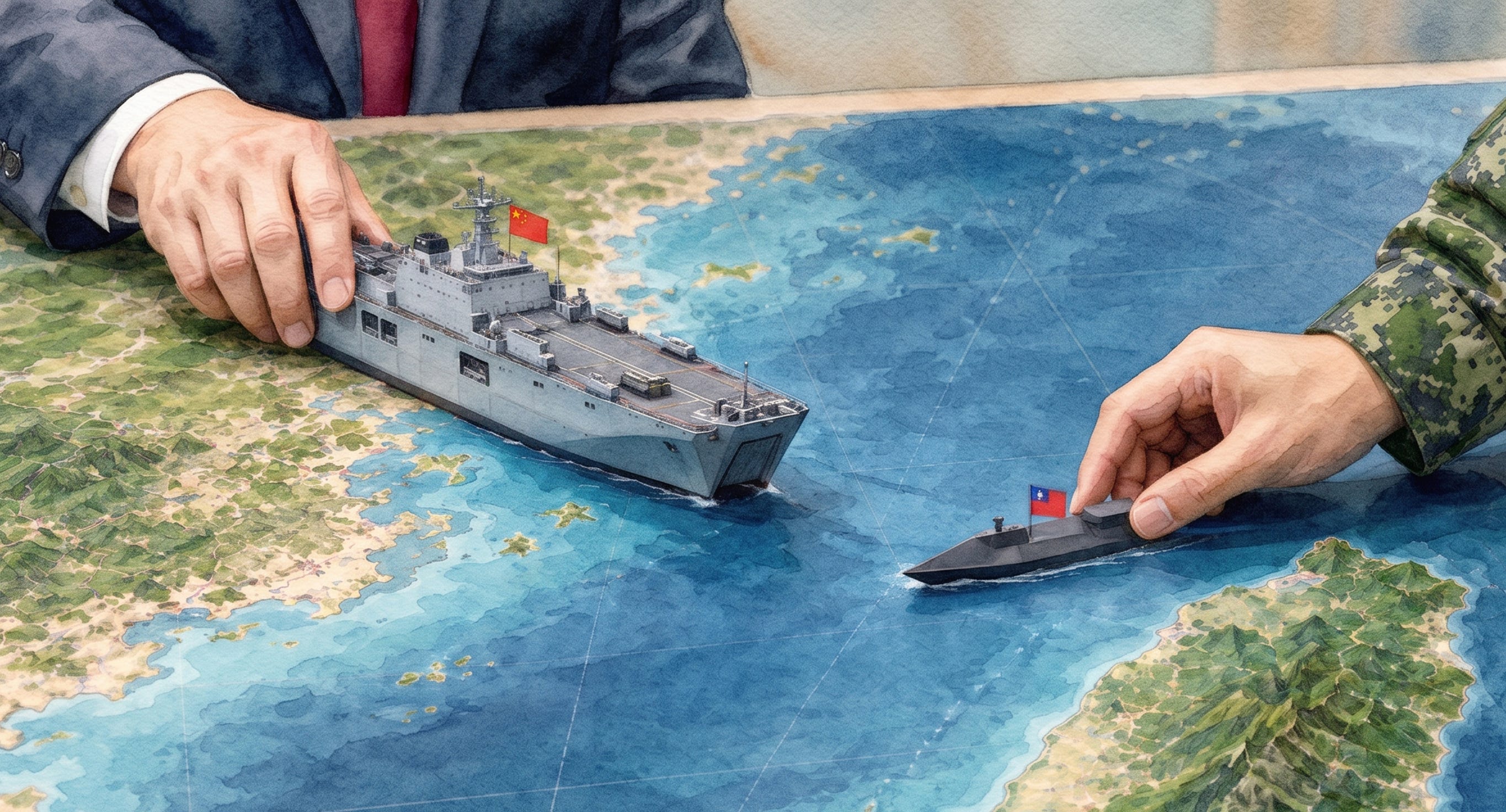
The real target, for China at least, is not Starlink operating in Ukraine. It is Taiwan, and Ukraine is the bycatch China happily throws to its Russian friends.
A country that remains connected under attack adapts. Russia discovered this the hard way.
A Chinese assault would not begin with landing craft appearing neatly on the horizon. It would begin with darkness. Satellites disrupted. Undersea cables cut. Radar stations struck. Airbases cratered. Government networks flooded with false information while Chinese propaganda insists resistance is collapsing.
Beijing would not need Taiwan to surrender immediately. It would need the island to hesitate, fracture, lose signal and lose the first forty-eight hours.
Ukraine has shown why this is harder than it looks. A country that remains connected under attack adapts. Russia discovered this the hard way. Its invasion depended on the Ukrainian state collapsing under the first shock. Instead, the government remained in Kyiv, the army remained in the field and the country became more organized. China is now trying to understand how to avoid the same fate that awaited Russia.