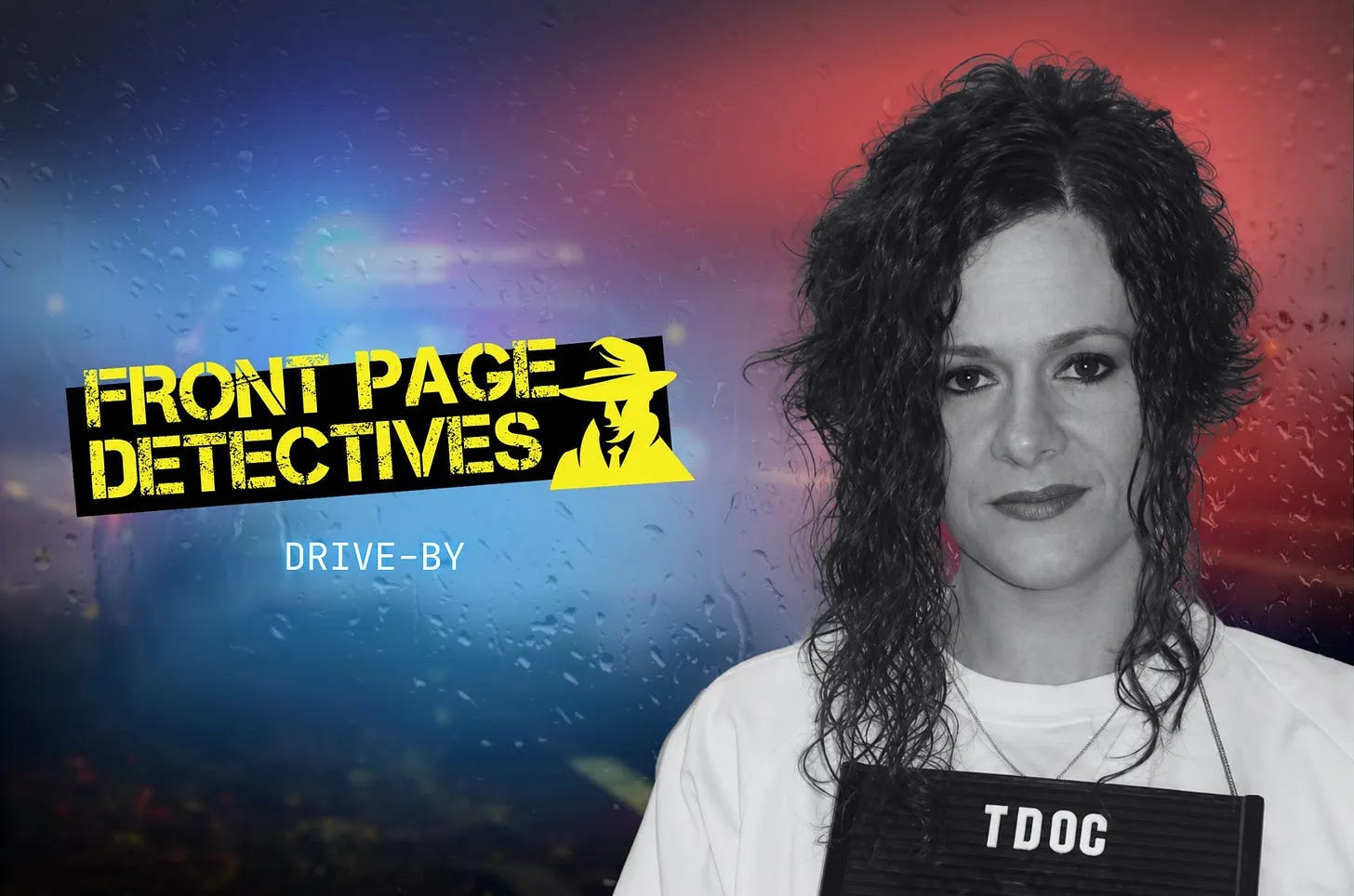
You don’t have time for three hours of doomscrolling, twenty half-baked takes, and some guy online screaming READ THE THREAD. We are Front Page Detectives, this is your morning Drive-By, and here is what is real.
Christa Pike survived two doses of lethal injection drugs and weeks of hospitalization, only to return to prison conditions her attorneys say violate a federal settlement.
Tennessee tried to execute Christa Pike on September 30. Nearly two months later, the state’s only female death row prisoner is still alive and fighting another legal battle over her treatment behind bars. Federal Judge Waverly Crenshaw Jr. has scheduled a December 1 hearing in Nashville after Pike’s attorneys accused prison officials of violating a 2024 settlement that ended nearly three decades of solitary confinement.
According to court filings, executioners repeatedly struggled to establish an intravenous line before administering two doses of pentobarbital. Pike survived the procedure but suffered serious injuries, spending several days on a ventilator and more than a week in intensive care before leaving the hospital October 9. Her attorneys say she continues to experience debilitating pain, nerve damage and wounds requiring medical treatment.
Since returning to Nashville’s Debra K. Johnson Rehabilitation Center, Pike has been housed in the prison infirmary, where her attorneys allege she has been denied meaningful contact with other prisoners, work opportunities and normal recreational activities. Pike described having to clean a roach-infested shower despite her injuries and said restrictions have also affected her access to religious visits and personal belongings. Her lawyers argue that these conditions violate a settlement guaranteeing supervised social interaction after years of isolation.
Tennessee disputes the allegations, maintaining that Pike’s current restrictions reflect medical needs and security requirements rather than punishment. Her attorneys are also seeking to preserve evidence from the failed execution, including intravenous equipment, surveillance footage and remaining drugs, while the state resists testing that could identify its confidential pharmaceutical supplier. Pike remains under a death sentence for the brutal 1995 murder of 19-year-old Colleen Slemmer, and the December hearing will address whether prison officials have violated the agreement governing her confinement.
Hot Take: Tennessee couldn’t execute Christa Pike properly, so it sent her back to conditions a federal settlement was supposed to end. She committed a monstrous murder, but the state doesn’t get to improvise additional punishments because its execution team botched the job. Apparently, incompetence is the one capital offense Tennessee refuses to punish.
Read more
The sudden death of attorney Michael Sanft has complicated Duane “Keffe D” Davis’ legal fight as testimony from his murder trial raises fresh questions about Diddy.
Duane “Keffe D” Davis is facing an uncertain appeal after his defense attorney was found dead just days after filing paperwork challenging his conviction for the 1996 murder of Tupac Shakur. Michael Sanft, 55, was discovered at his Las Vegas Country Club home November 6 after a woman reported that he had been missing for several days. Authorities have not publicly established his cause or manner of death.
Davis, 64, was sentenced October 13 to 40 years to life after a jury convicted him of orchestrating the drive-by shooting that killed Shakur on the Las Vegas Strip. Sanft had argued that his client’s repeated public statements about the murder amounted to exaggeration rather than proof of criminal responsibility, emphasizing the absence of physical evidence connecting Davis to the shooting. During sentencing, Judge Carli Kierny rejected those arguments, telling Davis that he had taken a man from his family.
The trial also exposed Davis’ lengthy relationship with federal investigators, including testimony that he became an FBI informant in 1998 while seeking protection from drug charges. Recorded interviews presented allegations that Sean “Diddy” Combs offered money to have Shakur and Death Row Records executive Suge Knight killed, claims Combs has denied. Davis was also discussed as a suspect in the still-unsolved 1997 murder of Christopher Wallace, better known as the Notorious B.I.G., although he has never been charged in that killing.
Hot Take: Keffe D spent years talking about Tupac’s murder until a jury finally took him seriously. His lawyer then died days after launching an appeal, leaving another grim twist in a case already drowning in them. Thirty years of gangland secrets, federal informants and Diddy allegations, and the only thing anyone seems capable of delivering on time is another corpse.
Read More
A jury consultant says the notorious triple child murder case could attract prospective jurors seeking publicity while frightening others away from serving.
Selecting an impartial jury for Lindsay Clancy’s second murder trial could prove even more difficult than the first, according to jury consultant Susan Constantine. Speaking with NewsNation’s Brian Entin, Constantine warned that the extraordinary publicity surrounding the deaths of Clancy’s three children may encourage some prospective jurors to conceal their opinions to secure a place on the panel. The retrial is scheduled to begin March 29 after prosecutors confirmed they would again pursue first-degree murder charges.
Constantine said attorneys would need to examine potential jurors’ beliefs and attitudes rather than rely on conventional demographic assessments. She raised concerns about so-called stealth jurors who might deliberately conceal prejudices, as well as people motivated by the prospect of interviews, publicity or financial opportunities after the proceedings. Conversely, she suggested that the intense scrutiny directed at jurors from the first trial could discourage otherwise suitable candidates from serving.
Clancy’s first trial ended in September when jurors deadlocked 11-1 in favor of finding her not criminally responsible because of mental illness. She is accused of strangling Cora, 5, Dawson, 3, and eight-month-old Callan at the family’s Duxbury home in January 2023, while her defense argues that postpartum psychosis prevented her from understanding the wrongfulness of her actions. NewsNation contributor Ashleigh Banfield suggested the defense could benefit from having already observed the prosecution’s strategy during the first trial, although the outcome of a second jury remains impossible to predict.
Hot Take: Three children are dead, and now the worry is that fame-hungry idiots might treat their mother’s murder trial like an audition for reality television. The first jury couldn’t reach a verdict, and the second may have to be screened for aspiring influencers. Somewhere along the way, the American justice system became a circus with better lawyers and worse clowns.
Read more
A judge has ordered the release of previously sealed records concerning the removal of juror Myra Crosby as Alex Murdaugh prepares for his second murder trial.
The former juror nicknamed the Egg Lady has won a legal battle to release sealed court records surrounding her controversial removal from Alex Murdaugh’s 2023 murder trial. Judge Debra McCaslin ordered transcripts and private judicial interviews involving Myra Crosby to be made public by November 30, with identifying information about other jurors redacted. Crosby was dismissed shortly before deliberations began after allegations that she had discussed the case outside the courtroom.
Crosby’s attorney Joe McCulloch maintains that his client did nothing wrong and believes the previously confidential proceedings could expose misleading claims about her conduct. He is also seeking investigative records concerning former Colleton County Clerk of Court Becky Hill, whose improper communications with jurors led the South Carolina Supreme Court to overturn Murdaugh’s murder convictions in May. Crosby acquired her unusual nickname after leaving a dozen eggs, brought to her by another juror, among her belongings in the jury room.
McCulloch has questioned why investigators did not pursue criminal charges against Hill despite findings serious enough to overturn two murder convictions. Meanwhile, Murdaugh’s attorneys are awaiting a separate ruling on their request to dismiss the original murder indictments over allegedly false grand jury testimony about forensic evidence. McCaslin has said the retrial will proceed April 5 in Sumter County regardless of her decision, with prosecutors potentially required to obtain fresh indictments if the defense succeeds.
Hot Take: A juror gets thrown off a murder trial, the court clerk gets caught interfering with the jury, and the convictions get overturned. Yet somehow Egg Lady is still fighting to clear her name. South Carolina’s legal establishment has made a spectacular omelet of this case, and nobody seems particularly keen to explain who cracked the shells.
Read more
An international investigation has uncovered thousands of transactions flagged by the German banking giant, raising new questions about its lucrative relationship with Jeffrey Epstein.
Deutsche Bank identified approximately $582 million in suspicious transactions linked to Jeffrey Epstein, according to leaked internal documents examined by an international consortium of more than 200 journalists. The investigation, known as Inside Deutsche Bank, analyzed roughly 15 million files, including financial records, compliance reports and internal communications. The findings more than double the $250 million in suspicious Epstein-related wire transfers previously identified by Senator Ron Wyden’s investigators.
According to the Financial Times, Deutsche Bank filed 21 suspicious activity reports with American authorities in 2019, covering approximately 3,200 transactions associated with Epstein and related businesses. The flagged activity included payments to women, transfers involving shell companies, suspected misuse of charitable funds and payments from wealthy associates including Leon Black and Glenn Dubin. The reports identify transactions warranting scrutiny, not proof that every payment involved criminal conduct.
Epstein became a Deutsche Bank client in 2013, five years after his conviction for soliciting sex from a minor, despite internal warnings about the risks of accepting his business. The bank continued its relationship until announcing its termination in December 2018, although two remaining accounts were reportedly not closed until three days after Epstein’s July 2019 arrest. Internal investigators later identified at least 112 high-risk transactions and examined possible connections to Epstein’s New Mexico ranch, his charity Gratitude America and a trust naming Ghislaine Maxwell as a beneficiary. Deutsche Bank said the matters dated back many years and emphasized reforms to its compliance systems.
Hot Take: Deutsche Bank spotted $582 million in suspicious Epstein transactions, yet somehow kept the convicted sex offender as a customer for years. The bank was making around a million dollars annually from the relationship, which apparently bought an astonishing tolerance for red flags. In high finance, the customer is always right, especially when the customer is a wealthy predator.