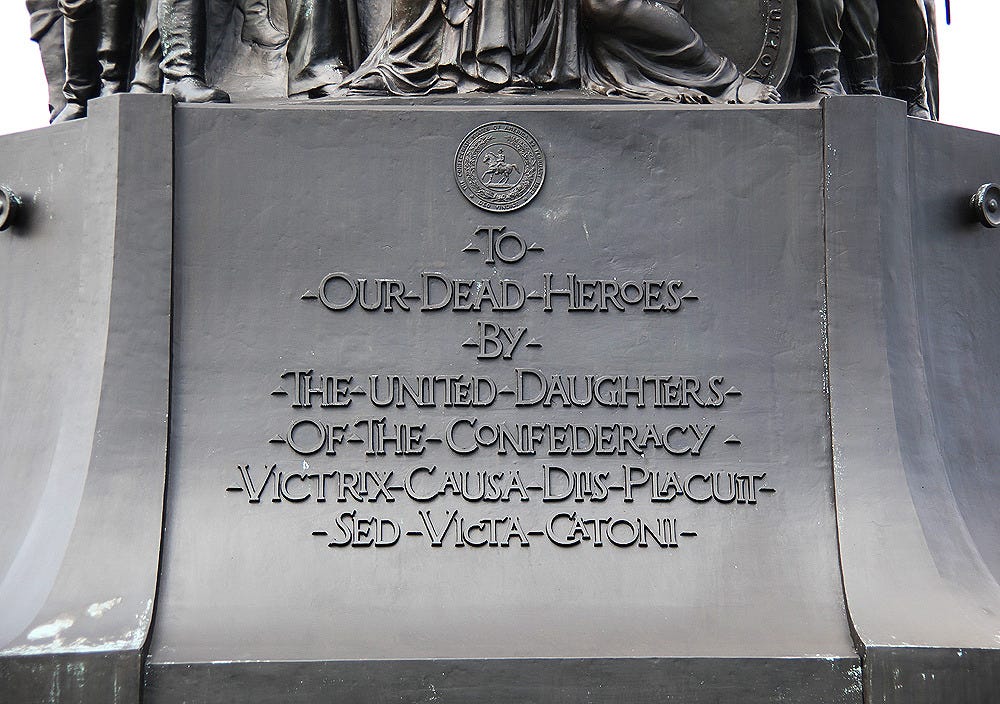
A couple weeks ago I reported on the U.S. Army’s plan to reinstall the Confederate monument in Arlington National Cemetery, which was removed back in December 2023. The proposal included changing the name of the monument to honor its sculptor, Moses Ezekiel, as well plans to erect a number of wayside exhibits that will provide historical context for visitors.
Since then the U.S. Commission of Fine Arts has had a chance to weigh in on the proposal. It should be pointed out that the commission now functions as little more than a rubber stamp rather than ensuring that our public landscapes are managed in the interest of all Americans.
In October 2025, the White House took the unprecedented step of firing all six Biden-appointed holdovers on the panel. This cleared the way to stack the commission entirely with Trump appointees and loyalists. Critics highlight how quickly major, highly controversial projects have moved through the review process, while others have noted that several new appointees lack extensive backgrounds in fine arts, architecture, or landscape design—fields traditionally held by commissioners.
While the commission strongly approves of the restoration of the Confederate monument in Arlington it has issued certain requests or recommendations. This includes “recommending that the original name—the Confederate Memorial—be used in all references to the reinstalled artwork.” In addition, the commission has “requested the submission of all signage and narrative text previously displayed at the memorial, as well as the number, placement, and content of any new interpretive signs that will be installed at the site.”
There is no reason to think that the commission has any interest in ensuring that the monument is properly contextualized nor is there any evidence that the members themselves are even qualified to make such an evaluation. They have already agreed that the monument’s restoration reflects a spirit of “reconciliation” when it was dedicated in 1914.
As I have said many times before, while the language of reconciliation could certainly be found in the broader culture at the time and in the 1914 dedication specifically, the monument itself is an unapologetic celebration of the Confederacy and the Lost Cause.
There is nothing reconciliationist about it, from the Latin inscription: “The victorious cause pleased the gods, but the lost cause pleased Cato” at its base to the images of “faithful slaves” that serve as a reminder that African Americans never wanted to be free.
I don’t see any future lawsuits standing in the way of this project moving forward. The U.S Army appears to be committed to, once again, honoring the men and a cause that represents the gravest threat to democracy and freedom that this nation has ever faced.
This monument will cast a long shadow over the men and women buried along the slopes of Arlington National Cemetery, who have served and given their lives defending this nation.