Human Evolution: Role of Stress & Chaos From Technological Change
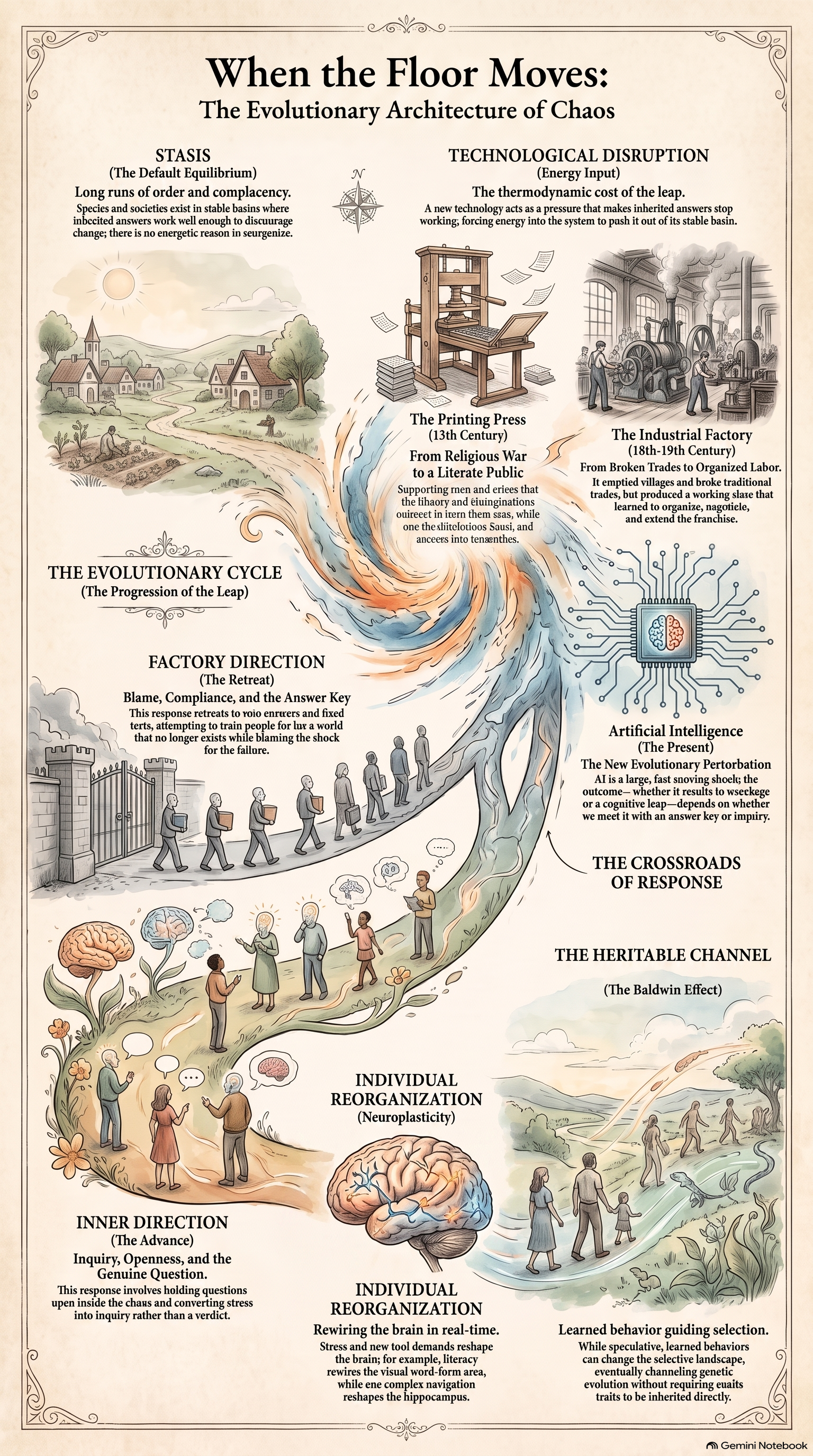
When humans create a major new technology it causes stress, chaos, and sociopolitical upheaval - this is borne out by human history.
A less recognized effect is that new technologies also seem to energize large leaps in human cultural evolution, which in turn affects biological evolution.
In order to cause evolutionary change a factor must cause enough of a challenge to overcome evolutionary stasis - the energy from stress and chaos driving change.
Human history is punctuated by emergence of new technologies which always caused a threat to the cultural status quo and which brought stress & chaos to societies.
Looking back we can see this perfectly in hindsight - periods where technology abruptly changed and where a period of uncertainty sparked fear and anxiety & social chaos.
Although it is less well recognized, it is entirely plausible that human cultural evolution happens more rapidly during these times - and although it takes longer, possibly biological evolution as well.
Now that we have scientific evidence of neuroplasticity, where changes in thinking and behavior drive the biological character of the human brain, we have a hint that technological change could well help drive long term biological evolution.
Perhaps most striking is that although our history is punctuated by these periods of rapid technological change we are no better prepared to deal with them.
My proposal is that technological change in humans marks periods of both cultural and biological evolutionary change.
Possibly seeing human evolution as marked by long periods of order and complacency, interrupted by shorter periods of technological progress which cause large leaps in cognitive & cultural evolution.
When we overlay a pattern of successive scientific advances over this pattern of cognitive and cultural evolution a significant evolutionary map appears - where human cultural evolution appears to be at least associated with technological change
Because human evolution goes on beneath the surface, and is less likely to be recognized by us as the evolving species - biological evolution will have to remain speculative - only recognized in some future science.