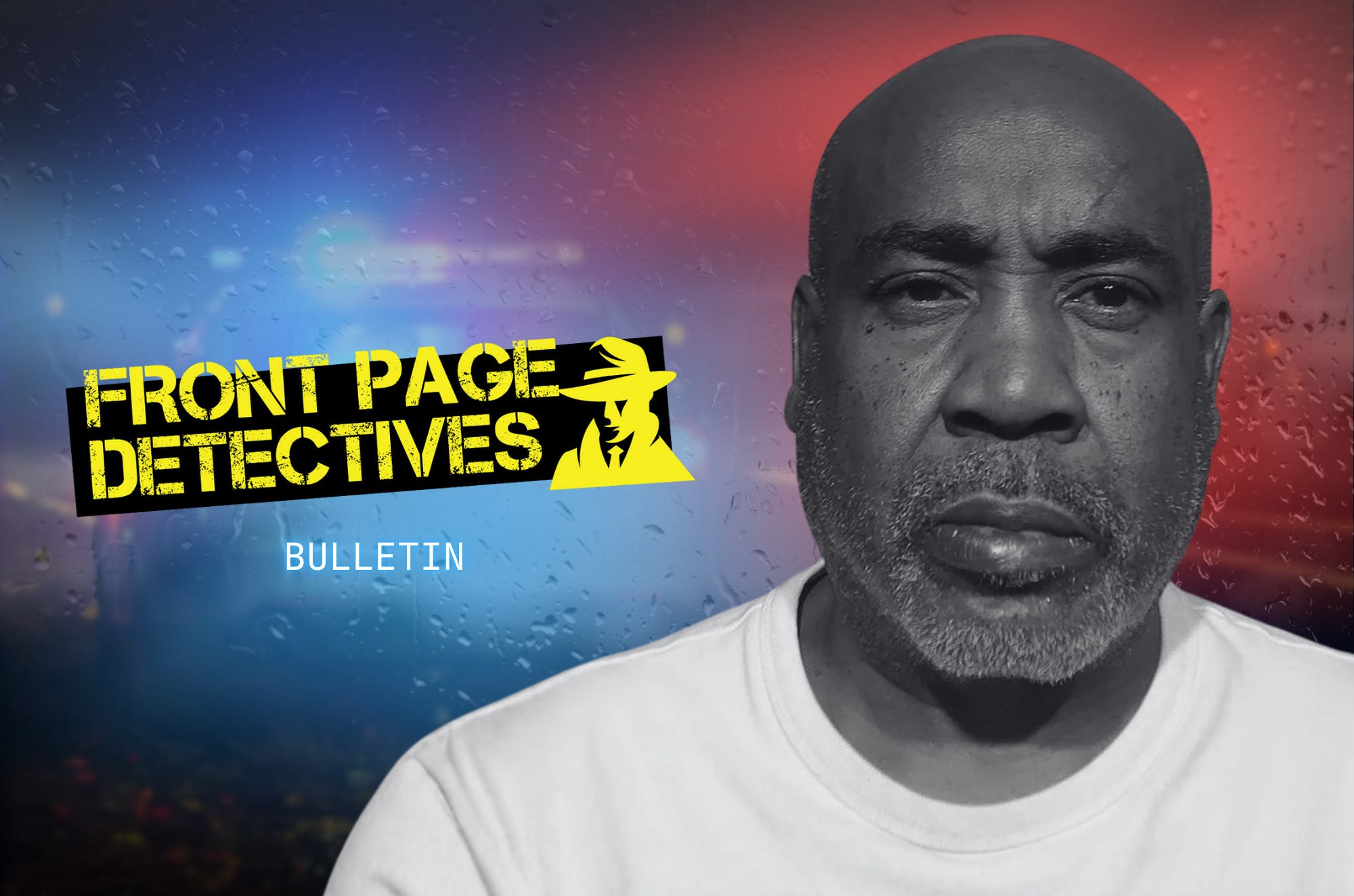
Duane “Keffe D” Davis once claimed Sean “Diddy” Combs offered $1 million to have Tupac Shakur and Suge Knight killed. Now convicted of Tupac’s murder and facing the possibility of dying behind bars, the notorious gang figure may have to decide whether the information he claims to possess is his last bargaining chip.
Davis spent decades talking about the murder of Tupac Shakur, and those words ultimately helped put him behind bars. Now they could become the only currency he has left.
A Las Vegas jury convicted Davis, 63, of first-degree murder with a deadly weapon Monday after deliberating for less than three hours. Jurors accepted prosecutors’ argument that the former South Side Compton Crips leader orchestrated the September 1996 drive-by attack that killed Shakur.
Davis was not accused of firing the fatal shots. Prosecutors instead argued that he obtained the gun, supplied it to the men inside the white Cadillac and helped launch the retaliatory hunt for Shakur and Death Row Records boss Marion “Suge” Knight.
Davis immediately said he intends to appeal, but with sentencing scheduled for October 13 and the possibility of life without parole hanging over him, another question now emerges.
Could Keffe D start talking again, this time officially, and could Sean “Diddy” Combs give prosecutors a reason to listen?
Sean Combs has never been charged in connection with Tupac ’s murder and has consistently denied having anything to do with it. Nothing presented at Davis’ trial established that Combs ordered, financed or participated in the killing. His name nevertheless entered the courtroom because of Davis himself. During the protected 2008 law-enforcement interview that became important evidence at trial, Davis alleged that Combs had previously offered $1 million for Shakur and Knight to be killed.
Davis claimed the alleged payment was supposed to pass through Eric “Zip” Martin, an associate who Davis said never ultimately handed the money over.
Davis has hardly been consistent about the allegation. Shortly before trial, he was directly asked whether he believed Combs had anything to do with Shakur’s murder.
“No, ma’am. I don’t think so at all,” Davis replied, a dramatic retreat from the claims he had made years earlier.
That contradiction would make Davis an extremely vulnerable witness in any hypothetical prosecution involving Combs. A defense lawyer could point to years of changing stories, public interviews, a memoir, financial incentives and Davis’ own recent insistence that many of his previous admissions were fabricated.
Davis would not necessarily need to become a convincing star witness, however. He could instead become a roadmap for investigators.
If Davis simply repeats that Diddy offered $1 million, prosecutors already know the allegation. It has been public for years. What could have value now is information investigators can confirm independently, such as witnesses who heard relevant conversations, financial transactions, previously unknown meetings, the alleged route taken by any money, records involving Martin or other details capable of producing proof separate from Davis’ word.
The trial repeatedly showed how deeply the culture against cooperating with police survives among people connected to the gang world surrounding Shakur’s murder.
James “Mob James” McDonald, a former Mob Piru member and Death Row associate, openly acknowledged his reluctance to testify. Although subpoenaed to court, he said he knew “everybody that was there” but resisted naming people and later explained, “I didn’t want to send a Black man to prison.”
Suge Knight has similarly spent decades refusing to provide authorities with the account investigators might want from the man who was sitting beside Shakur when the bullets struck their BMW.
Keffe D, however, has an obvious problem if he wants to portray himself as an unwavering follower of the street code. He has already cooperated.
The 2008 interview took place while Davis was facing serious legal jeopardy in an unrelated federal drug investigation. Under a proffer arrangement, investigators told him his statements in that protected setting could not be used against him, and Davis proceeded to give them an extraordinarily detailed account of Shakur’s killing. He identified the occupants of the Cadillac, described passing the gun toward the back seat and said his nephew Orlando “Baby Lane” Anderson opened fire. According to Davis’ recorded account played at trial, he even said he would have fired himself had Shakur’s BMW been positioned on his side of the Cadillac.
History has therefore already provided an answer to one version of the question. When Keffe D faced the possibility of spending decades in prison and cooperation offered him protection, he talked.
The conventional plea-bargaining stage is over. Davis has been convicted by a jury, so prosecutors cannot simply offer to dismiss the murder charge in exchange for information.
Sentencing, however, has not yet taken place. Nevada law provides several possible punishments for first-degree murder, including life without parole, life with parole eligibility after a minimum of 20 years, or a 50-year sentence with parole eligibility after 20 years. The precise punishment Davis receives will be determined by the court under the applicable sentencing rules. That gives his attorneys an obvious reason to explore anything that could strengthen an argument for leniency.
If Davis possessed genuinely useful information about another living person involved in Shakur’s murder, prosecutors could take that cooperation into account when presenting their sentencing position. There would be no guarantee of a particular result, and the judge would retain authority over the sentence, but for a 63-year-old man the difference between parole eligibility and dying in prison could hardly be greater.
There is also a major complication. Davis has announced plans to appeal, while his trial defense was built around the claim that his previous admissions were exaggerated, untrustworthy or outright lies.
Sitting down with prosecutors now and confirming that he really was inside the Cadillac could severely damage any attempt to continue presenting himself as wrongly convicted. His lawyers therefore face a fundamental strategic choice. They can continue fighting the verdict, or they could eventually decide that cooperation gives Davis a better chance of seeing freedom again.
If prosecutors asked what information he could offer, one name would inevitably dominate the conversation.
Sean Combs is currently serving a 50-month federal prison sentence after being convicted in 2025 of two counts involving transportation to engage in prostitution. He was acquitted of the far more serious racketeering conspiracy and sex-trafficking charges. Federal prosecutors sought 11 years and three months behind bars, while the judge ultimately imposed four years and two months.
Those federal prosecutors are separate from the Clark County authorities who prosecuted Davis in Nevada, so the two cases cannot simply be folded into a single bargaining process. An independently provable allegation that someone commissioned Shakur’s murder would be an entirely different matter from Combs’ existing conviction.
Davis’ old accusation by itself would almost certainly not be enough. Combs has denied it, Davis has contradicted himself repeatedly, and authorities have never charged Combs or publicly identified him as a suspect in Shakur’s killing. The equation changes only if Keffe D knows something that can be verified without asking anyone to trust Keffe D. That could mean identifying another surviving witness or explaining where the alleged money went. It could involve directing investigators toward records they never previously obtained, explaining exactly how the murder weapon or Cadillac was acquired, describing what happened after the shooting or identifying conversations that took place after Shakur died.
The three other men prosecutors placed inside the Cadillac with Davis are dead. Eric “Zip” Martin is also dead. Keffe D is the survivor, leaving him in a strange position after spending years talking himself into prison. The man whose inability to stop talking helped prosecutors finally secure a conviction for Tupac Shakur’s murder may now decide that talking is also his best chance of someday getting out.
The street code proved powerful throughout the trial, but Davis now faces a punishment that could keep him behind bars until he dies. Whether that code remains strong enough to compete with life without parole may be the next great question in the Tupac Shakur case.
Read more