An old art-history term, connoisseurship, is rarely discussed because of its colonial connotations. Underneath the word, though, are concepts that still matter in today’s digital ecosystem. A connoisseur has rarefied knowledge, earned through careful looking, thorough examination of scores of similar objects, and a specialized eye for the best. This historical term holds a few useful kernels that can help you become a discerning viewer.
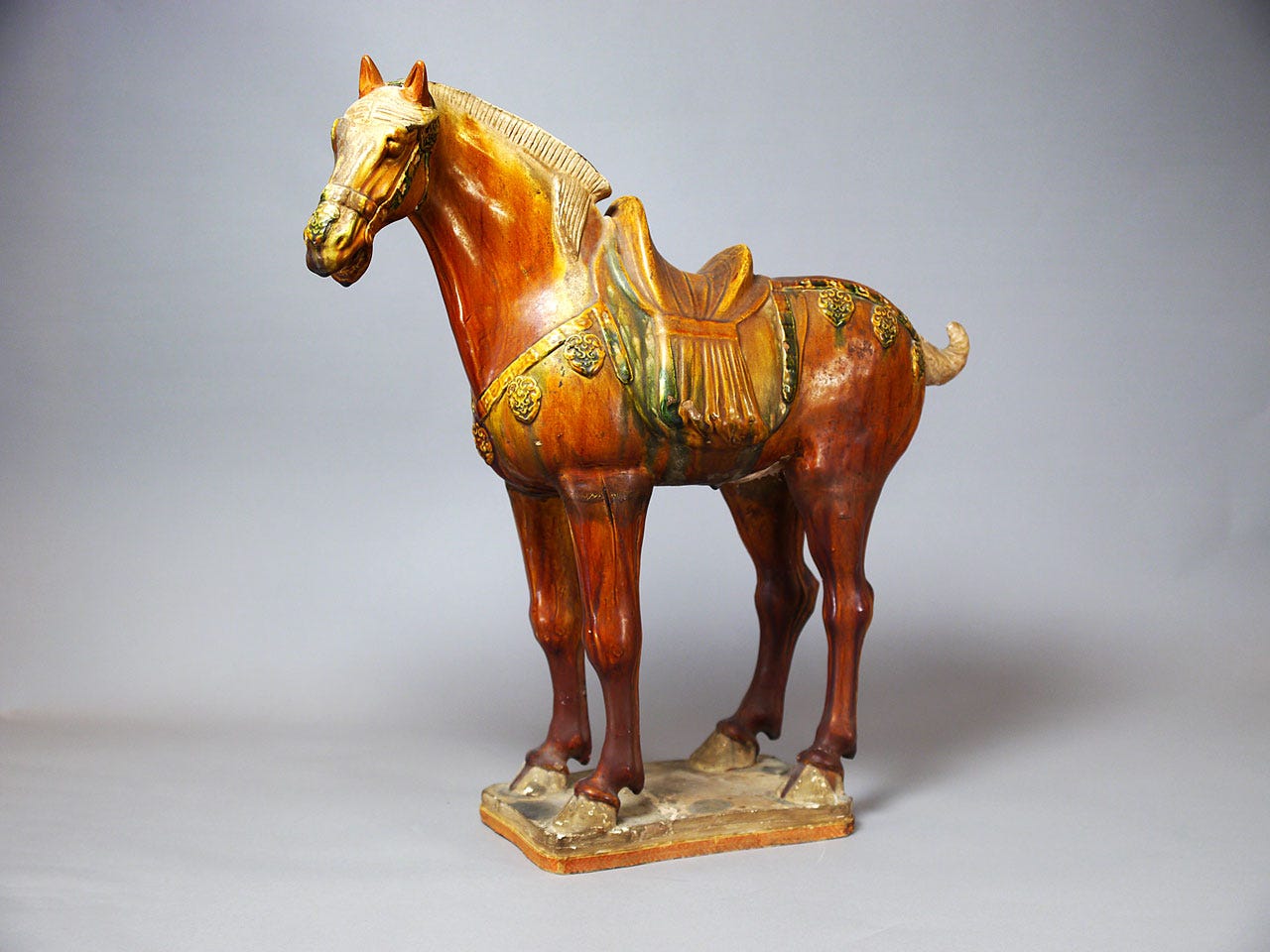
I was once in a small museum in the West, wandering through the Asian galleries with a staff member. Out of the corner of my eye, I saw what looked like a fake Tang dynasty horse figure. (It’s not one of the horses pictured in this article.) China has had many golden ages, and one ran from the late 700s to 907, when the Silk Road was bustling, and the Chinese were flush with trade profits. I’ve long wished I could take a time machine to Xi’an, the Chinese capital, to experience the court's multicultural wonders. When a society is flush with money, you often see equally lavish funerary objects. If life is great, wouldn’t you want to continue it in the afterlife? The wealthy of Tang China commissioned scores of ceramic figures to furnish their tombs. Many were made in molds, allowing artisans to produce camels, horses, and musicians in large numbers. The figures were often splash-glazed to create the iconic three-color, or sancai, appearance.
Given the scale of ancient production, these pieces appear on the art market all the time. And selling historic artifacts is great business when you can produce them at scale. Because the ancient makers used molds and reproducible methods, forgers can create pretty good fakes by cobbling together pieces of historical ceramic horses. Small museums might not have the technical ability to check whether every part comes from the same period. I’ll also point out that this moment in the galleries was nearly 20 years ago, and more museums now pool resources to assess artworks at shared labs. But even without scientific analysis, I could see the telltale signs: seams that didn’t quite match, a face tone that differed from the neck, and a body that seemed slightly too small for the head and limbs. I'd taught a year-long class in Chinese art, so I knew exactly what unscrupulous dealers were selling. I had even taught a lesson on spotting the not-so-real horse. In telling this story, I’m not outing that museum. I’m pointing out how much immersing yourself in visual media can train your eye.
An example everyone can appreciate is your favorite color. Let’s say your favorite color is in the blue family. When you walk into a store and see a blue that isn’t your favorite, your brain won’t say, “Maybe that’s it.” But when you see the exact blue you adore, your eye will recognize it.
Volume really is essential to growing your ability to see the right thing. But here, connoisseurship is a term that should be retired. In this series on visual literacy, one of my goals is for you to decide what is right for you. I wrote previously about beauty, and you might have noticed that I didn’t define beauty for you in that piece. The establishment will help define things as valuable or less valuable, historically important or not, novel or derivative. Art historians have a responsibility to help produce a canon that defines a moment. The average viewer also has a responsibility to define what matters to them, and they can choose to push back against the academy’s definitions.
Now that I’ve left the field, I focus on the things I find interesting, thoughtful, and beautiful. When I share an artist’s work, I try to also share a little about what fascinates me about it. That said, I don’t always like everything I share. I think someone who wants to build discerning taste in art has to push beyond their comfort zone. That is basically training your eye. I really hate dried coconut, and every once in a while I’ll taste something with that flavor to see whether, now that I’m an adult, I might enjoy it. I do the same with art: I spend time with things I don’t enjoy.
This part of growing your discernment differs from connoisseurship, because that historic practice rested on the Western belief that fixed categories like good and bad exist. Someone who truly wants to develop discerning taste in art shouldn’t paint themselves into a corner, or they might hide themselves from true pleasures.