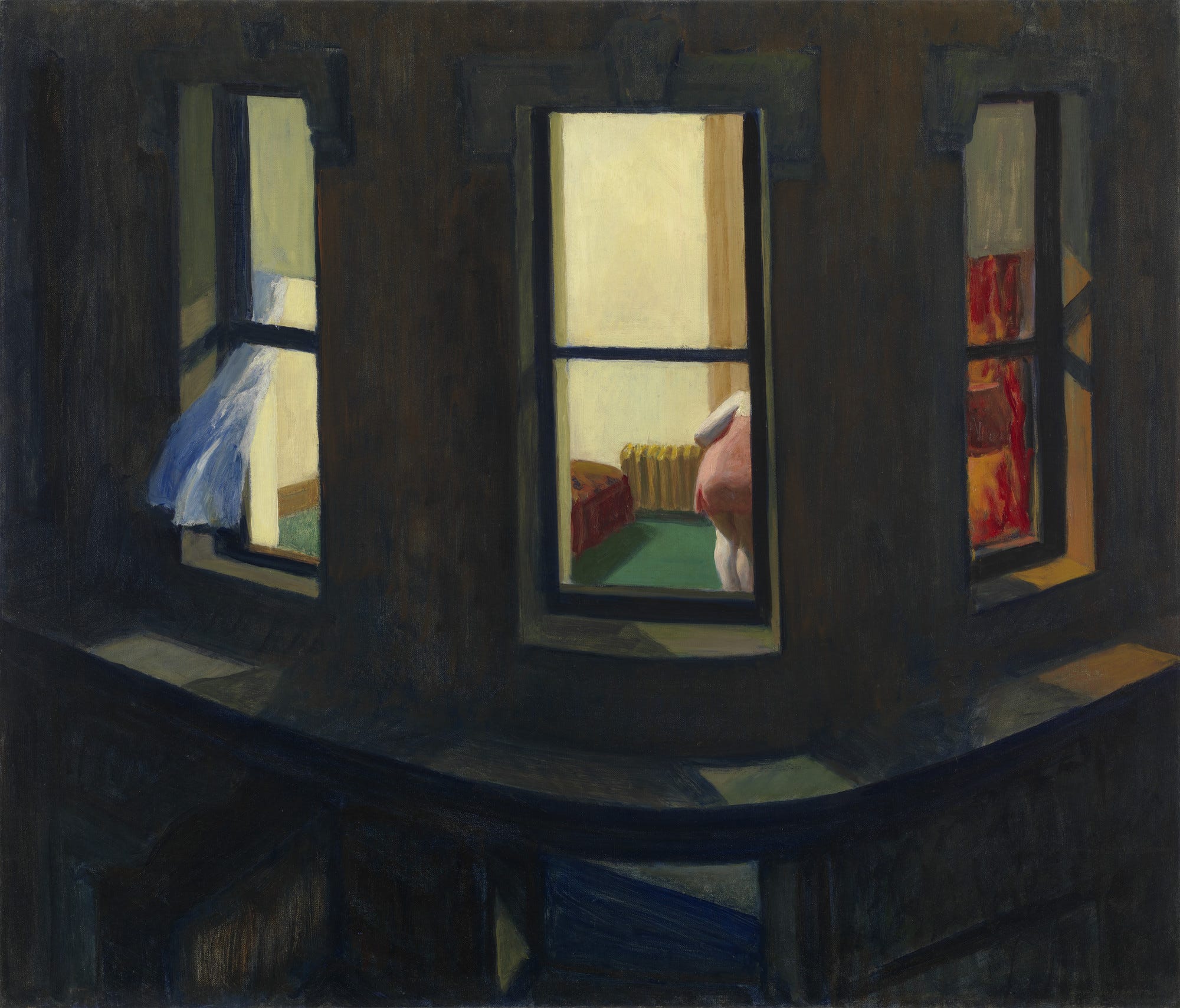
I’ve always been a bit of a peeping tom. In the dark of the night, when my parents had to go to the hospital, I sat in the back of the car, drawn to the lights in the houses. You couldn’t see people, just their shadowy forms behind drawn curtains. When I was older, often on summer evenings, I’d remember walking back to apartments, listening to them, but feeling my eyes drawn to the lit windows. In those days, real people’s houses were available to us by invitation and largely in real life. You saw people’s spaces when they showed you a physical picture, or they invited you into their home. If you were seeing their private space otherwise, say on the news, it was often a marker that something went incredibly wrong.
The internet changed that. First, blogs gave people a chance to share their lives and, as a result, gain fame. Halcyon were those early days of blogging. I’ve always loved to cook, so I was one of those early food bloggers. Something kept me from bringing people into my family completely. I had little ones, and I did show those chubby feet and hands. Their images remain just off-screen. I had a day job and career ambitions. Blogging was a hobby. Sure, I loved the idea of being picked out of obscurity to fame for my special voice, but I refused to share my family. But the time sacrifices just didn’t make sense. I watched others who shared much more about themselves get book deals (they were much better photographers than I, so there’s that). In retrospect, leaving the blog was an excellent idea. Those early blogs and vlogs succeeded by giving away your real life to make a profit. The trade-off was not worth my life.
Since those early blog days, we’ve only increased access to people’s homes. We invited them because it didn’t feel like a big deal. We invited them in because we got good attention. We invited them in because we got any attention. We invited them in because we got paid. The attention-plus-payment positive feedback loop, though, has a detrimental impact on self and society.
Just as more and more of us get a look into people's interior, private spaces daily, potentially dozens of people's interior spaces a day. We are also becoming a society that invites people into our real-life spaces less often for in-person communication. When we look at art about interior spaces, it's often fanciful, like the depiction of the Virgin's interior here, as if she were a wealthy woman in urban Northern Europe. The owner of this artwork, though, would be sitting in a space that looks like the room the Virgin was sitting in. So the viewer would not see a dissonance between their lived experience and the Virgin's. In the Renaissance, these visual tricks were meant to bring People closer to the divine by helping them see God through their own spaces. After the ethereal depiction of Byzantine art, more human depictions of Jesus were seen as useful tools for bringing people into communion with God. This is a private devotional piece in a larger devotional.
Altarpieces were meant for communal spaces like cathedrals. The donor would see themselves in the painting's physical space. The average worshiper would see a small sliver into the interiors of more wealthy people. But in large communal religious artworks, Jesus and Mary are often depicted in public spaces or outside, to avoid an intellectual disjuncture between viewers' lived experience and the faith depicted on the altarpiece.
This is because, for most of human history, the private sphere was highly segregated. Women, for example, might visit another woman’s spaces if they were closely connected, particularly if they were part of the family, but they would certainly not experience the study of a man they didn’t know. In the past, our private lives were our own, and the spaces where we experienced these moments were ours to shape; we did not share that sacred, intimate space. Even in cities, people built homes to ensure they had private spaces away from the street. Windows were necessary to let in light, but in many parts of Asia they were often shaded or screened.
In the 19th century, as leisure time grew, more and more people had access to visualizations of Interiors. In your spare time, you could look through a book of Fashion Plates. These women were often in interiors one might never see in real life. Similarly, as museums opened, people could see depictions of interiors they would never inhabit. Around this time, you also see a rise in depictions of noble poverty. Just as somebody might buy a Sunday Ticket to the Paris Salon to see beauty they could not afford, the wealthy collected depictions of the poor to see spaces they would never enter.
But there is a considerable difference between the interiors carefully constructed for Mass consumption in 19th-century visual art and today's social media. During COVID, people gained massive followings by sharing off-the-cuff thoughts right from their beds. We’ve shortened production time but also often cut out the process of making content. In long YouTube videos, you still see carefully constructed Interiors meant to set the tone. But in short-form content, directness is prized. Videos that show the unmade and messy side of life often do well.
Now, we’ve all become peeping toms, looking at scores of people's homes, but has it made us more curious and empathetic? I’d argue that increased access to interiors has disconnected us. We see these people we’ll never meet in the same way as in the 19th century; someone saw a painting on the wall–a type of fiction to view in passing. These moments rarely lead to a true connection with the person in the video. Even worse, the simulation of connection keeps us from connecting with people who would actually invite us into their homes. At least, in my youth, I didn’t see enough of those interiors. The shadowy spaces helped me flex my imagination. In contrast, online, we’re rarely given enough ambiguity to flex our imagination or enough connection to create true bonds. In peeping at others through our phones, we’ve manifested alienation without true connection.