This is Day 6 of my free 75 Days of Media Literacy series.
Are you taller than your best friend? Are they funnier than you? Do you like cake more or less than chips? Is today warmer or colder than yesterday? We use comparisons regularly in language, but we don’t necessarily understand how contrast shapes our frameworks.
While it's natural to make quick comparisons, like "I am taller" or "it is colder," you’re also often making deeper ones. When are you going to next step is to understand how something is both similar and different. By looking at two items in contrast, you assess the differences and can better make sense of each object. If you love, say, cheese, wine, or soda, you are using the tool of critically comparing and contrasting elements. You create an intellectual hierarchy: you assess what's good about each, then relate them to others of the same type; this is the same tool.
Use a similar system when you're thinking about media literacy. Much of art history involves looking at scores of artworks and thinking about how they contrast and compare. For example, take two depictions of David, slayer of Goliath. Start with what is similar: both wear little clothing, and both seem fairly relaxed about it. Then what contrasts? Donatello's David wears a jaunty hat and generally seems more brains than brawn. Michelangelo’s David seems like he could hold his own if needed.
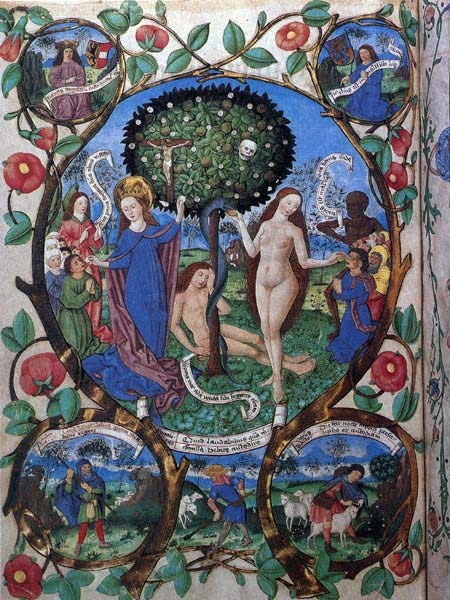
Iconography often builds in comparison and contrast. Mary is framed as a new Eve; rather than the downfall of humanity, she represents salvation. But when artists depicted both figures, this was an excellent time to focus on how the media helps draw them together and also apart. Are their faces similar or different? Are their gestures similar or different? Why?
After that, you’ll have much of the interpretation well underway. At this point, you can dig into the deeper meaning. In this case, Mary’s beauty reflects her purity, while Eve’s beauty stems from her sinful nature. Eve is also usually shown with her hair loose. But unlike Mary’s locks, which project innocence, Eve’s hair symbolizes wildness. Her sexuality is as unbound as her hair. She represents the incredible wantonness of women, something thankfully men have controlled. Mary is often framed as the repudiation of the evil Eve wrought upon humanity. In the pair, we see the duality of feminine beauty—sin and salvation.
More on Mary and Eve