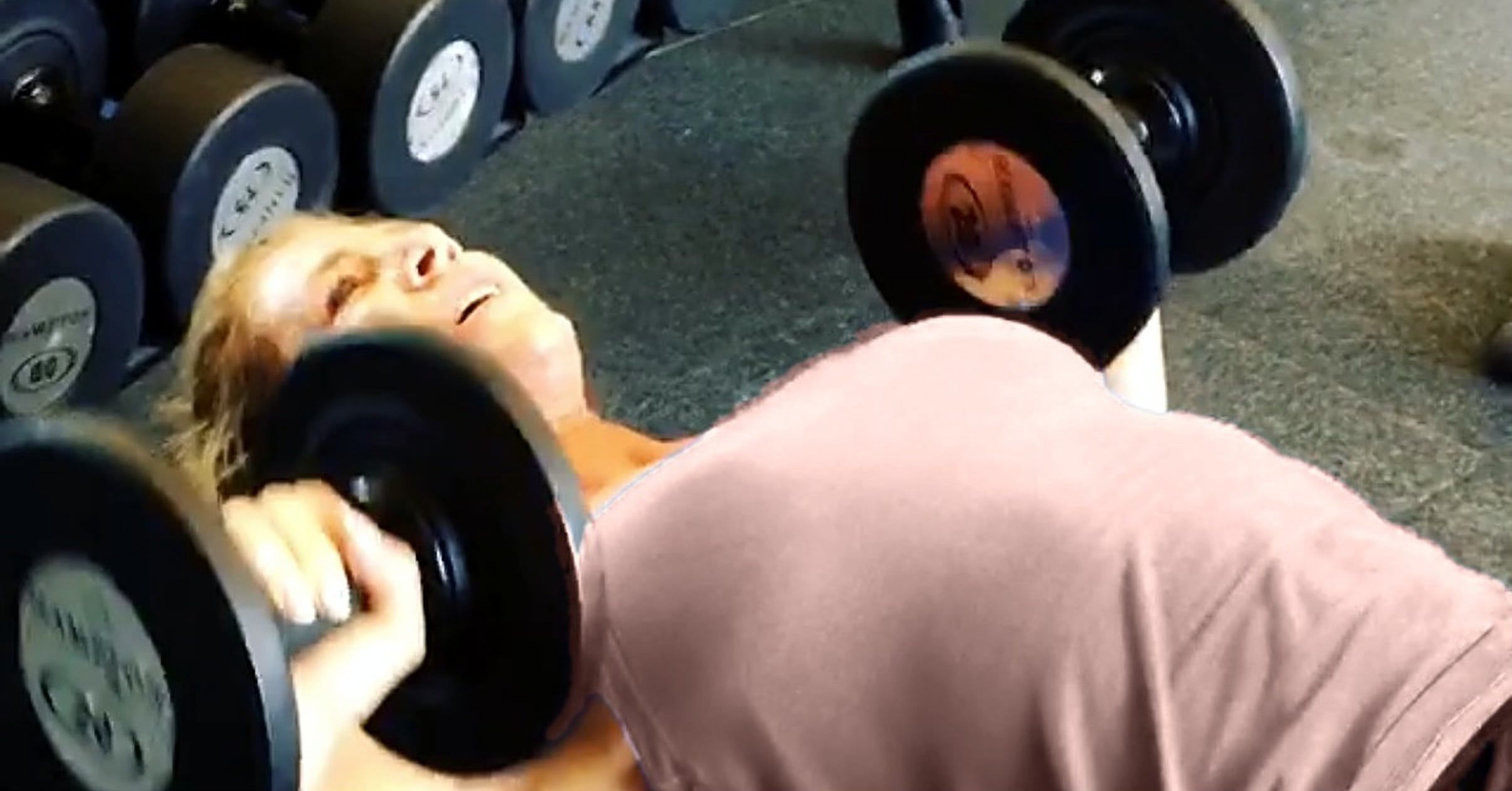
I’m examining at a woman in her late 40s. She can’t hook her bra, and she wakes in the middle of the night because rolling onto her right side feels like someone slid a knife into the shoulder joint. Her primary care doctor told her to give it time and suggested she take a shoulder class.
*Give it time? *In the slowed-down version of shoulder healing, that means one to three years, longer if you don’t get the right rehab designed for a woman’s body.1 Most women hear it, go home, then quit swimming and lifting weights.
Medicine calls the condition “self-limiting,” which is medical speak for we’ll wait while you hurt. Usually women develop this type of shoulder restriction and get told to give it time right around when estrogen starts to fall after 45, which almost nobody mentions.
I know this one from the inside. In 2020 my dog pulled hard in front of me and I tore the labrum in my right shoulder. Quick anatomy: the labrum is a ring of fibrocartilage on the rim of the shoulder socket. It deepens a shallow socket, seals the joint, and anchors the biceps tendon and the ligaments of the capsule.
Tear the labrum and the joint loses part of its seal. Then my shoulder started to freeze, and my orthopedic surgeon, who operates on the Golden State Warriors, put me in intensive physical therapy through every stage at twice per week for a year (!). It was the pro-athlete protocol, applied to a woman who just wanted to put her bra on without pain. I loved the guy but he also never mentioned estrogen or asked about perimenopause.
I was trained as a gynecologist to send a painful shoulder down the hall to orthopedics. What I know now is that frozen shoulder tracks the same estrogen curve I manage every day. That’s why women over 40 develop it at twice the rate as men. Now I believe frozen shoulder belongs to women’s health since we can understand the drivers better, yet my own field of OB/GYN mostly treats it as somebody else’s problem.
Frozen shoulder, or adhesive capsulitis (AC), is a disease of the capsule wrapped around the ball-and-socket joint. The capsule gets inflamed, then scarred, then shrinks around the joint like a wool sweater in a hot dryer. You lose the motion you can make yourself and the motion a clinician can make for you, and the X-ray still looks fine.2
Bone, cartilage, tendon, and muscle get spared. The collagen of the capsule takes the hit.3 Under the microscope, the capsule is packed with fibroblasts and myofibroblasts laying down extra type I and type III collagen. Inflammatory cytokines (IL-1, IL-6, IL-17A) and the growth factor TGF-beta egg them on. The enzymes that are supposed to balance scar building against scar cleanup fall down on the job.4 Translation: your shoulder is making scar faster than it can clear it.
It hits roughly 2 to 5 percent of people, mostly between 40 and 70. Sometimes it shows up out of nowhere, which doctors call primary. Sometimes it follows an injury, a surgery, or another shoulder problem, which is secondary.5 Mine was secondary. Diabetes raises the odds a lot: 10 to 36 percent of people with diabetes develop it. Thyroid disease in either direction, high cholesterol, and heart disease tag along too.6
Textbooks give you three stages.
**Freezing:pain runs the show, it’s worse at night, and motion slips away over two to nine months or so.7Frozen:the pain backs off and stiffness takes over your life.8Thawing:**motion creeps back.9Tidy three-act play. Real life is messier. Somewhere between 20 and 50 percent of people still have symptoms years later.10
Most women have no idea they get frozen shoulder about twice as often as men, or that being female changes how well treatment works.11 Now look at the ages. Risk climbs through the forties and peaks between 40 and 70, right on top of the menopausal transition, when estrogen goes erratic and then drops.12
Frozen shoulder is one of several shoulder problems estrogen may effect. A 2026 editorial in a major orthopedic journal points out that estrogen influences collagen synthesis, rotator cuff disease, and joint laxity along with frozen shoulder.13 And still, most women I see with a frozen shoulder have never been asked one question about their cycle, perimenopause, or hormone therapy.
A 2025 review makes the case that frozen shoulder is a whole-body immunometabolic disorder, bigger than one cranky joint. In that model, low estrogen, estrogen resistance, and scrambled estrogen receptors weaken the body’s defenses against inflammation, fibrosis, and oxidative stress. Women in perimenopause and after menopause pay for it with worse disease.14 Estrogen is one of the brakes on scar. Lose the brake in midlife and the capsule scars.
Estrogen has accomplices. Thyroid disease is more common in women, and it drives capsular scarring and pain sensitivity on its own. In a nationwide population study, hyperthyroidism raised the risk of frozen shoulder.15 Blood sugar piles on. Advanced glycation end products are the sticky sugar-protein junk that builds up when glucose runs high. They team up with oxidative stress and low-grade inflammation to wreck small blood vessels and drive fibrosis.16
One retrospective study pins part of women’s extra risk on a heavier lifetime shoulder load: paid work plus the unpaid kind.17 The laundry basket. The toddler on one hip. Every grocery bag in one trip, because two trips is for wusses.
Warning: most of the sex-difference story is still hypothesis, and the estrogen model comes from a narrative review that needs real trials behind it.18 However, mainstream medicine has had decades to run those trials in women and it hasn’t bothered.
Bottom line:when a woman's shoulder freezes in her late forties, her doctor should be asking about her hormones, and almost nobody does.
There’s another way to read a frozen shoulder, and I hold it alongside the scientific evidence. The shoulder is where the arm meets the trunk. It’s where we reach, lift, hold, push away, and carry. As a metaphor, shoulder pain raises a question about burden. As a physician, I ask questions about what a woman is tolerating alongside the diagnosis. Pain doesn’t prove a woman has taken on too much, but it’s worth considering at midlife.
The old texts knew the shoulder as the place where weight lands. In the Bible, the shoulder carries both burden and authority. A yoke sits there, and lifting it off is the picture of freedom: *I relieved your shoulder of the burden; your hands were freed from the basket.*19 Isaiah describes the bar across the shoulders broken and the burden lifted, and in the same book, authority rests on a shoulder.20 Two questions fall out of that image, and I want every woman to ask them. Who put the weight there? Is she allowed to set it down?
Ayurveda mapped the same ground. The Sushruta Samhita, the ancient Sanskrit surgical text, names a vital point, or marma, on each side of the body called the amsa. It sits midway between the neck and the head of the arm, linking the shoulder socket to the shoulder. Injure it, the text says, and a person can’t move the hands.21 That’s anatomy and injury, with no emotional meaning attached. I still love that an ancient surgeon put a loss of motion at the exact joint where a woman pushes her intentions out into the world.
Traditional Chinese medicine treats the shoulder as a crossroads. The Jing Mai chapter of the Huangdi Neijing runs several channels through it, among them the channels of the large intestine, the small intestine, and the triple burner.22 So the shoulder carries no single fixed emotional meaning there. The better question is where movement feels blocked.
Here’s what I believe. A woman’s shoulders carry more than her job, they usually carry the vigilance of anticipating everyone’s needs, the words she can’t safely say, and the running arithmetic on what falls apart if she stops holding it all together.
So ask yourself…. *Which responsibilities are mine? Which were handed to me? What support would let my body put some of them down? *
I had to ask them myself. My shoulder froze in 2020, in the middle of the pandemic, while I was slowly reorganizing my life around the knowledge that my marriage of 17 years was ending.
That map is the short version. In the next part of this series for paid subscribers later this week: every treatment ranked by evidence and matched to stage, where I part ways with the rankings, the full estrogen evidence including what I’ve watched happen at a patch dose of 0.075 milligrams or higher, and where BPC-157 fits.
Did anyone ever connect your frozen shoulder to your hormones? And when your shoulder froze, what were you carrying?
Please tell us in the comments. I read them all.
xo, Dr. Sara
Notes
**1. **C. Mülkoğlu et al., “Additive Effect of Glenohumeral Joint Hydrodilatation Applied in Addition to Suprascapular Nerve Blockage in Patients with Adhesive Capsulitis,” BMC Musculoskeletal Disorders 25 (2024): 945; G. Sun et al., “Risk Factors and Predictive Models for Frozen Shoulder,” Scientific Reports 14 (2024): 15261; R. Haas, et al, “Management of Shoulder Pain in Primary Care: A Review,” JAMA Internal Medicine, published online August 17, 2026.
**2. **F. Amjad and H. Asghar, “Comparative Effects of Gong’s Mobilization and Mobilization with Movement in Patients with Adhesive Capsulitis: A Randomized Clinical Trial,” Scientific Reports 15 (2025): 4272; J. P. Mullen et al., “Adhesive Capsulitis of the Shoulder,” Arthroscopy 41, no. 7 (2025): 2176–78; N. L. Millar et al., “Frozen Shoulder,” Nature Reviews Disease Primers 8 (2022): 59.
**3. **Mullen et al., “Adhesive Capsulitis”; B. H. Braffett et al., “Upper-Limb Complications in Diabetes: A Narrative Review,” Diabetes Care 48, no. 11 (2025): 1865–74.
**4. **Millar et al., “Frozen Shoulder”; Braffett et al., “Upper-Limb Complications.”
**5. **Mullen et al., “Adhesive Capsulitis”; Millar et al., “Frozen Shoulder.”
**6. **Braffett et al., “Upper-Limb Complications”; Mülkoğlu et al., “Additive Effect”; S. W. Huang et al., “Hyperthyroidism Is a Risk Factor for Developing Adhesive Capsulitis of the Shoulder: A Nationwide Longitudinal Population-Based Study,” Scientific Reports 4 (2014): 4183.
**7. **Amjad and Asghar, “Gong’s Mobilization”; Millar et al., “Frozen Shoulder.”
**8. **Amjad and Asghar, “Gong’s Mobilization”; Mülkoğlu et al., “Additive Effect.”
**9. **Millar et al., “Frozen Shoulder”; Mülkoğlu et al., “Additive Effect.”
**10. **Mülkoğlu et al., “Additive Effect”; Sun et al., “Risk Factors”; Haas, Ibounig, and Buchbinder, “Management of Shoulder Pain.”
**11. **Amjad and Asghar, “Gong’s Mobilization”; Mullen et al., “Adhesive Capsulitis”; Sun et al., “Risk Factors”; J. Zhang et al., “Comparative Efficacy and Patient-Specific Moderating Factors of Nonsurgical Treatment Strategies for Frozen Shoulder: An Updated Systematic Review and Network Meta-Analysis,” American Journal of Sports Medicine 49, no. 6 (2021): 1669–79.
**12. **Huang et al., “Hyperthyroidism”; Sun et al., “Risk Factors”; S. Navarro-Ledesma, “Frozen Shoulder as a Systemic Immunometabolic Disorder: The Roles of Estrogen, Thyroid Dysfunction, Endothelial Health, Lifestyle, and Clinical Implications,” Journal of Clinical Medicine 14, no. 20 (2025): 7315.
**13. **P. Chalmers and R. Tashjian, “Editorial Commentary: Estrogen Influences Shoulder Health,” Arthroscopy (2026).
**14. **Navarro-Ledesma, “Systemic Immunometabolic Disorder.”
**15. **Huang et al., “Hyperthyroidism”; Navarro-Ledesma, “Systemic Immunometabolic Disorder.”
**16. **Navarro-Ledesma, “Systemic Immunometabolic Disorder.”
**17. **X. Abudula et al., “Factors Associated with Frozen Shoulder in Adults: A Retrospective Study,” BMC Musculoskeletal Disorders 25 (2024).
**18. **Navarro-Ledesma, “Systemic Immunometabolic Disorder.”
**19. **Ps 81:6 (NRSVUE).
**20. **Isa 9:4, 9:6, 10:27 (NRSVUE).
**21. **Sushruta Samhita, Sharira Sthana, chap. 6, trans. Kaviraj Kunja Lal Bhishagratna (Calcutta, 1911).
**22. **Huangdi Neijing Lingshu, chap. 10, Jing Mai (The Channels).