For daily news updates and analysis, be sure to follow us on Instagram.
Vancouver, anyone? UK? Somewhere in Latin America with good Wi-Fi and no extradition treaty?** Mostly joking. **Until today, the threat to press freedom felt theoretical.
This morning, federal agents arrested Don Lemon and Georgia Fort, both independent journalists. The charges? A judge already dismissed one version. So the DOJ went with: disrupting church services while reporting. (Under Trump, ICE has disrupted church services across the country.)
Yes, the timing is convenient: 3 million Epstein pages released the same day. And yes, it’s designed to overwhelm and exhaust, to make it impossible to focus on any single outrage. But this is also a shot across the bow to any journalist covering ICE operations. It’s meant to chill reporting.
For years, when I’ve asked security experts how to assess risk as an independent journalist — working without the institutional backing, the lawyers, the security infrastructure of a major newsroom — they’ve given me the same answer: “Come back and talk to me when they arrest the first journalist.”
We’re there now.
I spoke with Errin Haines, a journalist and the president of the National Association of Black Journalists. She told me the response from the journalism community has been powerful, and that moments like these don’t weaken resolve, they sharpen it. When an administration works this hard to suppress truthful reporting, it reveals exactly how threatening that truth must be.
Watch our conversation below.
One more thing. The work ahead requires resources we didn’t need before — legal counsel, security measures, the ability to protect our team and expand reporting when it matters most. If you’re in a position to help sustain this, I’d ask you to help us by becoming a paid subscriber, giving gift subscriptions, or making a tax-deductible donation to News Not Noise here. This is how independent journalism endures. If you’re not in a position to do this, I understand completely and thank you for being here.
Also in this newsletter: A nationwide economic blackout to protest ICE. New Epstein files released, including striking allegations about Trump. Why ICE is spending millions buying old warehouses around the country. (It’s not good.) Senate strikes a last-minute deal on ICE funding. Big news about Luigi Mangione. And more on the Fed, ICE’s next target, and remembering Catherine O’Hara.
**Money Talks:**People and businessesacross the countryare striking today, staying home from school, and refraining from shopping in a nationwide economic blackout to protest ICE. Schools are shut, businesses closed (or have pledged to donate revenue), andthousands are braving frigid temperaturesto take to the streets. Scott Galloway wants to take this a step further. He and Kara Swisher argue this moment demands a true ongoing economic blackout, and helaunched a toolto help people identify and unsubscribe from companies supporting and enabling ICE. (We’re talking major corporations, not independent journalists!) “A day is an annoyance,” Gallowaysaid in conversation with Swisher. “It needs to be a week or a month, and it needs to be national.… The only thing these people care about is whether their stock goes down. That’s it. And if their stock goes down … they’re going to finally find their testicles and come out and speak out against this guy.”First Amendment’s Acid Test: The DOJ on Friday morningarrested independent journalistsDon Lemon and Georgia Fort in connection to their coverage of a peaceful protest at a Minneapolis church. Two other individuals were also arrested.Arresting journalists for reporting is practically unheard of in the US. This is a chilling escalation in the Trump administration’s assault on freedom of speech. Here’s what we know.Unheard Of: When federal agents arrived outside Fort’s house on Friday, she waslivestreaming on Facebook. She said she had been indicted by a grand jury, and a White House aide𝕏seemed to confirm the samewas true for Lemon. But this wasn’t the DOJ’s first attempt at arresting the journalists. Federal prosecutors initially tried to justify arrest warrants for the pair through a criminal complaint. A magistrate judge refused to sign the warrants for lack of evidence,which reportedly“enraged” Attorney General Pam Bondi. So the DOJ escalated the matter, taking it to Minnesota’s Chief Judge Patrick Shiltz, a George W. Bush appointee and staunch conservative. The US Attorney for Minnesota, aformer commercial lawyerwho hadno prosecutorial experience when he was appointedin October,argued this was an emergencyand the warrants were “urgently needed” to “protect the public.” Judge Schiltzdismissed thisas “frivolous,” said this was not “an actual emergency,” and noted there was no evidence Lemon had engaged “in any criminal behavior or conspired to do so.” He further stressed that the DOJ’s “unprecedented” request “is unheard-of in our district, or, as best I can tell, any other district in the Eighth Circuit.” Instead of waiting for his judgment, the DOJ appealed directly to the Eighth Circuit Appeals Court — which also said no. With this avenue resoundingly shut, the DOJ appears to have switched to a second method: seeking an indictment from a grand jury.Context: This controversy centers on a peaceful protest at Cities Church in St. Paul. The church haspowerful friends in the MAGA movement; one of its elders, who also served as a lay pastor, isreportedly a field officer for ICE in the city. That’s why protestors demonstrated at the church on January 18. They interrupted the service andchanted anti-ICE slogans. That’s it. Lemon and Fort were there, filming and conducting interviews — i.e., doing journalism. But the DOJ has accused them of participating in a nefarious conspiracy against the church. Their proof? Theindictment claimsLemon “peppered” the church’s pastor “with questions to promote the operation’s message.”
Losing FACE: The DOJcharged Lemon and Fortwith two things. First, conspiring to deprive the congregation of the church of their civil rights. Second, violating the Freedom of Access to Clinic Entrances (FACE) Act. The FACE Act was a response to deadly violence against abortion providers,passed in 1994with bipartisan support after Dr David Gunn’smurder by anti-abortion extremists. It protects people accessing or providing reproductive health care and related health care facilities. To win votes from Republicans, the Act also included similar protections for places of worship. The Trump administration’s use of the FACE Act against Lemon and Fort isincredibly cynical. On January 23, just days after Trump took office, hepardoned 23 people convicted of violatingthe FACE Act. The next day, the DOJdirected its Civil Rights Division to dismisspending abortion-related FACE Act prosecutions. Meanwhile, DOJ officials, including Pam Bondi, have pledged to use the FACE Act to protect what theCenter for Reproductive Rights calls“fake clinics” — centers thatpurport to provide reproductive health care services, butactually use misinformation, fearmongering, and shame tobully vulnerable pregnant womenaway from abortion. So to recap: pardon FACE Act violators, move to protect fake clinics, then arrest journalists under the FACE Act.Hypocrisy: The Trump administrationrescinded a policy preventing ICE from targeting churches(and schools and hospitals). In fact, the day before the church protest in St. Paul, ICE agentsdetained two Hispanic men renovatinga church exterior in LA, forcing the service inside to come to a halt.
“Bogus” Bondi: During the protest at the church, Lemon and Fort made it clear they were not participating. “I’m just here photographing,”Lemon saysin one of the videos he published. “I’m not part of the group.… I’m a journalist.” That didn’t stop the DOJ. Pam Bondi on Friday𝕏implied the pair participatedin a “coordinated attack” on the church. The head of the Civil Rights Divisiontold Megyn Kelly on Fridaythat they are “going to pursue this to the ends of the Earth.” The White House celebrated Lemon’s arrest,𝕏posting a picturewith the caption: “When life gives you lemons… ⛓️” Journalists, media outlets, and civil rights organizations widely condemned the arrests as an assault on press freedom. A senior official at advocacy group Public Citizenslammed themas “a constitutional violation” and “authoritarian breach.” Minnesota Attorney General Keith Ellisoncalled the arrests“deeply troubling,” saying that his state doesn’t “treat journalists like criminals for doing their jobs.” According to thechief of advocacy at the Freedom of the PressFoundation, “These arrests under bogus legal theories for obviously constitutionally protected reporting are clear warning shots aimed at other journalists. The unmistakable message is that journalists must tread cautiously because the government is looking for any way to target them.**The answer to this outrageous attack is not fear or self-censorship.**It’s an even stronger commitment to journalism, the truth, and the First Amendment. If the Trump administration thinks it can bully journalists into submission, it is wrong.”
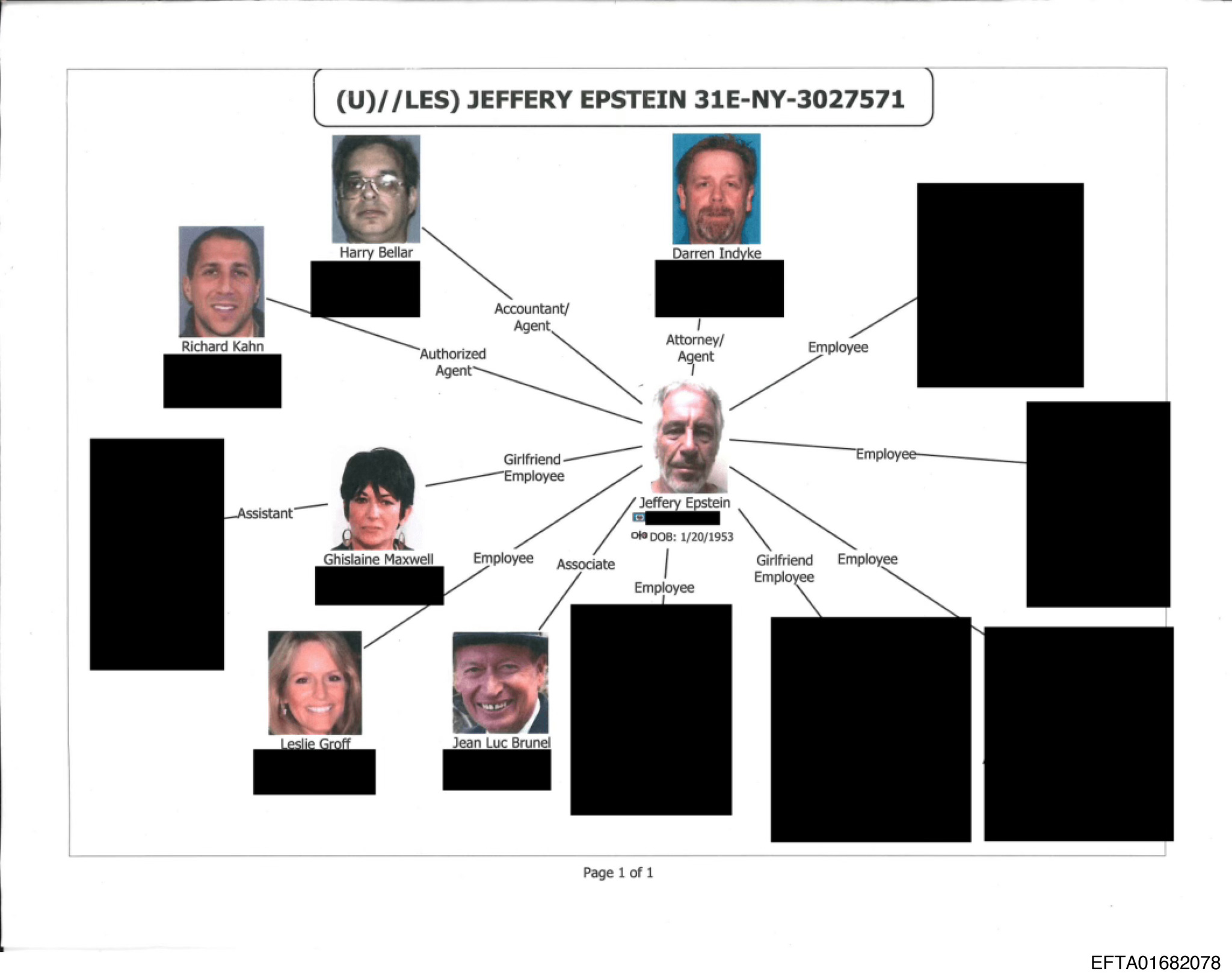
About Time: The DOJ on Fridayreleased over 3 million pagesrelated to Jeffrey Epstein. The agency didn’t just miss its deadline to release these files by several weeks — it reportedlystillhasn’t released everything, despite Deputy AG Todd Blanche saying itwould not release any more. There arereportedly 6 million pagesof files. Rep. Robert Garcia, the ranking Democrat on the House Oversight Committee,accused the DOJofwithholding “roughly 50% of the Epstein files,” which he said was a “violation of the law.” The newly published files mention many powerful men connected to Epstein, including Trump, Commerce Secretary Howard Lutnick, Bill Gates, Bill Clinton, and Elon Musk. It will take time to sort through them all; many are handwritten and not searchable. Here are some things we’ve learned.Tip of the Iceberg: The filescontain over 3,000 documentsthat mention Trump.One of them— which the DOJbriefly retractedbefore putting back online — is asummary of over a dozen tipsrelated to Trump and Epstein provided to the FBI, which the agency created last year. The tips are unverified and sometimes from anonymous tipsters, but include accusations of sexual abuse by Trump. I want to be very clear that the claims in the files can include false reports. The DOJclaimed on Fridaythat the files “contain untrue and sensationalist claims” against Trump, which they said “are unfounded and false.” Allegations in these documents aren’t evidence of wrongdoing. With that context, here are some of the allegations contained in the release: There is a report of one individual who claimed that her female friend was “forced to perform oral sex on President Trump” when “she was approximately 13-14 years old.” Another individual told the FBI she was “a victim and witness to a sex trafficking ring at the Trump Golf Course in Rancho Palos Verdes.” The individual claimed that “some girls went missing” and said she had been “threatened by Trump’s then head of security,” who allegedly warned her that if she revealed what had occurred she would “end up as fertilizer for the back nine holes like the other c---s.” Blanche said thatnothing in the released files would warrantfurther prosecutions.Spider’s Web: One document, featured at the top of this newsletter,is a diagramof Epstein’s inner circle (mostly…