’In three words I can sum up everything I’ve learned about life: It goes on.’ - Robert Frost
A little knowledge in the wrong hands can be very dangerous and lead to ‘sub-optimal’ results. The
*‘Dunning–Kruger effect’*is a cognitive bias in which people with low ability or limited knowledge in a specific area tend to overestimate how competent they are. I believe we are seeing a live demonstration of this right now, and are all bearing the brunt of it. Combine it with the overt confirmation bias (resulting from a bevy of ‘yes men’ and harsh responses to opposing viewpoints), and.. well, read the news.Lots of troops and equipment still in-theater, with ceasefire scheduled to end April 22. Whilst there is increased optimism for a more durable agreement, multiple ticking clocks argue for action to force a quick resolution. Note, European and Gulf commentators all expect a multi-month negotiation before any real agreement ( JCPOA took 18 months).
The supply chain issues are well-documented, and we are seeing growing data points indicating the tight window before supplies run out; rationing regimes are already being implemented.
The axiom is that all politics are local; as economic situations deteriorate, there will be massive pressure on incumbents. With Midterms in November and gasoline over $ ( diesel over $5), this is true here as well, despite our relatively advantageous position.
As pointed out by my friend Paulo, weather matters if a ‘boots on the ground’ operation is going to be initiated. With all the discussion about Kharg as the fulcrum to lever Irani capitulation, note the upcoming daytime temperatures; even SEALs and marines will be hard-pressed to effectively function for any length of time:
Breadth continues to be underwhelming, depsite daily new highs
Nasdaq has rallied for 12 consecutive sessions, closing at an all-time high and posting its largest 12-day point gain on record
Goldman says CTA bought +$86B this week, which ranks among the top 5 all-time.; modeled that CTA could purchase an additional $70B of the next 5
sessions.”
From my friend Peter Boockvar:
’CNN Fear/Greed index has risen to 63, in the middle of the ‘Greed’ section and well up from the late March bottom of 10 when it was in ‘extreme fear.’ The Daily Sentiment Index fell to just 12 at the end of March and was at 78 yesterday according to my friend Helene Meisler. The SPX stands at 76. The NAAIM Exposure Index closed yesterday at 79 vs 60 in March. Investors Intelligence (covering sentiment last Friday so I’m sure the Bull/Bear spread has widened much further) saw Bulls rise to 39.6 from 33.3 and Bears dropped to 22 from 27.8 and vs 31.5 in the week before. Last weekend saw the Citi Panic/Euphoria index back in Euphoria land at .43. The outlier to this bullish shift in line with the market rally is the very volatile and fickle AAII retail survey, my least favorite, where Bulls fell 4 pts to 31.7 vs Bears at 42.8 that was little changed.’
From Torsten: ‘Hedge funds own a record-high 8% of US Treasuries, and with combined repo and prime brokerage borrowing exceeding $6 trillion, any forced unwind of these leveraged positions could send shockwaves through global fixed income markets. ‘
Mag Seven is gaining in premarket trading, with Microsoft up 0.8%, Apple up 0.6%, Meta up 0.4%, Alphabet up 0.3%, Amazon up 0.3%, Tesla up 0.2%, and Nvidia little changed
The Iran conflict continues to dominate market dynamics as the US and Iran weigh a two-week extension of the ceasefire to allow more time for peace negotiations, according to a person familiar with the matter.
Strait of Hormuz remains largely closed despite the truce, with shipping traffic down 95% since early March.
Forty nations are meeting to address the Strait of Hormuz crisis.
IEA called the Iran war the “most severe oil supply shock in history”.
European leaders see a peace agreement taking months, while Trump said prospects are “looking very good”.
The physical oil market shows that an estimated 13 million barrels a day of supply has been disrupted. Commonwealth Bank of Australia warns that the US naval blockade puts at risk approximately 3.8 million b/d of oil and products.
DXY heading for its third straight weekly decline- DB and WFC declare the war-driven haven rally is likely over.
Bitcoin rose to a 10-week high of $76,336 , continues to contradict the “digital gold” thesis, and behaves more like a risk-on asset during this geopolitical crisis.
The physical oil market remains tight despite paper market optimism, with dated Brent reflecting growing supply constraints .
Cross-asset dynamics are shifting as ceasefire extension talks reduce the immediate risk of escalation.
NKY (1.8%) as traders booked profits after the index struck all-time highs Thursday.
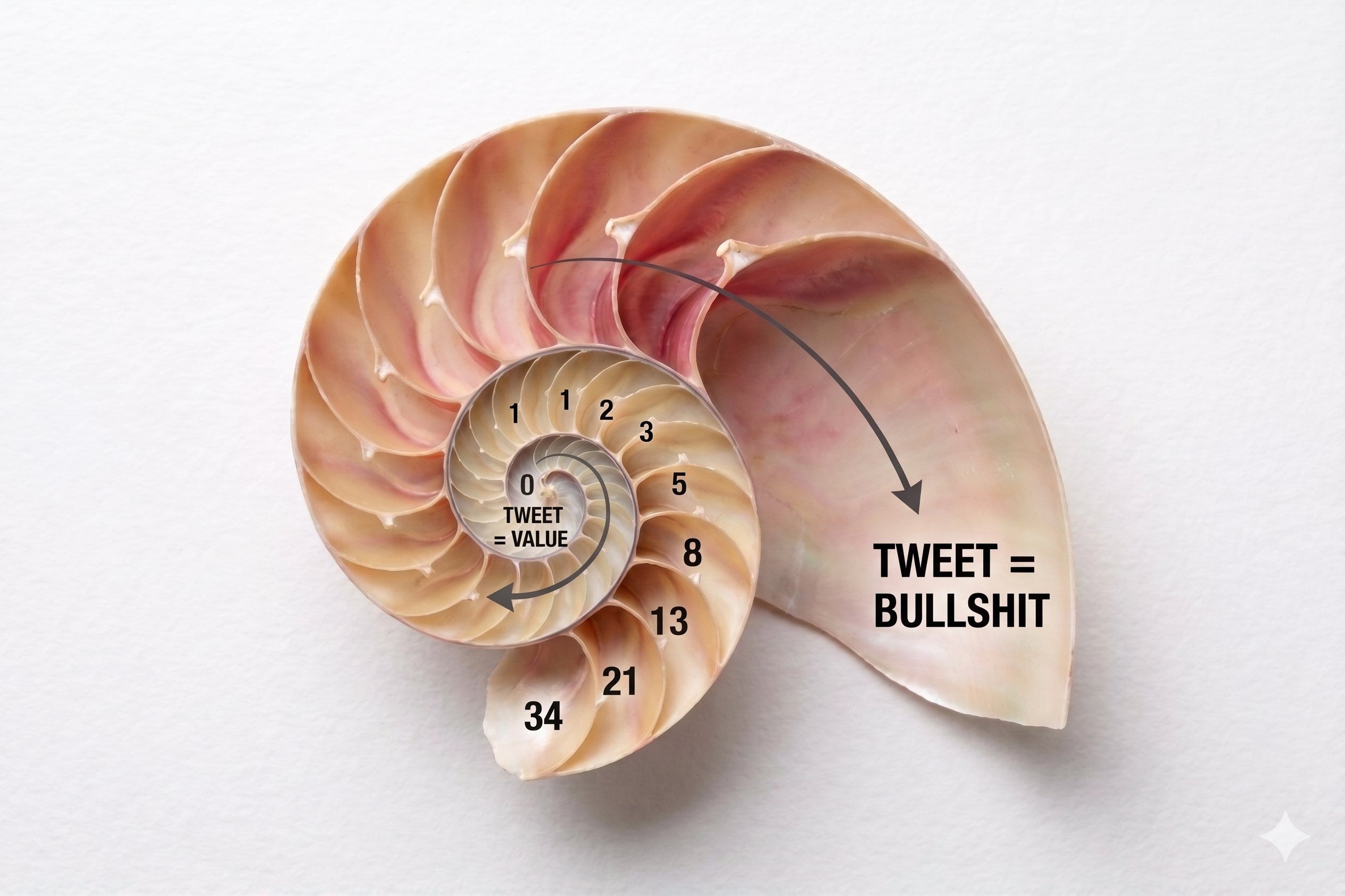
Currie has another warning as the S&P 500 reached new highs based on nothing more than Truth Social tweets. The US oil and gas companies make up just 3 percent of the index's equity capitalization; the other 97 percent is on the wrong side of the Gulf War trade and will soon suffer the consequences of what remains the biggest energy shock of modern times. (Source: telegraph.co.uk)
MACRO
The US and Iran are considering extending their ceasefire by another two weeks, with mediators seeking technical talks to overcome contentious issues that are preventing a longer-term agreement.
The European Central Bank will raise interest rates in June as the Iran war drives inflation higher this year, a Bloomberg survey showed, with inflation predicted to accelerate to 2.8% in 2026 . Fed Governor Stephen Miran said he could now foresee three interest rate cuts instead of four, citing shifts in the underlying composition of headline inflation. Harvard professor Kenneth Rogoff warned that the dollar is probably at least 20% overvalued and that investors may be overestimating the likelihood of a near-term resolution to the Iran war.
Fitch Ratings stated that the risk outlook for global credit has risen substantially since the start of the year, with the U.S.-Iran war posing a major risk to base-case forecasts and assumptions. The risk scenarios have widened substantially for global credit, with a clear adverse risk scenario involving a sustained global oil and gas supply shock.
Next? China pledged “firm support” for Cuba against continued US threats; a Foreign Ministry spokesman stated Beijing opposes coercive diplomacy and will back Havana’s defense of national sovereignty
COMMODITY
Oil prices lower on ceasefire extension optimism,Goldman Sachs warned Brent will stay above $100 through 2026 if the Hormuz closure drags on another month . The physical crude market shows a clear split from paper markets, with dated Brent reflecting tightening constraints. Asian refiners are contemplating 20-30% run-rate cuts as dozens of crude tankers remain stranded in the Persian Gulf. JPMorgan said commercial crude stockpiles in OECD countries could slide toward operational minimums by early May. South Korea successfully transported crude oil via the Red Sea as an alternative route, marking the first such case since the Hormuz blockade.
European natty fell as much as 2.3% Friday on ceasefire optimism, putting contracts on course for a weekly decline after surging over 90% since the conflict began.
Italy’s Edison said it has replaced most Qatari gas supplies disrupted by the war.
Asian spot LNG prices edged higher to around $16.20 per million British thermal units, still about 60% higher than pre-conflict levels.
FEDSPEAK
New York Fed Pres Williams;
high uncertainty should prevent policymakers from providing any strong guidance on the future path of interest rates, though his outlook still includes rate cuts in the longer term.
“Given all the different things that keep changing day to day, week to week, it doesn’t make sense for us to try to be giving strong forward guidance,”.
Williams expects inflation to be “well above” 3% over the next few months; reiterated monetary policy remains well positioned to deal with the threat of a protracted supply shock caused by war in the Middle East.
Fed Governor Miran
Is reconsidering his rate cut outlook for the year, trimming his projection from four cuts to potentially three.
“What’s happened in the last couple of months before the war broke out is that even though headline inflation was going sideways, the underlying composition got a little bit less favorable,”; however, expects price pressures to return to the central bank’s target in a year’s time.
Cleveland Fed President Hammack
Interest rates are well positioned and she prefers for them to remain steady, but also sees the possibility they may need to be adjusted in either direction
“My baseline is that we’re going to remain on hold for a good while, but I do think that there’s two-sided risk to rates,”.
AI Investment Trends
‘Anthropic’s Mythos AI tool could spark ‘systemic financial market disruption,’ a trade group warns’
(bbrg)‘Anthropic’s Mythos Is a Major Step Towards Superintelligence, Says Dr. Alan D. Thompson’
(Financial Sense)‘Europe AI-Risk Basket Jumps to Ten-Week High as Hays Leads Gains’
(bbrg)CFOs are accelerating investment in artificial intelligence, with 42% planning to increase spending by more than 30% over the next two years, according to new research from Bain & Company. Bain’s survey of more than 100 CFOs globally found that 83% expect to raise enterprise-wide AI spending by more than 15% over the same period.
Hedge funds lagging:
Small businesses are nervous
“Inside the Global Oil Crisis” (Stonebridge Capital)
“What is beginning to unfold across Asia is a different category of problem entirely. It is not that the molecules are too expensive. It is that the molecules are not there.
“We are no longer in price-driven demand destruction. We are in physical demand destruction. The distinction matters enormously because there is no price signal that can conjure barrels that do not exist.” — Wood Mackenzie”
‘…the refined products panel on the right shows that Asian refiners have begun retaining their output domestically rather than exporting it. This is a second-order consequence of the crisis that has received almost no attention: Asia is effectively withdrawing from the global refined products market to protect its own supply, tightening conditions in Europe and Africa simultaneously.’
Europe faces a structural bind that predates this crisis and is now being brought forward with brutal speed. The continent must simultaneously address energy insecurity, absorb the fiscal cost of a rapid defense buildup, and manage the political consequences of both within democratic systems that are already under considerable strain
Look who’s back!