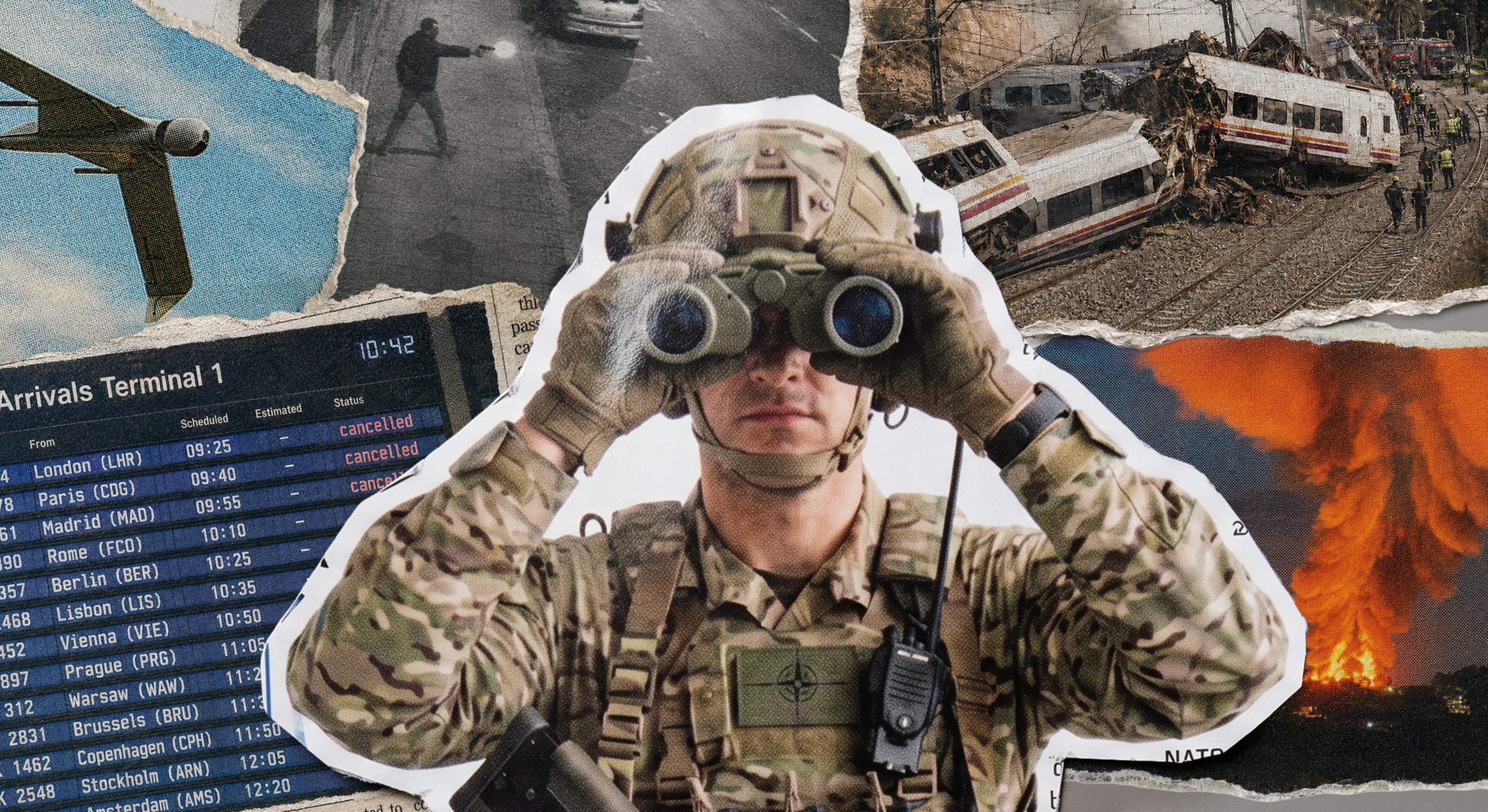
Europe still imagines war beginning with Russian tanks crossing a NATO border. Yet warehouses are burning, explosive packages are entering logistics networks, railway lines are being targeted, and alleged assassins are being recruited through layers of disposable intermediaries.
From Leipzig to Warsaw, Moscow’s shadow campaign is probing the infrastructure that keeps Ukraine supplied—and testing how much violence it can inflict before Europe finally admits that the war has already moved west.
BERLIN—While Russia’s war on Ukraine is fought openly, another front has spread across Europe, quieter and deliberately difficult to recognize as war. Since Russia launched its full-scale invasion, security services throughout Europe have investigated fires, sabotage plots, explosive packages, cyberattacks, and operations against the infrastructure supplying Ukraine. Some cases remain unresolved. In others, prosecutors and governments have publicly identified links to Russian intelligence.
We publish this newsletter every day at 9:05am NYC time / 4:05pm Kyiv. Your subscription fuels our work.
The pattern is not one dramatic attack but a steady campaign below the threshold of conventional war. Moscow can impose costs, disrupt military support, and frighten decision-makers while keeping enough distance from the people carrying out the work to deny responsibility. A Russian tank entering Poland would settle the political question within minutes. A warehouse burning outside Warsaw may occupy investigators for a year before anyone can establish who ordered it.