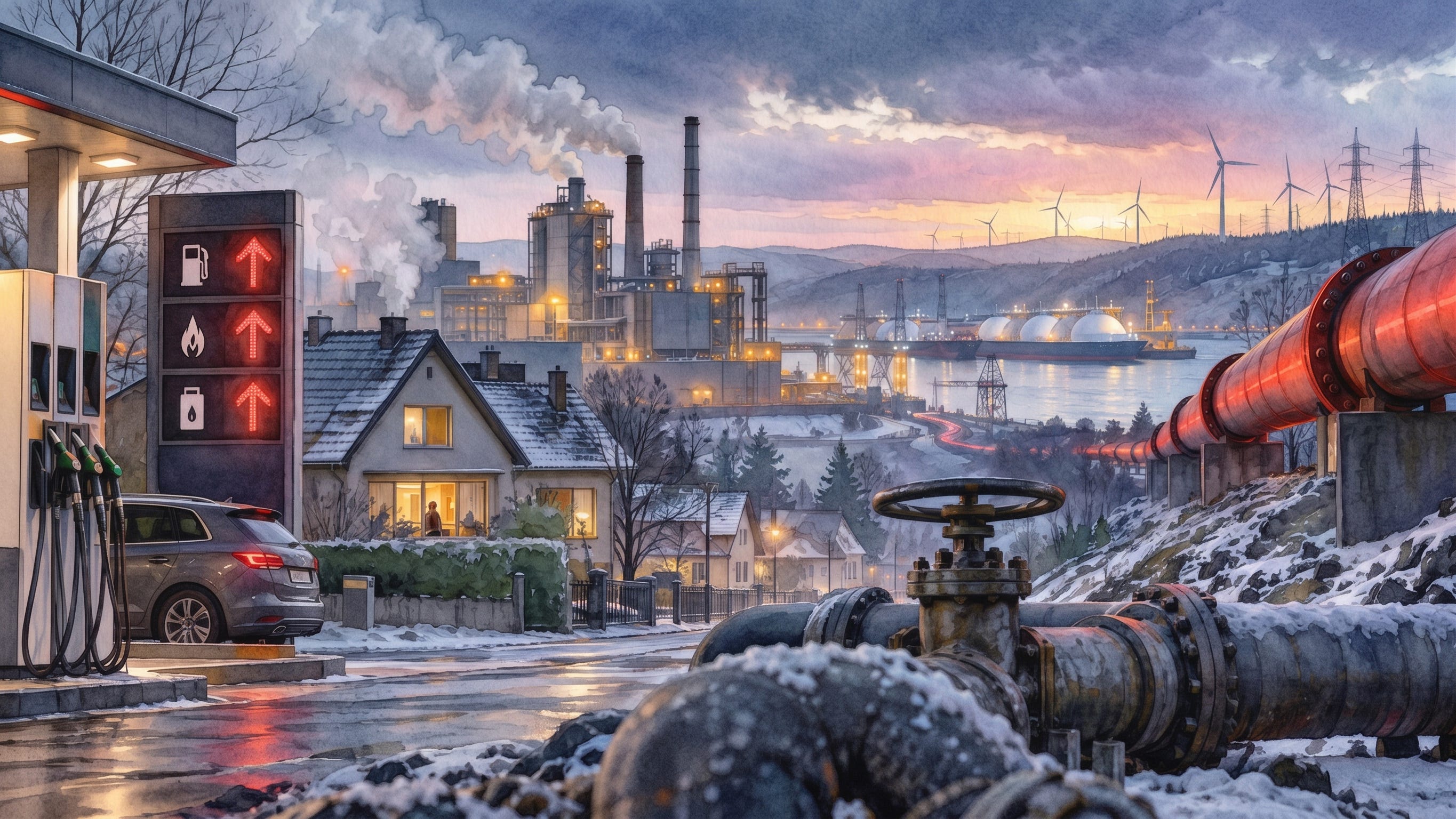
ODESA—More than €3 for a liter of fuel. At some German motorway stations, premium grades have crossed that line. A regular fill up for your tank at that price costs €180, roughly $13 per American gallon. Across the country, diesel has reached a record average of €2.47 a liter. Germany is paying more to drive, move goods, and keep businesses running before the winter heating season has even begun.
We publish this newsletter every day at 9:05am NYC time / 4:05pm Kyiv.Your subscription fuels our work.
The record has eased slightly, but the relief is difficult to find in a household budget. A full tank is now a substantial expense for anyone who drives to work regularly, especially outside cities where there may be no practical alternative. Fuel is bought with the money left after rent, food, and utilities. Each expensive fill-up narrows what remains for the rest of the month. More and more people are switching to public transport, but that solution only helps so much, given Germany’s strained and aging public transport system, which has become infamous for its delays and train cancellations.
European diesel futures have more than doubled since the beginning of 2026. Refineries elsewhere are running hard, leaving little spare capacity to make up the shortfall.
Businesses face the same calculation on a larger scale. Truckers cannot deliver goods at last year’s rates while paying this year’s diesel prices. They raise their charges, and those charges reach the supermarket shelf. Farmers are paying more to operate machinery while gas prices drive up the cost of fertilizer. Germany’s fuel bills are already being passed along to people who have not visited a station in weeks.
The immediate squeeze began in the Gulf. America’s war in Iran has restricted shipping through the Strait of Hormuz and damaged energy facilities across the region. Middle Eastern diesel exports between March and August fell to roughly half their level a year earlier. European diesel futures have more than doubled since the beginning of 2026. Refineries elsewhere are running hard, leaving little spare capacity to make up the shortfall.
Germany’s government plans to cut fuel taxes by about €0.17 a liter from October through the end of the year. It’s a costly measure that will cost the German state roughly €2.5 billion, while offering the German public only slight relief, given that prices have risen more than a Euro per liter in the past year. Furthermore Germany offered a similar rebate earlier this year, and prices rose again after it ended. The government must now explain what it expects to be different when this one expires.
The United States, the world’s largest diesel exporter, is having its own argument about supply. American diesel prices have reached records, and Donald Trump has spoken in favor of an export ban. The White House denied a report that it was preparing a 90-day restriction, while officials have approached refiners about limiting exports voluntarily. While no export ban is in force so far, European governments would be unwise to assume Washington will disregard its own drivers when deciding where American fuel goes.
Gas however may do even more damage this winter than expensive diesel. European wholesale prices rose from around €30 to €80 per megawatt hour after the Iran war began, while storage was only about 67 percent full in mid-September. Buyers are paying high prices to refill it as they compete for LNG cargoes. For households, the cost will appear in heating bills. For chemical and fertilizer producers, it is already part of the decision on whether production can continue through winter.
Moscow is making its pitch while those decisions are being made. The Kremlin has ** attributed** the AfD’s electoral success partly on Germany’s loss of Russian gas. AfD leaders and a senior Putin envoy have reportedly begun preparing talks about restoring supplies.
Winter is close, and Europe’s population is understandably nervous. Europe’s leaders should meet this moment with a plan
worthy of an industrial continent:## Secure the gas needed for this winter, bring down the cost of power, and clear the way for new plants and grids to be built at speed.