Islam’s history with the West has been one of unwavering antagonism and seismic clashes. By the standards of history, nothing between the two civilizations is as well documented as this long war. Accordingly, for more than a millennium, both educated and not so educated Europeans knew—the latter perhaps instinctively—that Islam was a militant creed that for centuries attacked and committed atrocities in their homelands.
These facts have been radically altered in recent times. According to the “mainstream” narrative, Islam was historically progressive and peaceful, whereas premodern Europe was fanatical and predatory.
Whatever else can be said about such a topsy-turvy claim—and there is much—an important question arises: if such a formerly well-known, well-documented and atrocity-laden history could be revised in a manner that presents its antithesis as the truth—with little objection or challenge—what then of Islam’s more subtle but also negative influences on world history, the sort that, unlike the aforementioned centuries of violence vis-à-vis Europe, are not copiously documented or readily obvious but require serious historical investigation?
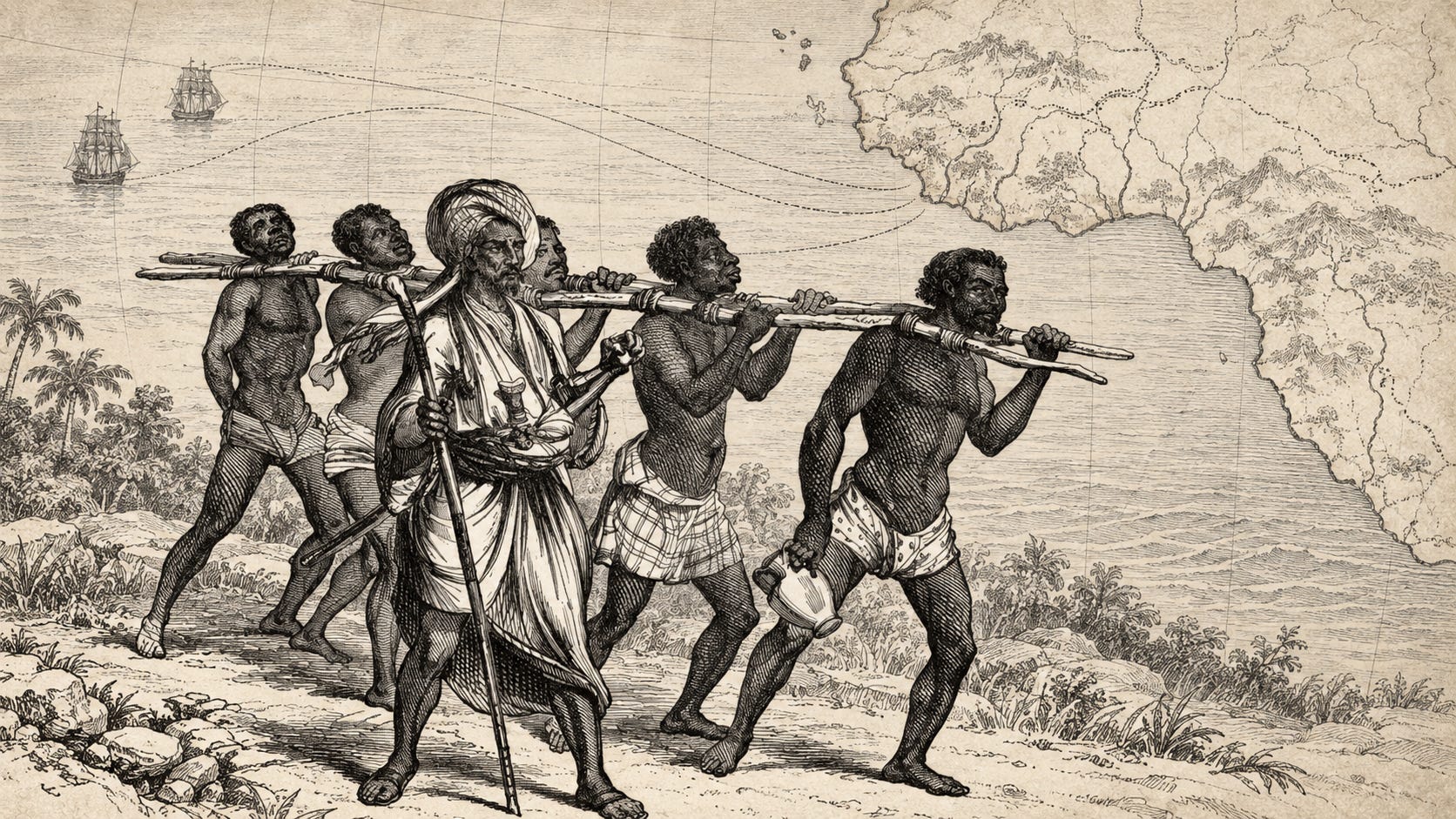
Take Islam’s role in facilitating the transatlantic slave trade—which otherwise is almost always presented as an exclusively European enterprise.
Slavery is, of course, as old as humanity. Centuries before the coming of Islam, Europeans—Athenians, Spartans, Romans—were fully engaged in the slave trade. With the coming of Christianity, and as it spread all throughout the Roman and post-Roman empire (circa. fourth-seventh centuries), the institution of slavery went into decline and was on its way to extinction.
Then Islam came. While hardly the first to exploit human flesh, it was the best at perfecting and thriving on it in the post classical, medieval, premodern, and even modern eras—with untold millions of non-Muslims enslaved throughout the centuries (one source indicates that 15 million Europeans were alone enslaved).
As usual, it was only natural for those near and in constant war with Islam to be infected by the same vice of dehumanizing the “other.” After all, the few instances of Christians in Europe buying and selling slaves are largely limited to the long war with Islam. Malta’s Knights of Saint John, for instance, responded to Islamic slave raids by enslaving the raiders and other Muslims. Similarly, those Europeans who first became involved in the African slave trade, the Spanish and Portuguese, also just so happened to be the ones who for centuries lived side by side with—often in violence and themselves enslaved to—Muslims (those of al-Andalus).
Islamic slave raids into Africa began in the mid to late seventh century; then, according to Muslim records, astronomical numbers of Africans—in the millions—were enslaved. By the time seafaring Europeans reached the coasts of West Africa, the Islamic slave trade was bustling.
While most Western historians are aware that it was African “tribesmen” who captured and sold enemy tribesmen to Europeans, left unmentioned is that the “tribal” differences often revolved around who was and was not Muslim.
Continue reading below.
If you value unflinching, historically grounded analysis that mainstream outlets soften or ignore, consider upgrading. Paid subscribers get:
**Several new, full-length articles every week.**Carefully researched pieces you won’t find elsewhere.
Full access to the complete premium archiveArchive of in-depth writing, research, and commentary — all in one place.
Entry into the subscriber chatA private space for serious readers and thoughtful discussion.