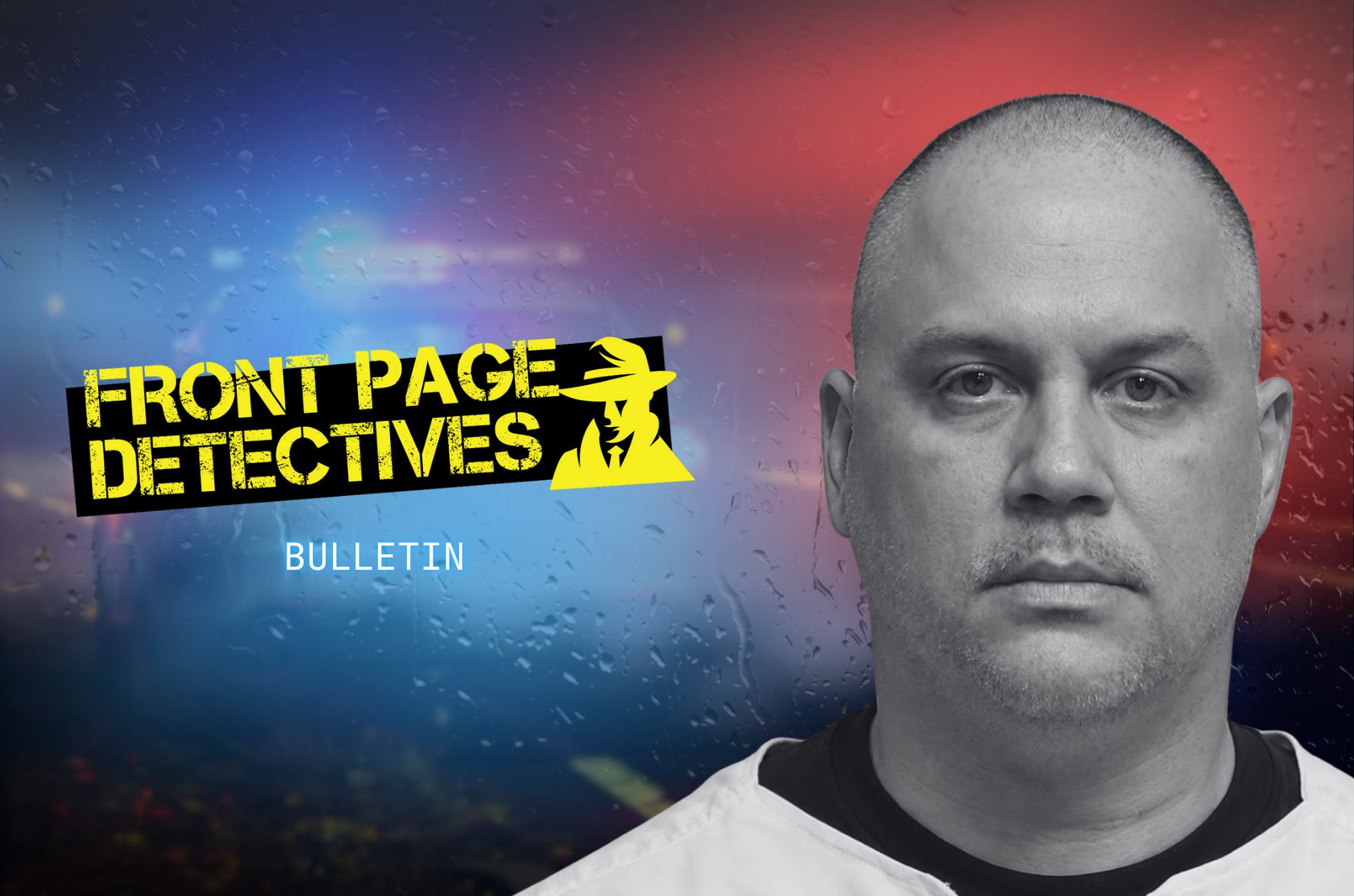
The sheriff who led the investigation into the 1990 murders of an elderly Ohio couple now says the man sent to death row for the killings is innocent.
P. Ken Howe, who served as Portage County sheriff from 1989 to 1993 and was at the crime scene after Bearnhardt and Cora Hartig were found dead, has urged Gov. Mike DeWine to grant Tyrone Noling a full pardon. Howe says the case against Noling never matched what investigators found inside the Hartigs’ Atwater Township home, and that evidence uncovered since the trial has made the conviction impossible for him to defend.
“The evidence of Noling’s innocence is so overwhelming, and the official misconduct that put him on death row is so egregious,” Howe wrote in a September 17 opinion column. “Therefore, only a full pardon will suffice.”
His intervention comes at a crucial point in a case that has been moving through Ohio’s courts and clemency system for decades. Noling, now 54, has spent 30 years on death row. Last month, the Ohio Parole Board voted to recommend that DeWine commute his death sentence and make him eligible for parole beginning January 1, 2029. One board member recommended a full pardon, while two opposed granting him any relief.
The murders took place on April 5, 1990. Bearnhardt and Cora Hartig, both 81, were killed inside their rural home in Atwater Township. Their bodies were not discovered until two days later, when a neighbor’s son noticed that the garage door had been left open and the Hartigs’ lawn tractor was still sitting outside.
Police found the couple fully clothed on the kitchen floor. Cora had been shot five times and Bearnhardt three times. Investigators recovered 10 .25-caliber shell casings and eight bullets, all fired from the same semiautomatic handgun. Drawers in the master bedroom had been opened and seven ring boxes were empty, suggesting that somebody had searched the house. The murder weapon was never recovered.
Noling was 18 at the time and was already involved with a group of young men committing burglaries and robberies around nearby Alliance. That criminal activity became the foundation of the later case against him. Prosecutors said the group had developed a method of targeting elderly residents early in the month, when Social Security checks were expected to arrive, and gaining entry to homes by pretending they needed to use a telephone.
There was evidence that Noling had taken part in crimes using that method. The Ohio Supreme Court later noted that Noling and Gary St. Clair had robbed another elderly couple and stolen a .25-caliber pistol. Noling used that gun during another robbery the following day. Police eventually recovered it, but ballistics showed it was not the weapon used to kill the Hartigs.
Investigators nevertheless began to believe the Hartig murders were another robbery committed by the same group. Noling was charged in 1992, although those charges were later dismissed. More than five years after the killings, a Portage County grand jury indicted him again in August 1995.
At Noling’s 1996 trial, Butch Wolcott and Joseph Dalesandro testified that Noling and St. Clair entered the Hartigs’ house while they remained nearby. Wolcott said he heard gunshots and a woman scream. Both men told jurors that Noling later admitted killing the couple.
Prosecutors also relied on jailhouse witnesses who claimed Noling had made incriminating statements while in custody. One said Noling told him the Hartigs had to be killed because they could identify the intruders. Police officers gave evidence about another exchange that appeared damaging at the time. While Noling and St. Clair were being held in connection with unrelated robberies, St. Clair allegedly asked visiting detectives whether they wanted to speak to them about “the two old people who were killed in Atwater.” According to the officers, Noling told him to keep his mouth shut.
There was no fingerprint, blood, DNA or other physical evidence placing Noling inside the Hartig home, but the testimony was enough to secure a conviction. He was found guilty of two counts of aggravated murder, two counts of aggravated robbery and aggravated burglary. The jury recommended death, and the Ohio Supreme Court upheld his convictions and death sentences in 2002.
Even during the trial, however, one of the prosecution’s supposed accomplices was rejecting the story being presented to the jury. St. Clair had previously implicated Noling and pleaded guilty in connection with the Hartig murders, but when he testified he said neither he nor Noling had been in Atwater that day.
Prosecutors responded by repeatedly confronting their own witness with his earlier confession. The Ohio Supreme Court later ruled that the questioning was improper because it effectively allowed the substance of St. Clair’s earlier statement to be placed before the jury. The court nevertheless decided the error was not enough to overturn Noling’s conviction because of the other evidence against him.
Much of that other evidence has since collapsed.
Wolcott, Dalesandro and St. Clair have all recanted the accounts that implicated Noling and have described pressure or threats from investigators. Noling’s lawyers have also uncovered evidence they say should have been turned over to the defense, including information pointing toward other possible suspects.
The most significant is Daniel Wilson, who lived near the Hartigs. Wilson was later convicted of murdering 24-year-old Carol Lutz in 1991 and was executed by Ohio in 2009. Noling’s attorneys say police records show that Wilson’s foster brother told investigators Wilson had confessed to killing the Hartigs.
There was also a cigarette butt recovered outside the Hartig home. Early DNA testing excluded Noling and his alleged accomplices as its source. Authorities later carried out separate testing involving Wilson and did not exclude him.
The cigarette does not prove that Wilson smoked it or that he murdered the Hartigs, but it becomes more significant when considered alongside the reported confession attributed to his foster brother. Noling’s defense has long argued that the information should have been disclosed and that Wilson should have been investigated far more seriously.
Howe says the crime scene itself created another problem for the prosecution’s theory. His investigators believed the Hartigs appeared to have admitted their eventual killer willingly and may even have sat with that person at their kitchen table before the shootings. Noling lived in another county and, according to Howe, did not know the couple.
That sits uneasily with the idea that the killings were simply another version of the robberies Noling and the others had been committing against elderly strangers. Howe was there before Noling became the focus of the case, and he now says the evidence found inside the house did not fit the man who was eventually convicted.
He is no longer alone among people directly involved in the original case. A juror has since told the parole board that the evidence she learned after the trial changed her view and that she would not now vote to convict Noling.
The parole board stopped short of declaring him innocent. Five of its eight members instead concluded that the recantations and the failure to investigate possible alternative suspects left them unwilling to recommend carrying out his death sentence. Former prosecutor Shontell Walker was the only member who went further and recommended a full pardon.
DeWine is not bound by any of those recommendations. He can pardon Noling, commute his sentence on different terms, accept the proposed path toward parole or reject clemency altogether. His office has said there is no deadline for a decision.
Noling is also continuing to fight through the courts. An evidentiary hearing on his attempt to secure a new trial had been scheduled to begin September 23, but it was postponed following a dispute over whether he should be allowed to attend in person rather than appear from prison by video. On September 22, an Ohio appeals court dismissed his emergency attempt to force the trial judge to allow his physical attendance.
For Howe, though, the issue is no longer whether Noling should eventually be given a chance at parole. More than three decades after he stood inside the Hartigs’ home as the sheriff responsible for investigating their deaths, he is asking Ohio to acknowledge that the conviction itself was wrong.
“I should know,” Howe wrote. “I was at the initial crime scene, and I am the sheriff who headed the office that worked on this case.”