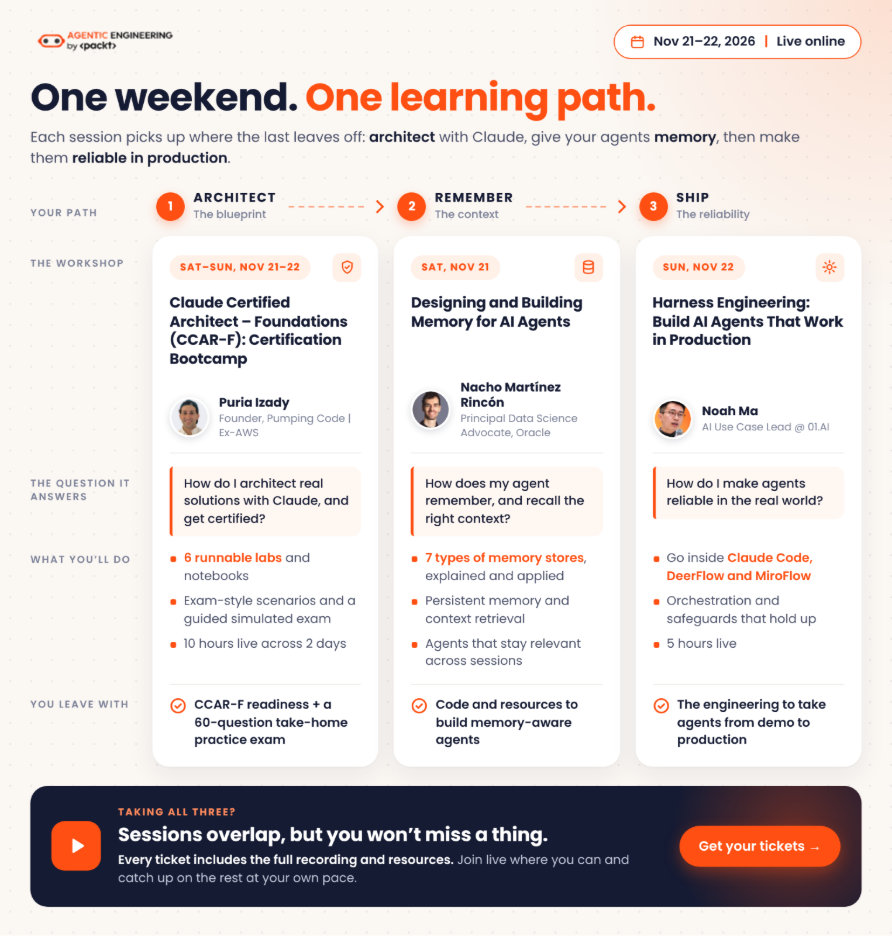
Preparing for the Claude Certified Architect – Foundations (CCAR-F) exam? Join Puria Izady (ex-AWS, founder of Pumping Code) on November 21–22 for a 10-hour, hands-on bootcamp with 6 runnable labs, real-world architecture scenarios and a full 60-question practice exam.
Want to go further? Two more live workshops run the same weekend:
Designing and Building Memory for AI Agents (Nov 21) with Nacho Martínez Rincón, Principal Data Science Advocate at Oracle.
Harness Engineering: Build AI Agents That Work in Production (Nov 22) with Noah Ma, AI Use Case Lead at 01.AI.
Pick a single workshop, or get all three with the AI Engineering Weekend bundle. Recordings and learning resources are included with every workshop.
See the full schedule and choose your workshop below.
CTA – Learn More - https://luma.com/claude-certification-bootcamp?utm_source=ken
The workshops cover three decisions that come together the moment an agent can act on your behalf. Its architecture determines which services it can reach. Its memory carries your preferences across tasks. Its harness governs what it does next. Imagine asking a travel agent to find an eSIM for your next trip. It remembers your $50 budget and finds a plan for $35. Should it show you the offer or buy it? The price is within budget. Your instruction was to find a plan. Whether the agent stops to ask depends on how its harness handles the difference between a remembered preference and permission to spend.
That question is already surfacing on both sides of a purchase. AWS Marketplace lets an agent buy a service through a company’s existing bill. Singapore’s proposed Know Your Agent protocol approaches the transaction from the other side. When a financial institution receives an instruction from an agent, how can it verify what the customer authorized?
Become a paid subscriber to read my analysis of eight agentic AI trends and the specific signal I’m watching in each. I follow the evidence from operating-system agents and autonomous payments to browser testing and enterprise deployments, including what happens when two agents each follow their instructions and still produce the wrong outcome for the business.