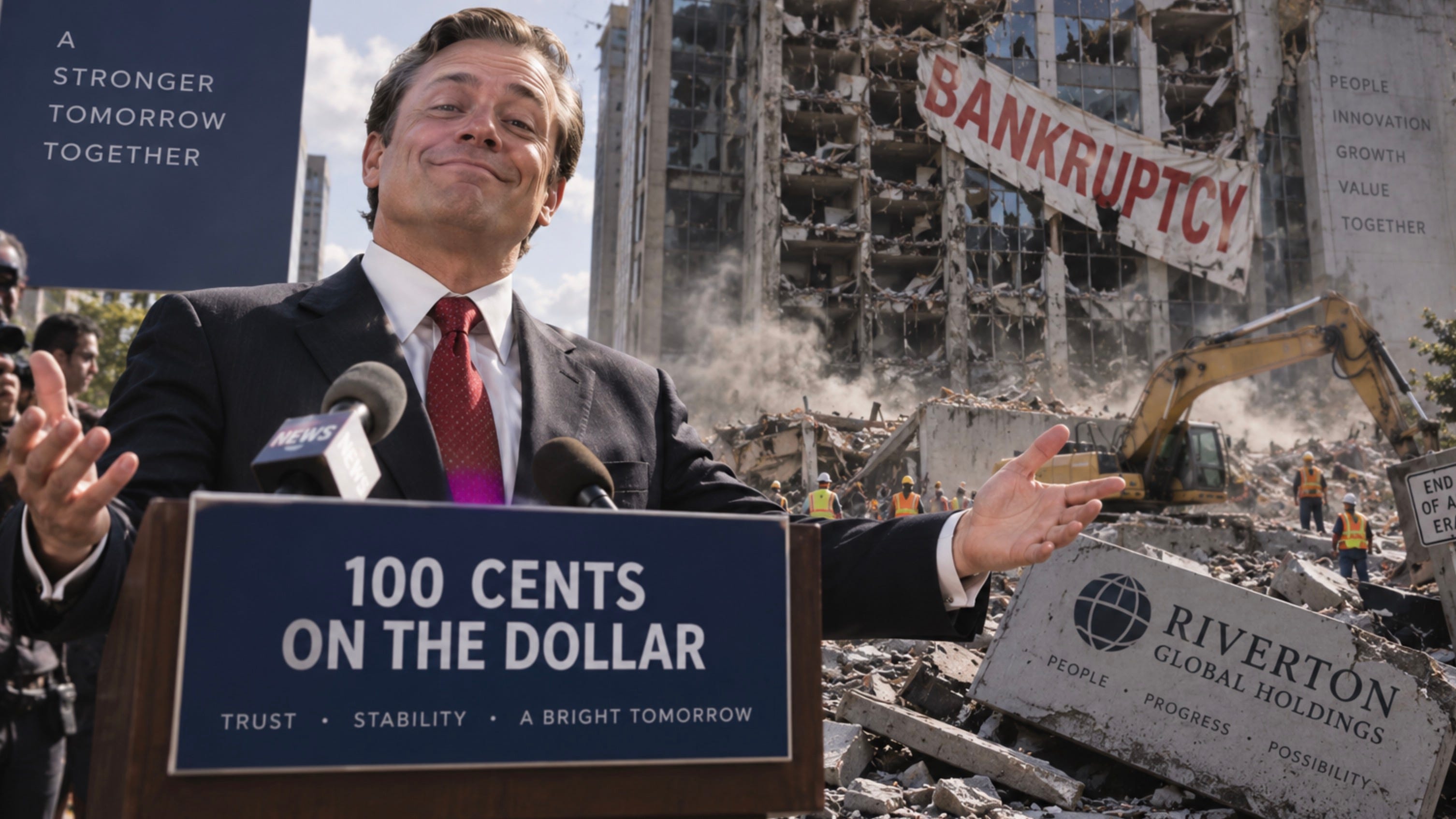
Private credit’s reckoning is not arriving with one grand, spectacular crash. It is arriving slowly and steadily, one loan at a time.
For years, one of private credit’s great attractions was the remarkable stability (or *perceived *stability) of its valuations. Public bonds could fall ten points in a week. Leveraged loans could gap lower after a bad earnings report. But private loans somehow possessed the soothing ability to remain at 98, 99 or 100 cents on the dollar through almost anything, all while paying investors a healthy yield.
Incredible, right? Another financial fairy tale…a proverbial unicorn shitting rainbows.
Until reality eventually reared it’s head, and now, to the surprise of no one, we are finding out unicorns don’t exist. Imagine that. We are learning that the absence of volatility in a reported mark does not mean the absence of deterioration in the underlying loan. And that is increasingly where the private credit story gets heinous…and why I’ve been writing about it for 2 years now.
The opacity is unlike any other corner of markets. Some borrowers can weaken for months, even years, while their loans remain marked at levels suggesting that most or all of the money is still coming back.
Eventually, though, something happens that makes the deterioration impossible to finesse away. A borrower stops paying interest. A hoped for refinancing disappears. The sponsor declines to put in more equity. A rescue transaction collapses. Or, most decisively, like we are seeing more and more, the underlying company files for bankruptcy.
That is when the soothing stability of private credit can suddenly disappear. A loan that sat near par through months of worsening fundamentals can plunge to 50, 20, five cents or even zero in remarkably short order. The economic deterioration may have been happening all along. The mark simply waited until reality became too difficult to ignore. You then get headlines like this one from Bloomberg yesterday.
And increasingly, the pattern looks familiar. A company struggles, leverage stays high, liquidity deteriorates and interest becomes harder to pay. Yet there is always a reason not to mark the loan too aggressively. Maybe EBITDA recovers. Maybe rates fall. Maybe the sponsor writes another check. Maybe there is a refinancing, an asset sale or a transformational M&A deal just around the corner. Maybe the guy responsible for marking down the loan has set his “out of office” email response to inform people he is taking 2 month vacation on his yacht in Malta.
Hope, conveniently, has a fair value. It’s always 100 cents on the dollar or damn close to it. But then…painstakingly and eventually…reality catches up and 100 cents quickly becomes 20 cents. Or zero cents.
The latest example is Loparex, a borrower held by Blue Owl Capital Corp., or OBDC. According to Bloomberg, at the end of 2025, its first lien debt was still carried around par and its second lien debt at roughly 88 cents on the dollar. By June, OBDC was carrying portions of the second lien at about five cents and one first lien position at roughly 22 cents. Loparex was also put on nonaccrual. Moody’s has since deemed the company in default and said a Chapter 11 filing is a possibility.
Perhaps recoveries ultimately exceed those marks. That happens in restructurings. But the interesting number is not five cents. It is 88 cents.
The loan did not suddenly become troubled on the day somebody changed the valuation. Loparex had been struggling with its debt load for years, including a 2024 distressed exchange that S&P considered tantamount to default. Yet the second lien still ended 2025 marked at roughly 88.
This gets to the central problem with private credit valuations that I have been harping on non-stop for years. These loans generally do not trade in liquid markets, so managers rely on models, comparable companies, third party valuation firms and their own judgment. That is unavoidable. But it also means that valuation becomes most subjective precisely when the underlying credit becomes most uncertain. If an executive were so inclined, he could figure out a way to model a bankrupt hot dog cart at a $1 trillion valuation. Like the Fed, printing cash, it’s all just made up bullshit out of thin air manipulated in seconds on a spreadsheet.
And that’s all good and well. But bankruptcy has a nasty habit of pissing in the proforma punchbowl. Once a company actually files bankruptcy, the comfortable range of hypothetical outcomes (hereinafter referred to as “bullshit”) gets much narrower. Creditors, restructuring advisers and courts start converting theoretical enterprise values into actual recoveries. At that point, extending and pretending gets considerably harder. Bankruptcy does not necessarily create the loss. It can simply make the loss impossible to avoid recognizing.
Here are some recent examples that make the point and what to watch out for.