For daily news, updates, and analysis, be sure to follow us on Instagram. If you are able to support independent journalism, please make a tax-deductible donation to News Not Noise here.
It’s hard to watch what’s happening in Europe without seeing echoes of what’s happened here in the U.S. A student protest begins over real grievances. Then the radicals, chaos agents, and looters arrive. Suddenly police are using tear gas, buildings are burning, and the grievance that started it all is sidelined. The images become the story and politicians know exactly what to do with those.
France votes for president next spring. The far-right and hard-left are angling for big wins. Chaos tends to brutalize the center, and fear and unrest can be good for the extremes.
Now consider the timing. Russia is trying to crush Ukraine and Europe is Ukraine’s essential democratic backstop. A Europe consumed by its own unrest has less time, money, and political will to spare confronting Putin.
Russia isn’t the only one who stands to gain from a weaker Europe. America’s tech giants have spent years fighting EU regulation, and to them a distracted, divided Europe might have its charms.
I am not suggesting outside forces engineered the protests. I’m saying that when democracies turn on themselves, it’s worth keeping track of who benefits. At this stage, the most important question may not be who started the fire. It’s who has an interest in watching it spread.
In today’s newsletter: The revolt goes global. Who cut Ukraine off? The Russia exception. The Kennedy Center marriage. Canada’s breakup vote. Settler violence meets consequences. Amanpour to leave CNN. Suddenly, women’s health. And in News That Doesn’t Suck: Steam cleaning strawberries.
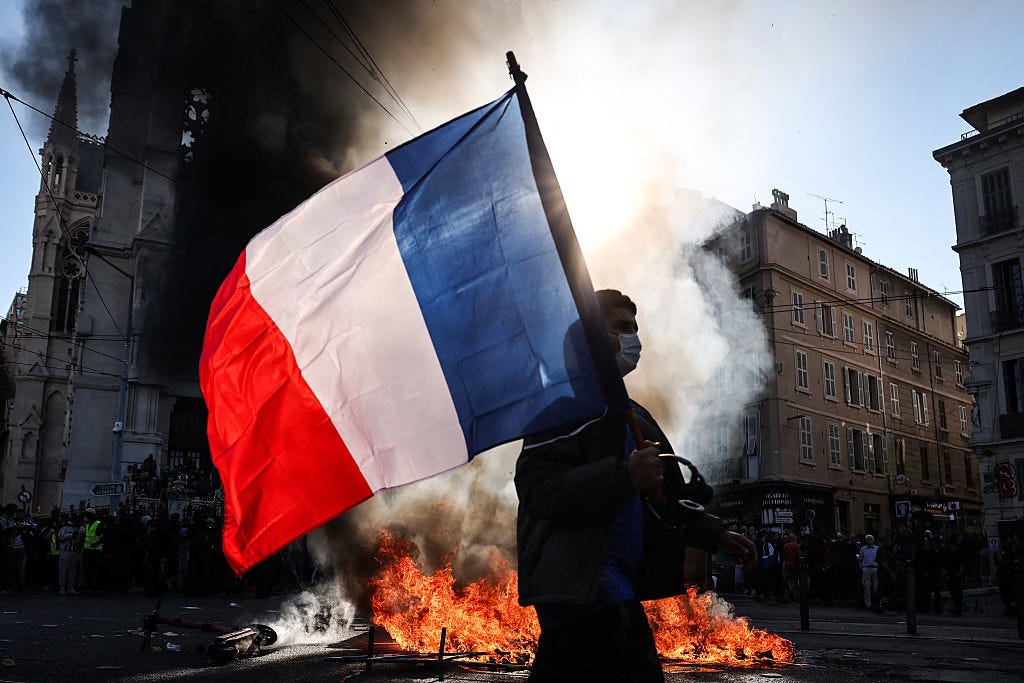
Protest Like It’s 1968: France’s centrist government asked some cities toimpose“partial curfews” and threatened to ban public gatherings after weeks of protests exploded into some of the country’smost destructiveriots in decades. It started with student protests but more radical elements turned the demonstrations violent. The interior ministeradmittedpolice “lost control” and submitted his resignation, which President Emmanuel Macron rejected. Rioters looted or damaged thousands ofbusinesses, almost 2,400 people werearrested, hundreds were injured, and two peopledied. In Marseille, masked individualsbroke intocity hall; in Lyon, a crowdset fireto the city’s tourist office; in Limoges, rioterspractically destroyeda 19th-century town hall. The governmentblamesfar-left extremists and “delinquents” for the chaos. Jean-Luc Mélenchon, the head of France’s hard-left party and a major supporter of the protests,𝕏rejectsthe accusation,arguingthat the government’s unpopular policies and heavy-handed policing fueled the unrest.TrumpandVanceclaimed, without evidence, that immigrants were responsible for the violence. Themain political beneficiaryof the violence may be Marine Le Pen, the head of France’s far-right party. Polls show herleadingpresidential polling, with elections just six months away. She is seizing on the riots to attack her centrist and left-wing rivals andcast herself— and the far-right — as as the answer to the chaos. President Macronpromised“concrete proposals” this week, but offered few specifics beyondpledgingto lower gas prices. Hewarnedthat “those who sought to bring down the Republic will be held accountable.” See some of the weekend protestshere.**Who Are the Protestors?**According to thegovernment, the “vast majority” of the 500,000 people whodemonstratedacross France on Saturday were peaceful. (Organizersput the figureat 800,000.) The protests began with students protesting the poor quality of suburban schools, the high cost of university tuition, and underfunding. (Catch uphere.) But the movement quickly became much bigger and messier. Unions, Yellow Vests, environmental activists, anti-Israel protesters, and far-left groups joined in, along with more radical elements and looters. Some came to support the students, others brought grievances of their own, mainly about thecost of living. Gas prices, which remain high thanks to the war with Iran, areone flashpoint. Another is the government’s yearslongstruggleto force through deeply unpopular austerity measures, which supporters say are necessary to avoid alooming debt crisis. The weekend’s violence furtherspooked investors, sparking a sell-off in France’s bond market. (We explain why the bond market mattershere.) Many people across Franceexpressed frustrationwith the violence, which they — andthe government— say distracts from the legitimate grievances of the protestors. Francehas a namefor opportunistic looters and rioters:Casseurs, which literally means “breakers.”Spilling Over: France isn’t alone. Similar protests eruptedacross Europe, including inBelgium,Portugal, andItaly. In Albania, monthslong protests against aKushner-backed development(and corruption in general)turned violent. Similar youth-led movements have challenged governments around the world, including inIndia,Morocco,Nepal,Indonesia, and thePhilippines. These are different countries with different grievances, but a common strain of anger over inequality, affordability, and institutions that many young people believe aren’t working for them. What do you think governments should do about it?
Breakdown: Ukraine says the U.S. is restricting military support it needs to fight Russia. Ukraine’s President Volodymyr Zelenskyysaidthe country’s use of Starshield remains restricted; that’s the military version of SpaceX’s satellite internet service Starlink. Zelenskyy𝕏warnedthe restrictions, which he blames on the Trump administration, are hampering the military’s efforts to intercept Russian drones, strike Russian forces in occupied territories, and deliver supplies to front-line troops. The Trump administration denies responsibility. Treasury Secretary Scott BessentsaidZelenskyy should “be very careful about making statements like this that aren’t true.” Secretary of State Marco RubioclaimedUkraine doesn’t haveaccessto Starshield at all, and had actually requested access to “conduct deep strikes inside of Russia.” But a well-placed American source familiar with Ukraine’s military planning tells me that Ukraine is not using Starshield for strikes inside Russia. The source says it is essential to defending Ukrainian territory and that children are dying while access is restricted. Zelenskyy also accused the U.S. ofnot warningUkraine about a massive Russian attack on energy infrastructure in Kyiv, the capital, which left more than 500,000 people without power, heat, or running water. Rubio suggested a “software problem” could be to blame. On top of that, Zelenskyyclaimedthe Trump administration is delaying already-paid-for Patriot interceptor missiles, which are running critically low in Ukraine. Taken together, the disputes point to a much bigger question: whether the Trump administration is pulling back from years of support for Ukraine. TrumpclaimedZelenskyy “doesn’t want to end this war, and probably never did.” Zelenskyywarnedthat Ukraine would lose without U.S. support, and argued siding with Putin would be an “historic mistake and a big tragedy.”Pick a Side: Trumpwaivedbipartisan sanctions on Russia, named for Lindsey Graham, days before they were set to take effect. He claimed that doing so “is in the national interests of the United States.” Rubiosaidthe move is a 60-day pause to analyze their economic impact. (No similar pause before sweeping tariffs on trading partners?) Trump’s move drewbipartisan criticism.Money Talks: Trumparguedthe waiver is necessary for peace negotiations with Russia, which, he now claims, involve “hostage negotiations.” Meanwhile, the people negotiating peace are also reportedly discussing business – their own. Jared Kushner and Steve Witkoff, Trump’s peace negotiators, arereportedly involvedin talks over a multibillion dollar deal to buy assets from one of Russia’s biggest energy companies. Among the reportedpotential investorsare Trump donors and business associates of Kushner and Witkoff, including two behind Kushner’s controversial development in Albania.Missing Someone? Putin reportedlyproposeda three-way meeting with Trump, and China’s Xi Jinping next month to discuss the war in Ukraine. Not invited: Ukraine.Threats: The U.S. ambassador to Europethreatened“devastating” consequences if the EU moves ahead with an alternative to Starlink, reducing its reliance on Elon Musk’s satellite network. The EU would also restrict foreign companies’ access to European radio spectrum used for satellite internet. The Trump administration is, erm, warning Europe against both moves.
MAGA Feud: This one has a little bit of everything: Trump-world access, a billionaire, the Kennedy Center, Venezuela, and a marriage. A top Trump adviserallegedly offereda Turkish billionaire access to “VIP events” and administration officials, including Trump, in return for amassive donationto the Kennedy Center — which apparently never arrived. Ric Grenell, whoformerly ledthe Kennedy Center, denies this. Here’s where things get weird. The 29-year-old billionaire is Turhan Mildon, whorecently married… 42-year-old Alina Habba, Trump’s former personal lawyer, af…