This is the first of two reflections on going home.
The Lord God formed the man from the dust of the ground and breathed into his nostrils the breath of life, and the man became a living being.— Genesis 2:7
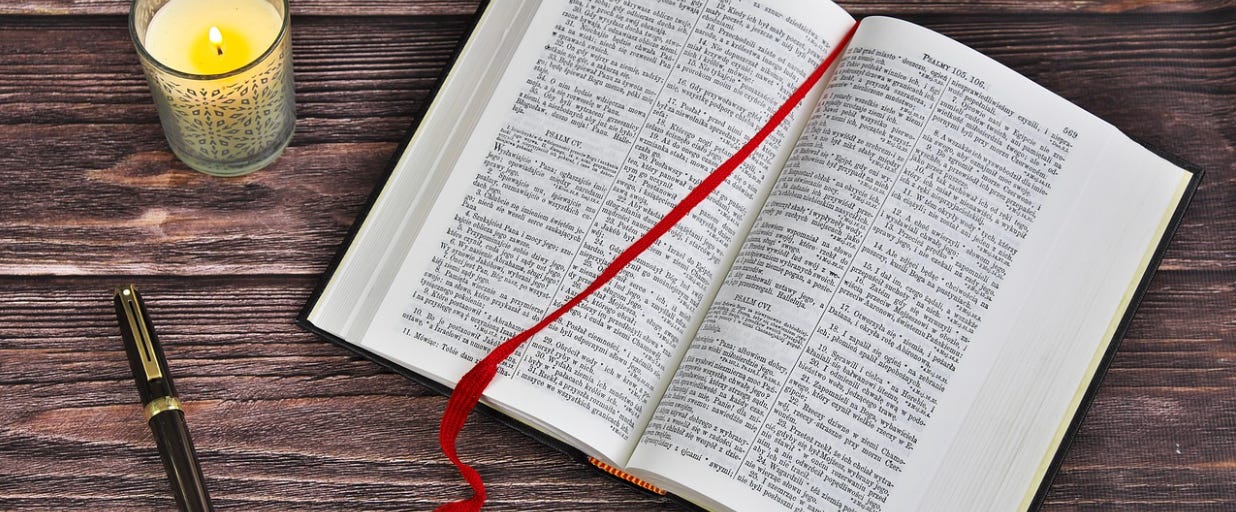
Every morning, an old man settled into his chair, picked up his magnifying glass, and opened his Bible to Matthew 1. A genealogy. Pages of names most people skip on their way to the actual story.
His grandson finally asked. “Grandpa, why do you always read that chapter? It’s just a list of names.”
The old man looked up, completely unbothered. “Well, I’m going to heaven soon. I should at least know their names. You can’t greet someone you’ve never heard of.”
I have told that story more than once. People laugh — and then, somewhere in the middle of laughing, they go quiet. Something about it lands before they’re ready for it. There is a kind of readiness that only comes to those who have made peace with where they are going. The old man had it. Most of us are still working up to it.
None of us were there when it happened. And yet Genesis 2:7 tells us exactly how we came to be: a revelation so precise, so intimate, that it reshapes how we understand ourselves.
He stooped.
He formed the man from the dust of the ground. The Hebrew word is yatsar (יָצַר), the word of a potter shaping clay on a wheel, pressing thumbs into wet earth, coaxing form from formlessness. There is something unhurried in that word. Something that cannot be rushed. God was not manufacturing. He was making.
And then He leaned close and breathed into him the breath of life. Just that. A breath. And dust became someone.
Not air. Not oxygen. The same breath used elsewhere for the breath of God Himself (Job 33:4). What entered us in that moment was not merely biological. It was something of Himself, like eternity folded into dust.
And so we became what we are: dust, animated by the divine. Dust and spirit.
We are, from our very first moment, creatures of two worlds. The earth is in us. We feel its weight. We tire, we age, we return to it. But something else is in us too. Something that does not belong to the ground. Something placed there by the One who leaned close enough to breathe — and that has never stopped belonging to Him.
Most of us live as if only one of those worlds is real.
We plan for this life with great care. We think about our careers, our health, our families, our futures. These are not wrong things. But when they become the only things, something in us quietly starves. The part that was made for more than dust begins to suffocate under the weight of the only-earthly. We were built for two worlds, and we are trying to live in one.
Ecclesiastes names it plainly:
*The dust returns to the ground it came from, and the spirit returns to God who gave it. *— Ecclesiastes 12:7
That is not a morbid verse. That is a map: one that shows not just where we are going, but where we are going back to.
C.S. Lewis observed that the Christians who did the most for this world were precisely those who thought most about the next. He was right. The old man with his worn Bible was not escaping the world. He was living in it more honestly than most of us do, because he remembered what this life was, and what it was not.
We are not just bodies that happen to have souls. We are souls that have been given bodies: dust shaped by a Potter’s hands, filled with a breath that came from God Himself.
That changes how we hold this life. Not loosely, as if it doesn’t matter. But openly, knowing it is real and good and worth loving, and knowing it is not the whole story.
Every morning, that old man opened to the same page and read the same names. Abraham. Isaac. Jacob. Salmon. Boaz. Jesse. And on down the line. He wasn't memorizing a genealogy. He was getting acquainted. Putting names to the people he expected to meet one day: to walk up to, extend a hand, and say, I know you. I've been reading about you for years.
He wasn’t afraid of dying. He was excited about arriving.
The question is not whether we are going. We are. The question is whether, like that old man, we are getting ready.
We were made from dust. But we were breathed into by God.
And the breath always finds its way back.
© 2026 Bible Portal. Free to share with attribution. Please keep the source and a link to Bible Portal intact. For other uses, contact us.