This is the second of two reflections on going home. Read the first reflection, "Getting Ready," here.
I have fought the good fight, I have finished the race, I have kept the faith.— 2 Timothy 4:7
Cheon Sang-byeong was one of Korea’s most beloved poets. In 1967, he was swept up in a political crisis, falsely implicated in a spy scandal, and taken by the Korean Central Intelligence Agency. He was tortured. By the time he was released, something in him had broken that never fully healed. He wandered the streets of Seoul for years, living in poverty, drinking too much, barely holding together. His friends, assuming he was already gone, published a collection of his poems as a posthumous work while he was still alive.
He died in 1993.
But before he died, he wrote a poem called “Return to Heaven.” And its last lines stop me every time I read them:
“The day my sojourn to this beautiful world ends, I shall go and say it was beautiful.”
I don’t know how to explain that. Not from the life he lived.
The Apostle Paul wrote his own version of that sentence. He wrote it from a prison cell in Rome, near the end of his life, knowing execution was coming.
Paul had been beaten, shipwrecked, stoned, imprisoned, and abandoned by friends. He had every reason to end on a note of exhaustion or bitterness. Instead, he ended on completion. Not triumph in the way the world counts triumph, but something quieter than that. The sense of a man who had run the race he was given, and was ready to cross the finish line.
He wrote that he had fought the good fight, finished the race, kept the faith, and that waiting for him at the end was the crown of righteousness, which the Lord, the righteous Judge, will award to me on that day (2 Timothy 4:7–8).
Two men. Two broken lives. Two testimonies that said: it was worth it.
Cheon had a word for this life. He called it an outing. A day trip. Something temporary and lovely, not meant to last forever, but worth every moment of it.
That is not resignation. That is not passivity. It is something closer to the deepest kind of freedom: the freedom of a person who knows where home is, and therefore can enjoy the journey without clinging to it.
Jesus said it first, and He said it plainest. On the night before He died, He told His disciples something that people have held onto through every kind of suffering since:
In my Father’s house are many rooms. If it were not so, would I have told you that I go to prepare a place for you? And if I go and prepare a place for you, I will come again and will take you to myself, that where I am you may be also. — John 14:2–3
This is not poetry. This is a promise. The outing has an end. And at the end, there is a room already prepared, not a vague destination, but a specific place, made ready by Someone who knows exactly who is coming. Jesus Himself went ahead. He is there now, waiting.
Paul glimpsed it from a prison cell. Cheon glimpsed it from the wreckage of his own life. What they found, what they were both reaching toward, was this: the outing has an end, and at the end, Someone is waiting who made a place for you before you even knew you needed one.
And that changes what we are able to say when the outing ends. Not just that we survived. Not just that we endured. But that it was beautiful. Because we were held, all the way through, by the One who loved us enough to go ahead and prepare a place.
We are all on an outing. Some days it feels like one. Other days it feels like anything but.
I think of Paul in his prison cell. I think of Cheon wandering the streets of Seoul. And I think about what it would take to arrive at the end of my own outing and say, honestly, without pretending: it was beautiful.
I’m not sure I’m there yet. But I want to be.
Maybe that is where it starts, not at the end looking back, but now, in the middle of the hard and the lovely both, choosing how to see.
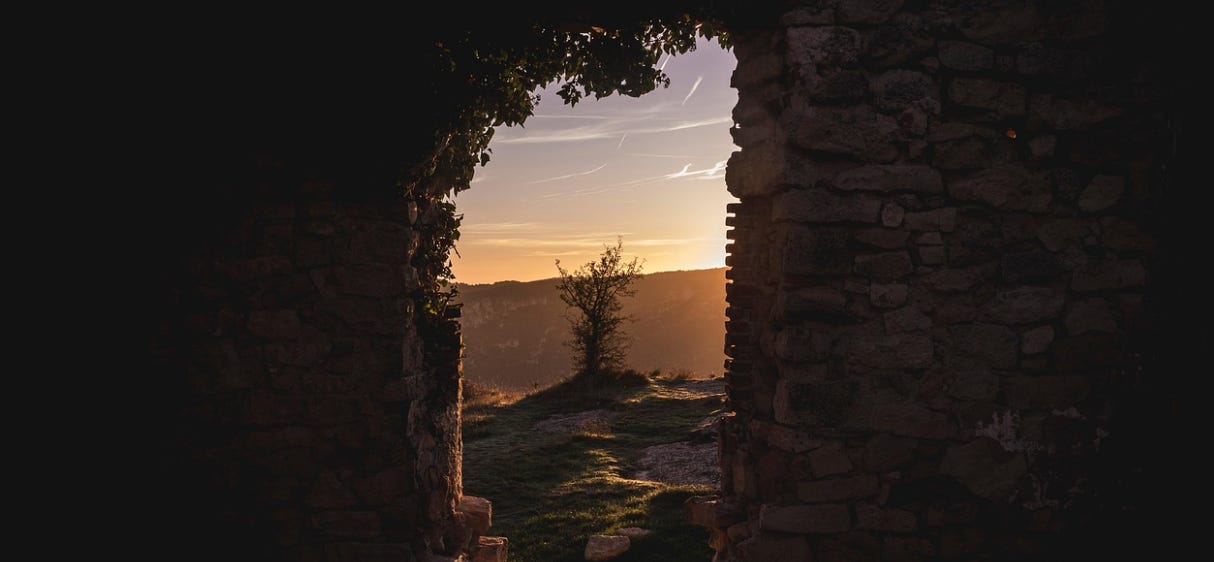
He has already gone ahead. The room is ready. Your name is on it. And one day, when this outing ends, we will walk through that door and finally say what every broken and beloved soul has said before us:
It was beautiful.
Before you turn the page, be still for a moment. A man who had nothing left still found his way to beauty: not because his life was easy, but because he knew where he was going. Stay with that.
i. Paul and Cheon both arrived at the same word — beautiful, worth it — through suffering, not despite it. What would it take for you to say the same about your own life? What is standing between you and that word?
ii. Jesus said He is preparing a specific place for you. Not a general heaven, but a room with your name on it. What does it do to you to sit with that image: that He has gone ahead, and He is waiting?
Lord, some days I cannot see the beauty. I am not going to pretend otherwise. There are days when I am more aware of what has been taken, broken, or lost than of anything lovely. I know what it is to wander. And Paul’s words from a prison cell feel further away than I care to say.
But You are not waiting for me to arrive at beauty on my own.
You went ahead. You prepared a place. You know my name, and You know which room is mine. And that means this outing — however hard, however long — is not wandering. It is a journey toward something You have already made ready.
Teach me to hold this life with open hands. To feel its weight without being crushed by it. To receive the hard parts and the lovely parts alike, knowing that one day, at the end of this outing, I will walk through a door You opened, and I will finally be able to say it:
It was beautiful.
In the name of Jesus, who went ahead to prepare a place and will come back to bring us home. Amen.
© 2026 Bible Portal. Free to share with attribution. Please keep the source and a link to Bible Portal intact. For other uses, contact us.