Washington has discovered a remarkable business model: make promises today, borrow the money tomorrow, and leave the purchasing power problem to whoever is still holding dollars when the bill arrives. Both parties can explain why their spending is essential and the other party’s spending is reckless. Somehow, the debt survives every election.
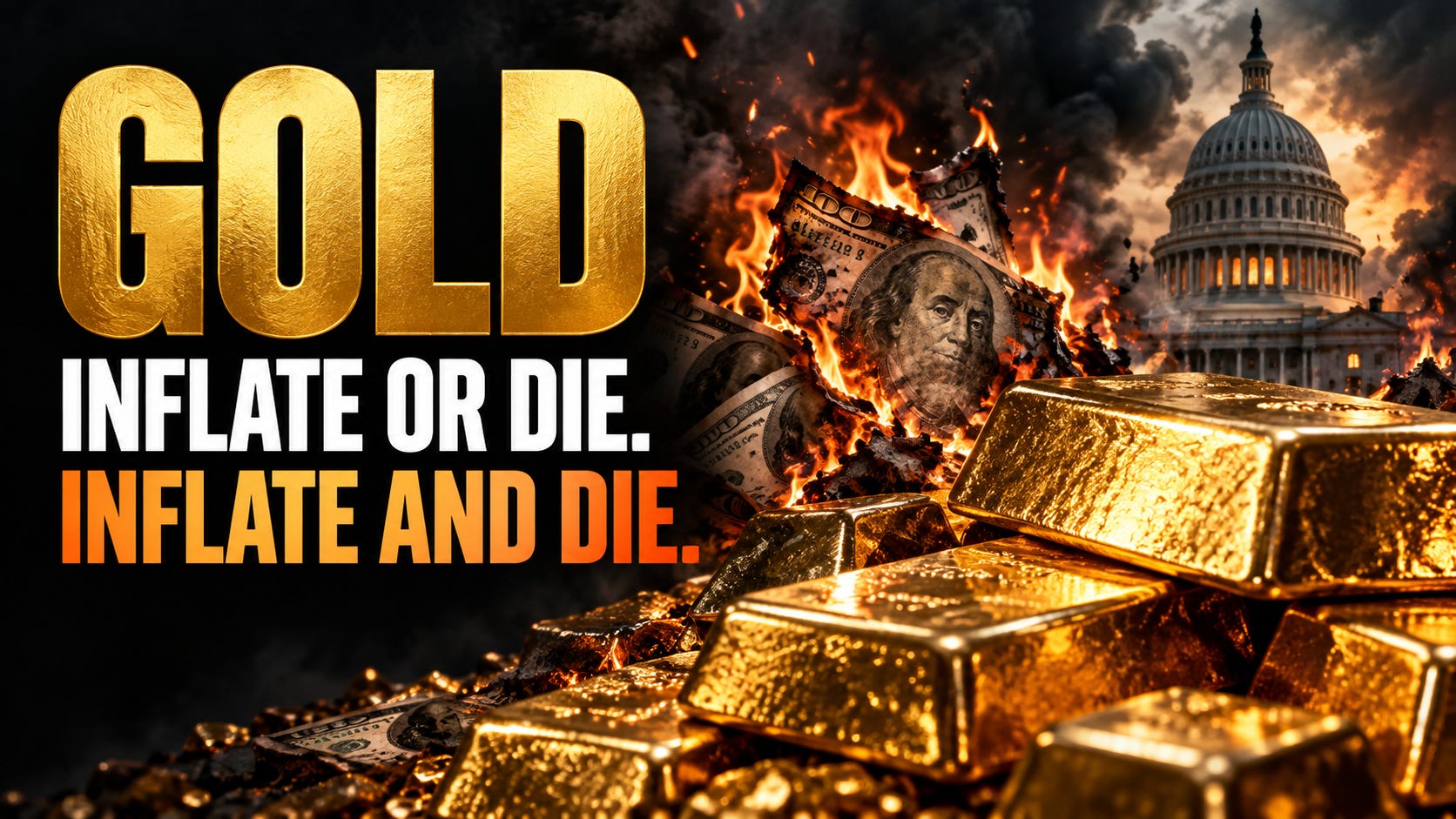
For years, the gold argument has been summed up in three words: inflate or die. Let the debt machine seize up and face defaults, falling asset prices, shrinking tax receipts, and furious voters. Keep the credit flowing and give everyone another chance to pretend the arithmetic will eventually cooperate.
But there is a second half to that bargain: inflate and die. Inflation can buy time for an overextended system while steadily eating away at the confidence that supports it. The question is how much time policymakers can purchase, and who gets stuck paying for it.
The scale of the problem is hardly a secret. In its April 2026 Fiscal Monitor, the IMF reported that global public debt had reached nearly 94 percent of GDP in 2025 and projected it would reach 100 percent by 2029. That is a forecast, not a deadline for financial Armageddon, but it tells you how much room governments are using up before the next emergency even arrives. (imf.org)
Now put yourself in the chair of an elected official. Spending cuts produce identifiable losers who call your office, organize, and vote. Higher taxes produce another group of angry people with accountants, lawyers, and campaign contributions.
Inflation spreads the damage around. Your grocery bill rises, your insurance renewal becomes a hostage negotiation, and the retirement income you worked decades to build buys a little less. Everybody knows something is wrong, but there is no single roll-call vote labeled “Reduce Kerry’s Standard of Living.”
That is why incentives matter more than intentions. A politician can sincerely want sound money and still support policies that undermine it when the alternative threatens the next election. Multiply that decision across enough officials and enough years, and you do not need a conspiracy to get a disastrous result.
There is a catch to inflating away debt that the easy-money crowd tends to skip. Unexpected inflation can reduce the real burden of existing fixed-rate debt, but governments keep borrowing and old bonds keep maturing. Once lenders expect weaker purchasing power, they can demand higher interest rates on the next round.
Government expenses also adjust. Workers want raises, contractors charge more, and inflation-linked benefits rise. The supposed escape hatch starts looking suspiciously like another revolving door.
Authorities may prefer a world in which interest rates remain below inflation for extended periods. The government gets some relief while savers receive dollars that buy less than the dollars they originally lent. On paper, the obligation has been honored; at the checkout counter, the creditor discovers the haircut.
That is where gold enters the conversation. A physical gold holding is not somebody else’s promise to deliver dollars in thirty years. It does not need Congress to authorize repayment, and its supply cannot be expanded by a central-bank announcement.
Of course, gold does not pay interest, and its price can fall hard. When investors need cash in a panic, they may sell what they can, including gold. Anyone selling you a story in which every bad headline guarantees a higher gold price is selling you a bedtime story with a brokerage account attached.
The more serious case concerns what happens after the panic. If governments and central banks respond to repeated crises by protecting financing conditions while leaving the underlying fiscal problem unresolved, investors have reason to seek assets outside that chain of promises. My argument for gold rests on that policy incentive, not on guessing next Tuesday’s inflation report.
Nor does every deficit become newly printed money. Governments can borrow from private investors, and central banks can resist pressure to make that borrowing cheaper. The danger grows when maintaining price stability becomes politically unbearable because the financing costs expose how fragile the government’s budget has become.
“Inflate and die” is a description of where persistent abuse can lead, not a claim that every indebted country must end in hyperinflation. A government can change course through spending restraint, revenue reform, stronger real growth, or some combination of all three. The question is whether it will accept those choices before markets make the choices for it.
I would welcome a credible change in direction. But I am not willing to confuse another promise of future discipline with discipline itself. Washington has been remarkably generous with promises, particularly the kind somebody else must keep.
For savers, the damage can arrive long before a dramatic currency crisis. Your account balance may grow while the life it can finance gets smaller. You can do everything the conventional playbook tells you to do and still discover that the measuring stick has been shrinking.
That is the discussion we pursue at the Insider Advantage: what policy choices mean for purchasing power, where the risks are moving, and which opportunities deserve closer examination. Take your seat at the table if you want to follow the incentives behind the announcements. The press conference is free; misunderstanding the consequences can get expensive.
Inflate or die is the argument for buying another year. Inflate and die is what can happen when buying another year becomes the entire economic plan. Gold cannot tell you when that plan runs out of road, but it gives you a way to hold something the people running it cannot simply print.