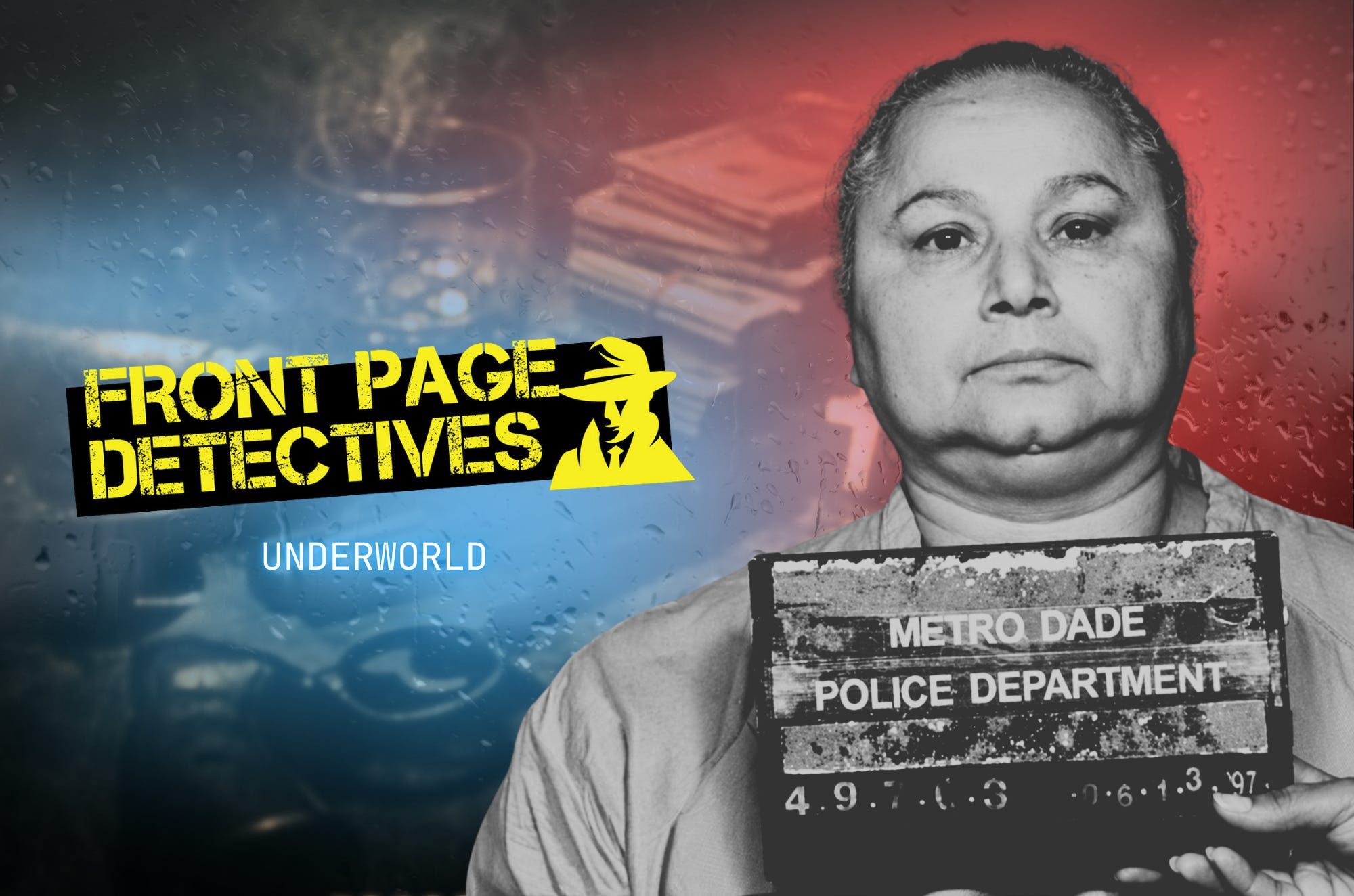
On September 3, 2012, an elderly woman walked into a butcher shop in Medellín, Colombia, and bought meat worth around $150. She was accompanied by her pregnant daughter-in-law, and there was little about the scene to attract attention. The customer was 69, considerably heavier than she had once been, and had spent most of the previous eight years living quietly enough that even the people serving her apparently knew little about her past.
As she left the store, a motorcycle arrived. A gunman climbed off the back, approached the woman and shot her twice in the head before calmly returning to the bike. The killers disappeared into Medellín, leaving their victim dying on the pavement. Her daughter-in-law placed a Bible on her chest.
It was an almost impossibly appropriate execution. Decades earlier, the woman had become notorious for deploying motorcycle-riding assassins against her own enemies, helping make sudden public murder one of the trademarks of Colombia’s emerging cocaine industry. She had survived husbands, rivals, informants, federal agents, nearly 20 years in American prisons and a criminal world in which retirement was rarely recognized as a legitimate career choice.
Her name was Griselda Blanco.
By the time Pablo Escobar became one of the most infamous criminals on Earth, Blanco had already helped establish something that would prove far more consequential than any individual drug lord. Cocaine could be turned into a multinational industry. Supply could begin in South America, pass through layers of couriers and transporters, reach wholesalers in American cities and generate fortunes previously unimaginable to conventional organized crime.
And when contracts, loyalty or money failed, bullets could hold the system together.