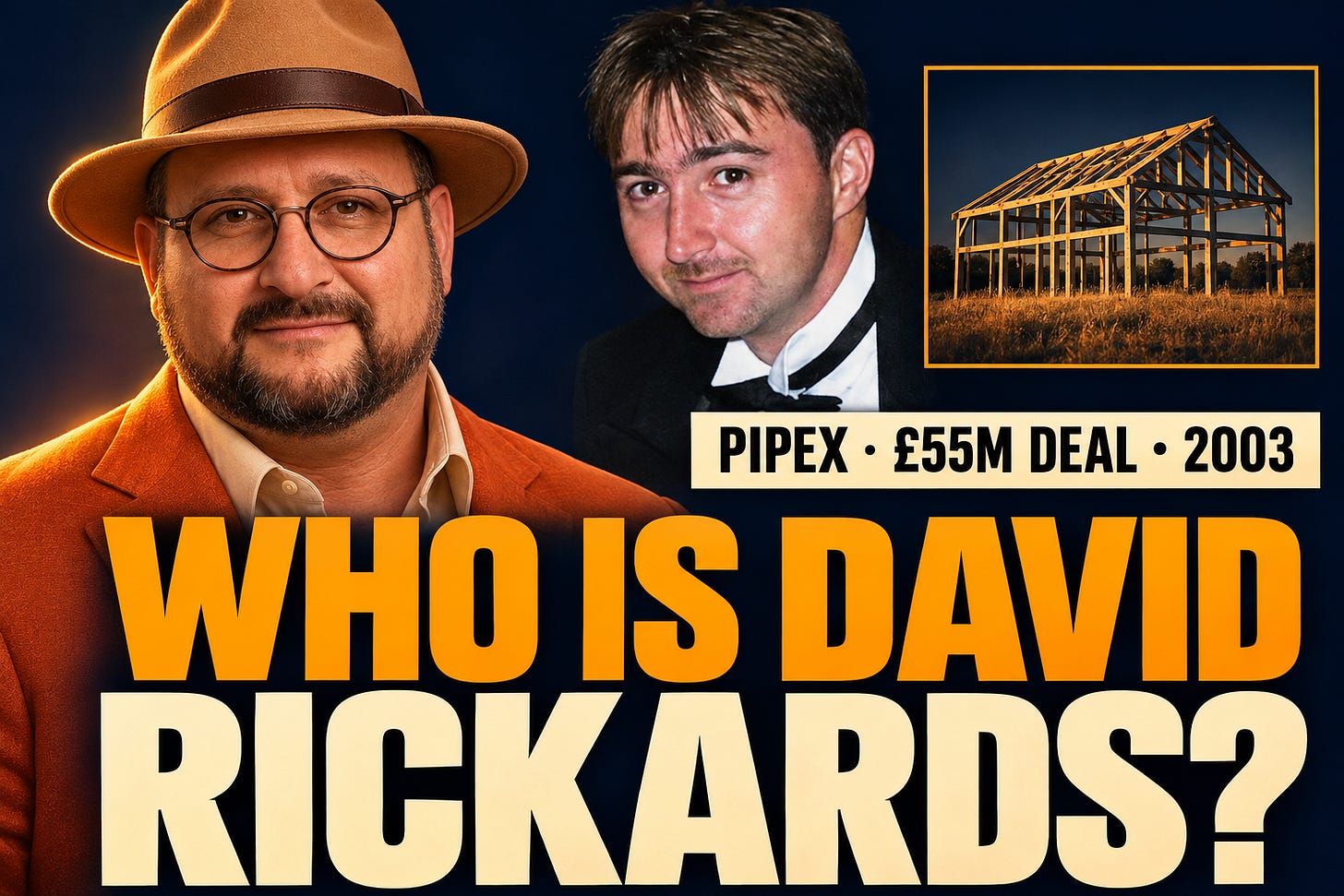
The Halesverse had a barn dispute. Then Rich Luthmann heard a name with a £55 million paper trail. On Two Lees in a Pod, Lisa Lee described gifts she says David Rickards sent for several purposes, including a barn project. Robbie Keszey questioned the theory that Rickards was aligned with Jeremy Hales and offered a different explanation for why work stalled: permits. Luthmann wanted to know who Rickards was and what the records could prove. British filings tell one story, about the rise and sale of an internet provider. The payment records could tell another. That’s where the reporting starts.00:00 Opening banter and litigation talk09:28 Lisa Lee introduces the donor dispute10:12 Who is David Rickards?15:42 The panel differs on a possible Hales connection19:17 Luthmann takes up the Rickards lead22:59 The accounting question and the receipts33:39 The on-air search for Pipex38:10 Lee explains her position on disclosure39:22 Lee disputes the total and all-barn characterization44:59 Keszey gives his account of the permit issue46:31 Deposition talk and the trademark opposition01:05:02 Luthmann discusses hearing from the other side
A £55 million internet deal is on the record. The barn money needs an accounting.
On Two Lees in a Pod, Rich Luthmann joins Lisa Lee and Robbie Keszey to ask how a donor named David Rickards became part of the Halesverse, the network of livestreams and disputes surrounding Jeremy Hales and his critics. Lee identifies the donor as the Pipex businessman and says he uses the online name Only Me. Luthmann calls the lead “millionaire in the shadows” and asks what can be verified.
The UK trail starts with Pipex. Britain’s Companies House lists David Peter Rickards, 60, as a former director of Pipex Networks Limited. The Independent reported that Rickards came from a finance and accounting background and acquired Pipex from WorldCom for an undisclosed sum. The Evening Standard dates that purchase to 2001. As broadband took off, Pipex built a business selling internet access. In October 2003, GX Networks agreed to buy it in a deal announced at £55 million. The buyer later reported the acquisition closed on October 28 and that Rickards served as chief operating officer after the deal. The £55 million figure refers to the announced transaction price. His current net worth has not been established.
Then there’s the barn. Lee says the gifts served more than one purpose: a holiday effort, fence work and, later, the barn. She disputes the public characterization that the payments amounted to $56,000 and were all meant for the barn. She says she previously shared figures and acknowledges there is money left over. She did not say on air what would happen to the balance, citing legal reasons. Keszey says the contractor he expected to do the work would not proceed without permits. He doubts Rickards was working with Hales. Those are the panelists’ accounts. We have yet to independently confirm that the donor and the Pipex executive are the same person, reconcile the payments and spending, or substantiate any coordination with Hales.
The next questions are concrete. What was sent, and on what terms? Which transfers were designated for the barn? What invoices, refunds or transfers match the records? What remains, and who holds it? Luthmann says he wants to hear from people on the other side of the dispute. Lee’s account deserves the same scrutiny as the claims made about her.
The episode also touches on deposition talk and Luthmann’s opposition to the JEREMY HALES trademark application. That opposition is pending before the Trademark Trial and Appeal Board. In a separate federal case, Judge Robert Hinkle adopted the magistrate judge’s recommendation and dismissed Hales’s sole claim against Luthmann with prejudice. That order did not decide the barn dispute. Richard is a participant in both legal matters and a guest on this episode.
Thank you to everyone who tuned into my live video! Join me for my next live video in the app.