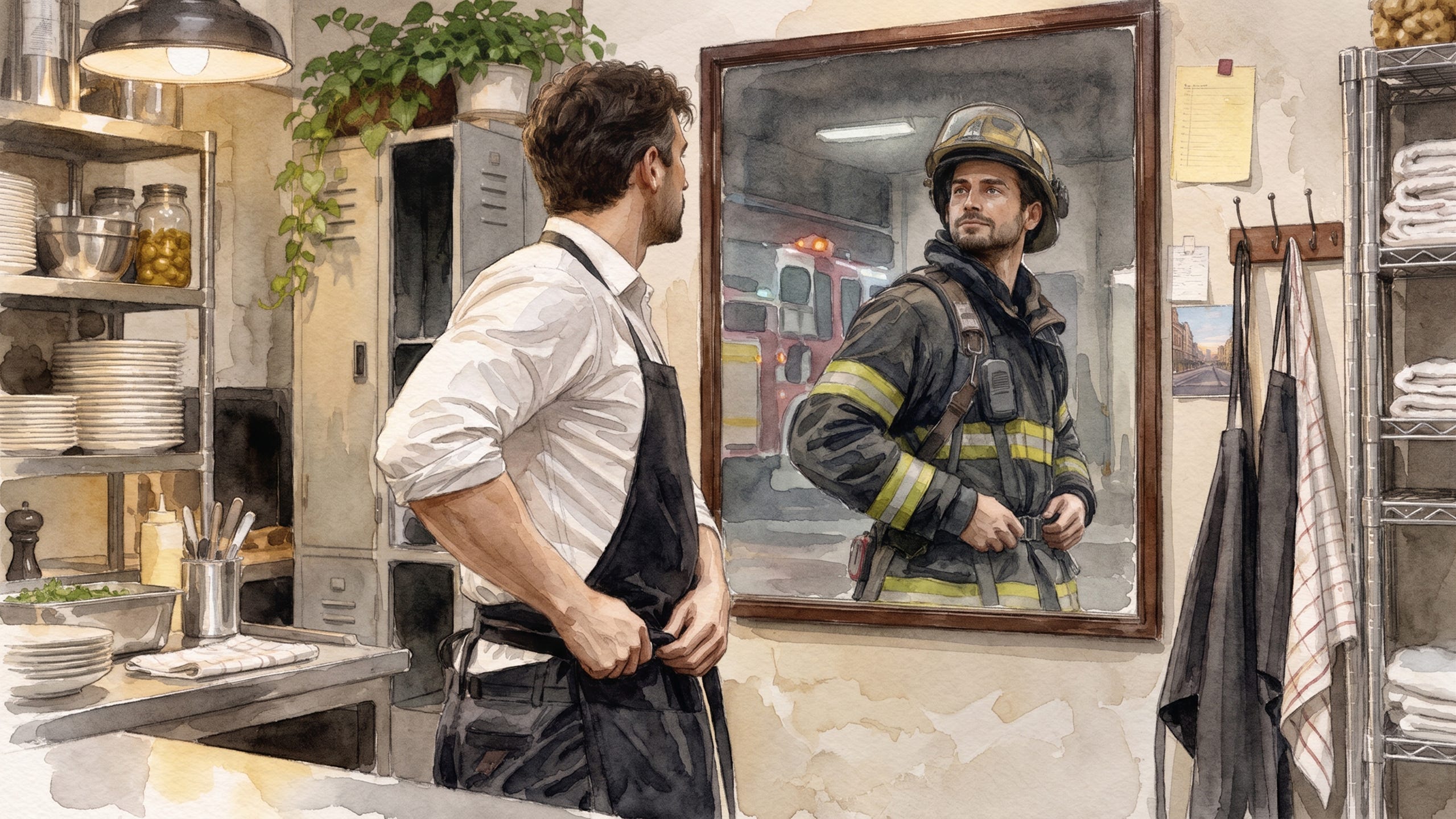
ODESA—The night before a fire broke out in my home in Ukraine, one of the firefighters who would put it out took my dinner order at a restaurant.
When I called the fire brigade the next day, I had no reason to expect a familiar face. Only after the fire was out did one of the men come over to me. Then I recognized my waiter.
We publish this newsletter every day at 9:05am NYC time / 4:05pm Kyiv.Your subscription fuels our work.
By day he saves lives. In the evenings he works at a restaurant because a firefighter’s salary doesn’t bring in enough to support his family. I’d gone out to enjoy a meal. He’d given up an evening with the people he loves so they could afford theirs.
What I remember best is his smile. He’d served us dinner with a smile the night before. The next day, after he and his crew had saved our lives, he came over with that same smile. Then he was off to the next call. If he hadn’t taken a moment to come over, I could have gone back to that restaurant a week later, thanked him for bringing me dinner, and never known what else I owed him.
I wonder how many people like him I’ve walked past in Ukraine. When the lights come back on, I have no idea who repaired the line or how long their family has been waiting for them to come home. I happened to meet this man twice, and it gave me a glimpse of the sense of duty that keeps this country going. His family needed him to take that evening shift. The next day we needed him, and so did whoever made the call after ours. He’s a hero. I nearly knew him only as the waiter.
Living in Ukraine, I write a good deal about what it takes to defend this country. I can tell you how an air defense system works and why it matters how many interceptors Ukraine’s partners are willing to supply. I have devoted rather less attention to the people who answer the emergency calls when a missile gets through. I could cover a whole night’s attack and give them five words. Emergency crews attended the scene.
On November 11, 2026, in Yahotyn, east of Kyiv, two of the men behind those five words were Oleksandr Bondarenko and Yurii Lytovchenko. Bondarenko was a fire station chief with 25 years of service. Lytovchenko drove a fire engine and had spent more than 30 years in the service. They were fighting a fire when the Russians struck again, in a practice cynically known as “double tapping”. Both died. Between them, they left behind two wives and three children.
By the day they died, at least 137 members of Ukraine’s State Emergency Service had been killed since Russia launched its full-scale invasion in February 2022. In Yahotyn, the next crew would need someone to take the chief’s place and someone to drive the engine. The next time a call comes in, the people answering it will know exactly what happened to the last crew.
Americans know what it means for a firefighter to die in the line of duty during a terrorist attack. On September 11, 2001, as people made their way down the stairs of the World Trade Center, New York firefighters climbed toward them in full gear. That day, 343 members of the New York City Fire Department died. Years later, firefighters across America still climb stairs in their memory. A quarter of a century later, they still remember which way their colleagues were going.
Under Fire News joins the Dzyga’s Paw charity to provide Ukraine’s Da Vinci Wolves 1st Assault Regiment with crucial life-saving equipment. This fundraiser’s goal is $10,000.
I think an American firefighter who has made that climb would understand a great deal about Bondarenko and Lytovchenko without knowing a word of Ukrainian. He knows how much of a lifetime 30 years in a firehouse represents. He could tell you what an experienced driver means to a young firefighter on his first call. And he would understand what it costs a family to share someone they love with strangers who might need him at any hour. I was one of those strangers.
Most of the work that keeps Ukraine going passes without a siren. After a blackout, the first you hear of a successful repair might be the refrigerator starting up. You put the kettle on. Somewhere out there is a crew whose names you’ll probably never know. On 9 November in Sumy, a Russian drone hit a vehicle taking power workers to their shift at a substation. Three were wounded. One electrician went into surgery that morning. He’d been on his way to relieve the previous shift.