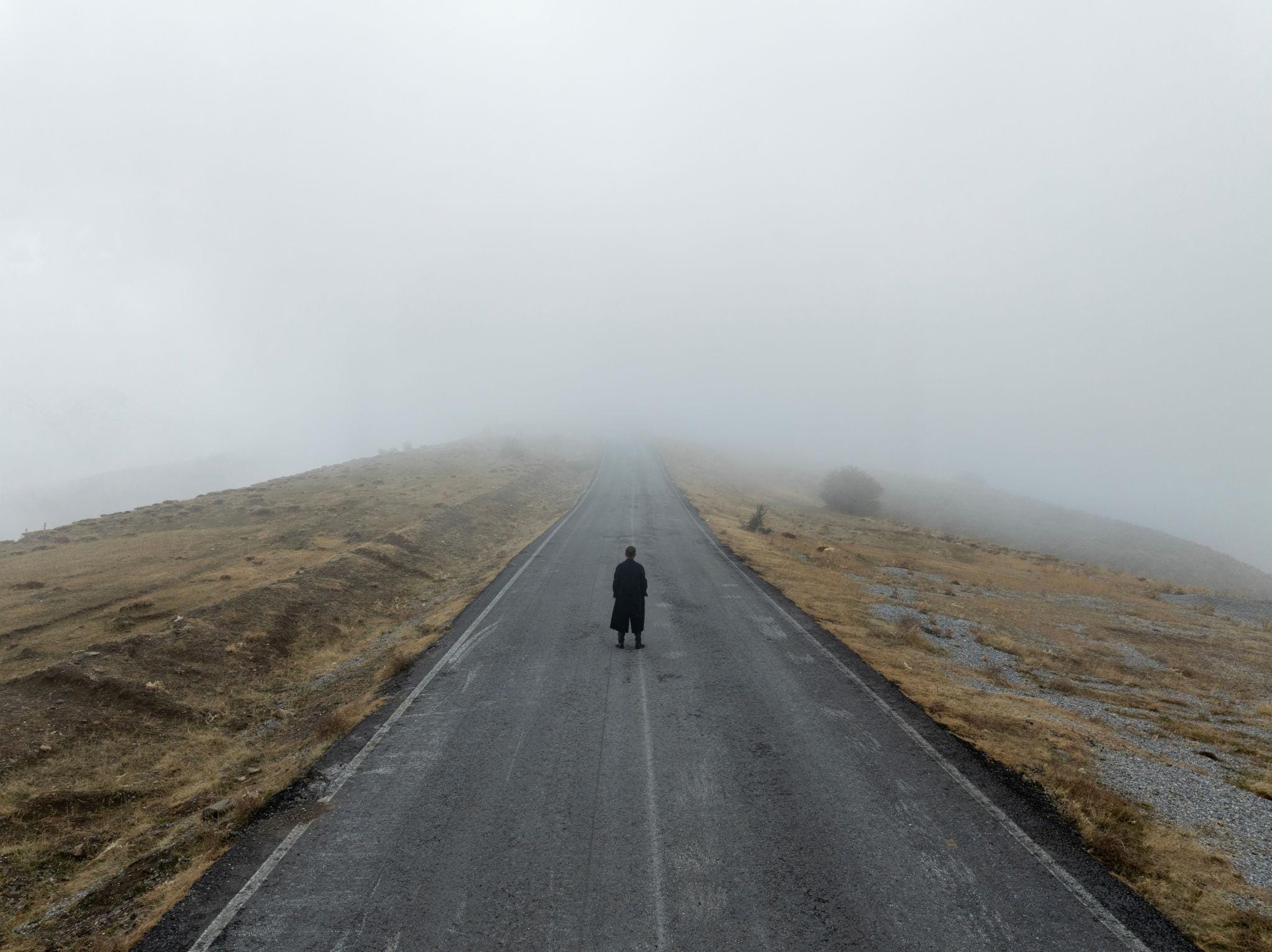
When I left Christianity nearly thirty years ago, I understood my departure largely in terms of what I no longer believed. Having spent years as an evangelical pastor, I had plenty to examine: the authority of scripture, the meaning of salvation, the claims made on God’s behalf, and the distance between what religion promised and what people actually experienced. Questioning those things felt consequential because they had organized so much of my life.
Looking back, I see that I was leaving more than a set of convictions. I was stepping outside a structure that had told me who I was, what my life meant, whom to trust, and how to interpret everything from an unexpected kindness to a devastating loss. Even my uncertainty had an assigned explanation. There were approved ways to suffer and prescribed ways to recover.
My earlier writing grew out of that departure and the humanity I began encountering beyond the boundaries I had mistaken for the edges of truth. Over time, however, a more difficult question emerged. What happens when someone no longer believes the teachings that constrained their life, yet continues to live within the patterns those teachings established?
That question changed the direction of my work. It led me toward human development, toward the field I call existential health, and eventually toward writing The Practice of Being Alive.
Religion is often discussed as though it were a collection of propositions someone accepts or rejects. That account misses the way belief becomes woven into ordinary existence. A doctrine about divine purpose influences how a person chooses a career, while a teaching about obedience enters the conversation they are afraid to have with their spouse.
Within a religious world, a person’s identity often arrives with relationships, rituals, obligations, and a vocabulary for interpreting experience. Sunday morning has a destination. Grief has familiar words. Other people know where to find you and have some understanding of what you consider sacred.
I have come to think of this as a kind of survival architecture. The phrase describes the psychological and social structure through which someone finds orientation and makes life bearable. Its usefulness depends on examining what the structure actually does, including the shelter it offers and the restrictions it imposes.
In , I explore religion’s historical role in organizing cooperation, shared identity, and responsibility across generations. Understanding those contributions deepens the question of what follows religion: how we sustain the shared conditions of a meaningful life while changing arrangements that demanded obedience or exclusion.
Some people receive substantial care within religious communities. Others learn that acceptance depends on concealing their sexuality, distrusting their conscience, or remaining silent about harm. Both experiences deserve an honest account, including when they occur within the same community or the same life.
When that architecture loses credibility, the resulting disorientation reaches beyond intellectual uncertainty. Someone who rejects the claim that God directs every event still faces the task of making decisions without that assurance. A person who leaves a congregation needs somewhere to bring their grief, and freedom from a prescribed identity opens the demanding question of how they want to live.
Religious departure is therefore an inadequate measure of what has changed. We also need to understand what held the person’s life together and what support remains when it falls apart.
I explored this more fully in , reflecting on what thirty years taught me about deconstruction, reconstruction, and reality. Understanding what religion had organized in my life helped me recognize why changing my beliefs left so much unfinished.
One of the most persistent assumptions surrounding deconstruction is that identifying a harmful belief loosens its grip on the life organized around it. Sometimes it does. Recognizing manipulation or discovering that a frightening teaching lacks credibility brings real relief.
Yet understanding a pattern and becoming able to respond differently involve different kinds of work. Someone who spent years treating disagreement as rebellion has more to learn than the intellectual legitimacy of dissent. They need experience disagreeing without immediately abandoning their judgment or assuming responsibility for another person’s displeasure.
Consider a woman who has rejected the belief that God punishes disobedience. She receives a family request that would consume the only afternoon she has to herself that week. Before she has considered what she wants, she feels the familiar pressure to agree.
Her theological conclusion is settled, but the situation remains difficult. She recognizes no wrongdoing in wanting rest, yet guilt arrives with the force of evidence. Asking someone else whether she is allowed to decline offers temporary relief while preserving the arrangement in which another person must authorize her choice.
This is an illustrative situation, but the underlying problem has become central to my work. A belief system teaches through repeated experiences of reward, punishment, approval, and exclusion. Its influence continues through habits of attention and relationship long after its explanations cease to persuade.
What looks like indecision sometimes reflects a history in which choosing carried serious consequences. Difficulty identifying a preference makes sense when being good meant accommodating everyone else. These responses have histories, and understanding those histories gives us a more useful starting point than urging people to trust themselves.
My attention gradually shifted toward the abilities people had been discouraged from exercising. I began asking what happens to discernment when questions invite suspicion, or to emotional understanding when anger is treated as evidence of spiritual failure. A community that rewards self-denial without respecting limits gives its members abundant practice overriding themselves.
These effects vary across religious environments, and religion shares this territory with families, workplaces, and other institutions. The relevant question concerns the particular conditions under which someone learned to live. We need to understand what those conditions encouraged and what they made costly.
I think of some of this as interrupted development. A person has abilities that received little opportunity to grow because exercising them threatened a relationship or a source of belonging. They might have become exceptionally skilled at anticipating other people’s needs while remaining unfamiliar with their own.
That account also asks us to recognize competence where we find it. Adults emerging from controlling environments bring knowledge, endurance, practical skills, and relationships that deserve respect. Their difficulty in one area does not erase the capacities through which they have already sustained a life.
Development resumes through experiences that make another response possible. Expressing an ordinary preference, revisiting a decision after learning something new, or allowing a disagreement to remain unresolved gives judgment somewhere to develop. Support helps people attempt these things at a scale their circumstances permit.
None of this requires waiting to become fully developed before claiming a life. That would reproduce the old postponement in a different vocabulary. The person’s life already belongs to them, including while they are learning how to participate in it with greater freedom.
In , I explore what happens when a person’s growth exceeds the room their religious framework allows. A system that once provided orientation becomes constraining when continued belonging requires them to suppress the judgment and awareness they are beginning to develop.
This understanding also made me more attentive to authority within the world of deconstruction itself. Leaving a religious institution does not eliminate the wish for someone who knows, and a person exhausted by uncertainty has understandable reasons to seek confident guidance.
A new teacher sometimes inherits the place once occupied by a pastor. Their conclusions differ, but their audience still looks to them for permission to think, speak, and belong. Agreement becomes a measure of progress, and doubt about the new framework begins to feel suspiciously like regression.
In , I examine how a movement built around questioning authority begins to reproduce its own orthodoxies. The deeper question is whether our communities help people develop judgment or make acceptance depend on reaching the approved conclusions.
Writers and teachers have responsibilities here, especially when their work attracts people recovering from environments that weakened self-trust. The invitation to question authority has little substance if our own authority quietly becomes exempt. Readers need room to find something useful in our work while declining the identity, community, or conclusions surrounding it.
I have to apply that scrutiny to myself. Writing about freedom creates no immunity from enjoying approval or becoming invested in how others receive an idea. The responsibility is to remain answerable for what I claim and to recognize that a reader’s disagreement belongs within the relationship.
Self-authorship requires an active relationship with influence. Other people contribute knowledge and perspectives we do not possess, while evidence sometimes demands that we revise a cherished interpretation. Developing judgment means learning to participate in that exchange without surrendering responsibility for what we conclude.
A person who leaves my work with more language for examining their experience has gained something useful. What they do with that language must remain theirs.
Eventually, the scope of these concerns exceeded the setting in which I first encountered them. Religious deconstruction had made certain human difficulties especially visible, but those difficulties appeared in lives with very different histories. Retirement unsettles an identity built around work, and bereavement alters the world through which someone understood their future.
In , I explore the human concerns that persist when religious explanations lose their hold. Leaving a faith does not extinguish the longing for meaning or the need to belong; it changes the terms on which we encounter them.
Much of contemporary life places substantial responsibility for orientation on individuals. We are expected to establish our values, build relationships, decide what deserves our commitment, and recover when a familiar direction disappears. The freedom involved is significant, but the support available for exercising it is uneven.
I develop this wider argument in . The pressures exposed by religious departure belong to a larger problem: societies that give individuals increasing responsibility for making sense of life while weakening the shared structures that help them do so.
In , I examine the mismatch between the lives modern systems organize and the human beings expected to live them. Our needs for connection, bodily rhythms, and meaningful participation belong within any serious account of social progress. When institutions disregard those needs, the resulting distress is too easily assigned to individual inadequacy.
This brings us to what I call the capacity gap: the distance between what a life demands and the abilities, relationships, and resources available to meet those demands. Greater freedom of choice requires opportunities to develop discernment. As dependable communities erode, people must undertake more of the work of belonging themselves, often under conditions of economic pressure and exhaustion.
Two related essays examine different dimensions of this problem. In , I explore the developmental support that freedom and responsibility require.
Understanding these conditions also places limits on what we should ask personal development to accomplish. Someone whose time is consumed by survival faces constraints that a better morning routine will not resolve. A harmful relationship calls for protection or departure, and loneliness requires attention to the social arrangements that leave people isolated.
The question widening before me concerned how human beings find sufficient ground to live amid uncertainty and change. Religious departure had brought that question into focus, but its implications reached into workplaces, schools, families, and public life. I was beginning to understand how much our ability to inhabit a life depends on the world in which we are asked to live it.
Existential health concerns our relationship with the conditions of being alive. We seek meaning without possessing a final explanation for our existence, form attachments we cannot secure against loss, and make consequential choices with incomplete knowledge. Our awareness of mortality enters a life that still requires us to answer emails, care for others, and decide what to do with an afternoon.
In , I approach these concerns through an existential anthropology, beginning with the human being who seeks, doubts, suffers, and belongs. Starting there changes the inquiry: before asking which account of ultimate reality we accept, we examine the conditions of the lives through which those questions arise.
The quality of that relationship shapes how we live. Someone might remain functional and accomplished while feeling absent from their own life. Another person, living through substantial grief, retains a sense of connection and the ability to respond to what matters even as the loss continues to hurt.
In , I explore the spiritual crisis that arises when the loss of an ultimate explanation feels like the loss of meaning itself. Care still makes demands on us, and our actions continue to affect other lives. Learning to recognize and respond to that significance belongs to the work of existential health.
In my work, I have been developing a language for the capacities involved. Reality contact concerns whether experience has room to correct our explanations. Self-authorship involves bringing our judgment into the direction of a life, while meaning formation takes shape through engagement with people and undertakings we have reason to care about.
Existential resilience concerns how we remain or regain orientation when uncertainty persists and familiar supports fail. These capacities develop together through actual situations. Caring for someone through illness, for instance, brings us into contact with limits while asking what responsibility means under changed circumstances.
Belonging runs through this work because a life develops among others. People need relationships in which they have meaningful voice and communities willing to accept correction. Self-trust grows more readily where someone’s perceptions receive a fair hearing and disagreement does not automatically threaten their place.
As these questions became more coherent, I began working to establish existential health as a field in its own right. I am proposing it as a fourth domain of human health and wellbeing, alongside physical, mental, and social health. These domains overlap, but each brings something into view that deserves explicit attention. Our relationship with meaning, identity, mortality, belonging, and self-trust requires a place within how we understand and support human flourishing.
This proposal asks more of me than developing a vocabulary. A field needs a clear account of its subject, concepts open to scrutiny, and practices whose usefulness remains accountable to experience. My ** published academic paper** on existential health and
The work also reaches beyond individual accompaniment into the institutions that shape our lives. In education, for example, preparing students for empl…