Welcome to Voices of the Fight— a Saturday Q&A series featuring the warriors, innovators, advocates, and volunteers standing under fire for free people.
My name is Iryna Zhluktenko, and I am the co-founder and director of Dzyga’s Paw Charity Foundation. We are a Ukrainian nonprofit organization that supplies the Ukrainian Defense Forces with technical equipment. The money comes primarily through online crowdfunding and individual donors from around the world.
My mission is to do everything I can to make our military more technologically advanced and help our soldiers return home healthy and alive after completing their missions.
We publish this newsletter every day at 9:05am NYC time / 4:05pm Kyiv.Your subscription fuels our work.
My involvement in the war began long before the full-scale invasion. I was born in 2000, so I was 13 when the Revolution of Dignity began and Russia launched its initial invasion of Ukraine. I followed the events on the Maidan very closely, mostly online because I am from the Lviv region. After the revolution ended, my mother finally allowed me to visit Kyiv. That experience influenced me deeply.
I was also involved in Sokil, a patriotic Ukrainian youth and sports organization. Many of the young men I knew through that community went to fight during the first years of the war, particularly in 2014, 2015, and 2016. Some were only 18 or 20 years old. I remained in contact with them and began volunteering.
I wanted to help in a more sophisticated way than sending food, clothing, or basic protective equipment. Those things remain important, but I wanted to provide technology that could give soldiers a direct operational advantage.
At first, the help was very simple. I baked cookies and traditional western Ukrainian cakes to send east. I visited the Donbas several times and gradually developed a personal connection with the region and the people living there.
My final major trip east before the full-scale invasion was in January 2022. We traveled with a traditional Ukrainian Christmas vertep, a nativity play, and performed for soldiers and children. We went through the Kharkiv region, continued to Shchastia near Luhansk, then visited Bakhmut, and finished in Mariupol.
One month later, the full-scale invasion began. I watched what happened to Mariupol on the news after having just been there. That affected me enormously.
I wanted to help in a more sophisticated way than sending food, clothing, or basic protective equipment. Those things remain important, but I wanted to provide technology that could give soldiers a direct operational advantage.
My boyfriend at the time, Dimko, also had many friends serving in the military. Because they knew we had volunteered before, they began calling us with requests. We initially used our own savings, then asked our families and close friends to contribute.
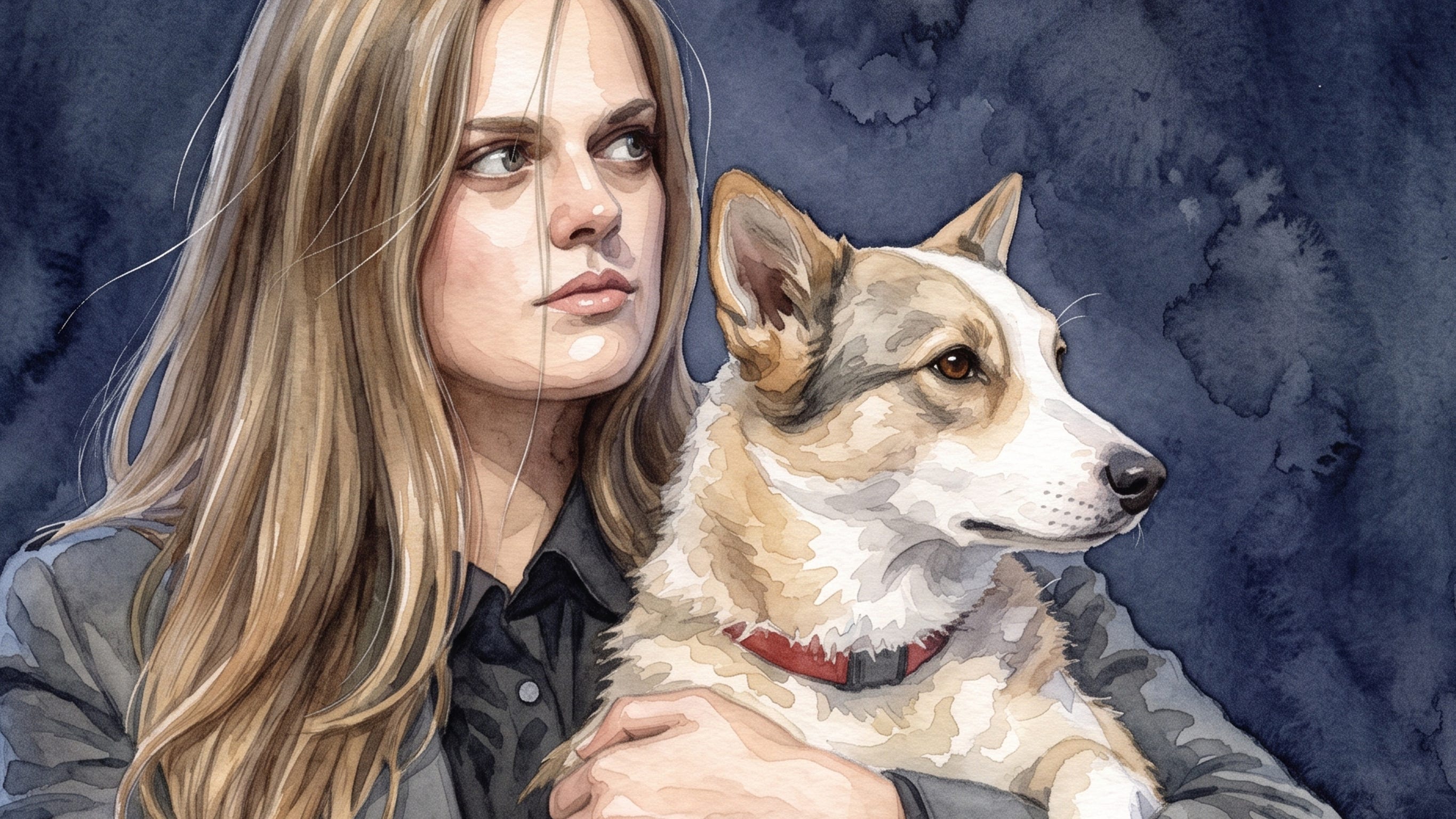
Dimko began posting about the work on X. The posts were very simple. We might say that we had bought helmets for a unit, photograph the helmets with our dog, Dzyga, and explain that we were shipping them to Kharkiv through Nova Poshta. People saw that something concrete was being done and began asking how they could help.
Eventually, Dimko shared his PayPal account. We started organizing small, targeted fundraisers for items such as chemical heaters, hand warmers, food warmers, and drones.
Then, in May 2022, someone contacted Dimko on X and said he wanted to send us money. He told us to use it for whatever appeared most useful, perhaps a Mavic drone because he had seen that we were already buying them.
The donation was $10,000.
That was an enormous amount for us at the time. Someone who did not know us personally had trusted us with serious money because he had watched what we were doing. We realized that the operation could no longer continue through private bank cards and personal accounts. We had to institutionalize it and accept the responsibility that came with that trust.
We registered Dzyga’s Paw within the following two months, in July 2022. What began with two people helping their friends has since developed into a professional charity supporting military units across Ukraine.
The experience that influenced me most was losing my boyfriend, Myroslav Mysla, when I was 16.
We had met through the patriotic youth organization I mentioned earlier and had been together for more than a year.
One morning, I woke up and did not receive the good-morning message he would usually send me. I immediately sensed that something was wrong. Later, one of his comrades contacted me and told me that Myroslav had been killed.
That was probably the greatest personal challenge I have ever faced. He had not died because of an accident or an illness. He was killed while defending his country against people who had entered it with weapons.
When I say that I want soldiers to receive the technology they need and return home alive, that is not an abstract mission statement. I know what it means when somebody does not return.
Realizing that another human being had made the conscious decision to invade his country and participate in the violence that killed him was very difficult to process. I had to confront the entire meaning of what had happened, not merely the fact that he was gone.
Myroslav was a historian by education. He taught lectures on Ukrainian history and was an intellectual leader within our organization. To me, he represented someone who was not only studying and teaching history, but making it.
He was killed in battle near Krymske in the Luhansk region on October 2, 2016. That was almost ten years ago, and the same war continues.
His death remains a large part of what motivates me every day. When I say that I want soldiers to receive the technology they need and return home alive, that is not an abstract mission statement. I know what it means when somebody does not return.
The international environment was also very different in 2016. Outside Ukraine, the war was often treated as a small local conflict. Some people described it as a dispute over territory that supposedly belonged to Russia or had somehow been mistakenly given to Ukraine.
The scale of international support today gives Ukraine a better chance of victory than we had then. At least our allies now understand that Russia is invading another country and that the occupied territories are Ukrainian. That basic clarity was far less common when Myroslav was killed.
But Ukrainians have been living, fighting, and losing people in this war since 2014. The full-scale invasion did not begin the story. It only forced the rest of the world to pay attention.
Honesty.
First, that means being honest with myself. Because of my previous experiences, I understand why I am here and what I want to do. I could have left Ukraine, continued my studies abroad, remained in the technology industry, and probably earned much more money.
Instead, I have chosen to stay. The work carries risks, and I know I could lose my life. But when I am honest with myself, I know that this is where I want to be. I want to help our military.
That conviction produces the internal motivation I need to continue. Without it, I think I would eventually become exhausted or begin looking for a more comfortable life elsewhere.
It is better to reject a questionable request at the beginning than to tell ourselves what we would like to believe and discover the truth only after something goes wrong.
Honesty is equally important in our relationships with soldiers and military units. It is the first requirement when we begin cooperating with a new unit or receive a request from somebody we have not supported before.
We examine who they are, what they need, how the equipment will be used, and what reports they can provide afterward. They must be able to explain the operational requirement clearly. If someone cannot provide basic information, or if we have reason to believe that the request is dishonest, we end the process early.
It is better to reject a questionable request at the beginning than to tell ourselves what we would like to believe and discover the truth only after something goes wrong.
Dishonest requests are not a large problem in numerical terms. Perhaps one request in a hundred raises serious concerns. But falling for that single request could jeopardize everything.
If we gave expensive equipment to somebody who stole or resold it, donors could lose confidence in the entire foundation. We would then be unable to fulfill the other 99 legitimate requests. One failure could destroy the trust required to do all the rest of the work.
That is why due diligence and transparent reporting are not administrative details. They determine whether the organization can continue operating. We have to know where the money goes, who receives the equipment, and whether it reaches the purpose for which people donated.
Trust is difficult to build and extremely difficult to recover once it has been lost. Honesty is what protects it.
4 | How can people support your work?
The first way is to tell other people about it.
We need journalists, media organizations, online creators, and people with influential social-media accounts to help explain what we do. When the full-scale invasion began in 2022, many international reporters came to Ukraine. We could help them speak with soldiers, explain their technological needs, and connect the story to a fundraiser for a particular unit.
That worked very well. The reporting showed people the reality of the war, while the fundraiser gave them a direct way to respond.
Thousands of modest donations are precisely how we bought the drones, communications equipment, charging stations, night-vision devices, and other technology that has saved lives.
Far fewer foreign reporters are now covering Ukraine regularly. Maintaining public attention has therefore become more difficult, even though the military’s needs have not disappeared. Sharing our work and helping it reach new audiences makes an enormous difference.
The second and simplest option is to donate. Our median donation is roughly $25, which is about the price of an ordinary lunch in the United States. Using donations of that size, we have raised more than $6 million since the beginning of the full-scale invasion.
People sometimes think that donating $5, $20, or $25 would be too small to change anything. They feel almost embarrassed to contribute such an amount. But our own figures demonstrate the opposite. Thousands of modest donations are precisely how we bought the drones, communications equipment, charging stations, night-vision devices, and other technology that has saved lives.
There is no donation too small to contribute to the final result.
The third option is to participate in one of our more personal projects. Every year, we organize a Secret Santa campaign for Ukrainian soldiers. We collect letters from soldiers and connect each of them with someone abroad who wants to prepare a gift.
The requests can be very different. One soldier might ask for local sweets. Another might want Reese’s from the United States, a laptop, or something small and personal from the donor’s country. Participants select a letter, assemble the gift themselves, include a handwritten note if they wish, and send the package to our office in Lviv.
Our team then dresses in Christmas costumes, travels east, and distributes the gifts directly to the soldiers. It creates a much more tangible connection than simply transferring money. Somebody abroad chooses the items with their own hands, and a specific soldier in Ukraine receives them.
We want to provide a platform for people abroad who say they support Ukraine and are looking for a concrete way to act on that support. We work directly with military personnel. A soldier can call us today and ask for another charging station or a set of drone components, and our team may be delivering it to him in the east the following week.
If you want to do something for Ukraine, we can help you get it done.
5 | Where can people follow you?
My most active personal accounts are X and Instagram. My handle is @ippvch on both platforms.
I usually share personal observations, reports from our trips east, and my thoughts on events in Ukraine. I am still learning to post more consistently. Social media has become part of the work, particularly for an organization dependent on international awareness and public trust.
People can learn more about the foundation through the Dzyga’s Paw website, see our current projects, and examine our public financial transparency system.
They can also follow Dzyga’s Paw on X and Instagram.
The central message is simple. Support for Ukraine does not have to remain a statement. Whether you share our work, contribute a small donation, or prepare something personally for a soldier, there is always a way to turn support into action.
Nikolaus Muchitsch is chief of staff and strategy at Under Fire News.
What else we’re watching today:
Europe Prepares for War Without a Declaration—European leaders are warning that Russia may deliberately launch drones or missiles against NATO territory and present the attacks as accidents. Polish Prime Minister Donald Tusk says intelligence shared by Poland, Ukraine, NATO, and the United States indicates that Moscow could target countries supporting Kyiv in an attempt to weaken their willingness to invoke collective defense. Emmanuel Macron has separately ordered plans to protect French infrastructure from intensifying Russian drone, cyber, and sabotage operations. The warnings follow Russian strikes near NATO borders, the interception of a drone over Lithuania, suspected sabotage across Europe, and a Russian warship firing flares at a Danish military helicopter. Individual incidents differ in the strength of the evidence connecting them to Moscow, but together they reveal the strategic problem Russia is exploiting. A tank crossing a border produces an obvious response; an unidentified drone, damaged railway cable, or conveniently deniable explosion generates investigations, jurisdictional arguments, and political hesitation.
Russia Votes After the Kremlin Removed the Opposition—Russia is holding its first parliamentary election since the full-scale invasion of Ukraine, but the Kremlin has removed almost every means by which voters could challenge the war or Vladimir Putin’s rule. United Russia is expected to retain control of the State Duma, while most anti-war candidates have been disqualified, imprisoned, driven abroad, or prevented from organizing. The liberal Yabloko party was barred from the national ballot, leaving only a limited number of candidates in individual constituencies. The remaining parliamentary parties may criticize officials or economic policy, but none offers a meaningful alternative to the Kremlin’s war. Voting also extends into occupied Ukrainian territory, where residents have reportedly faced pressure from officials accompanied by armed personnel. Three days of balloting, extensive online voting, and the absence of credible international obs…