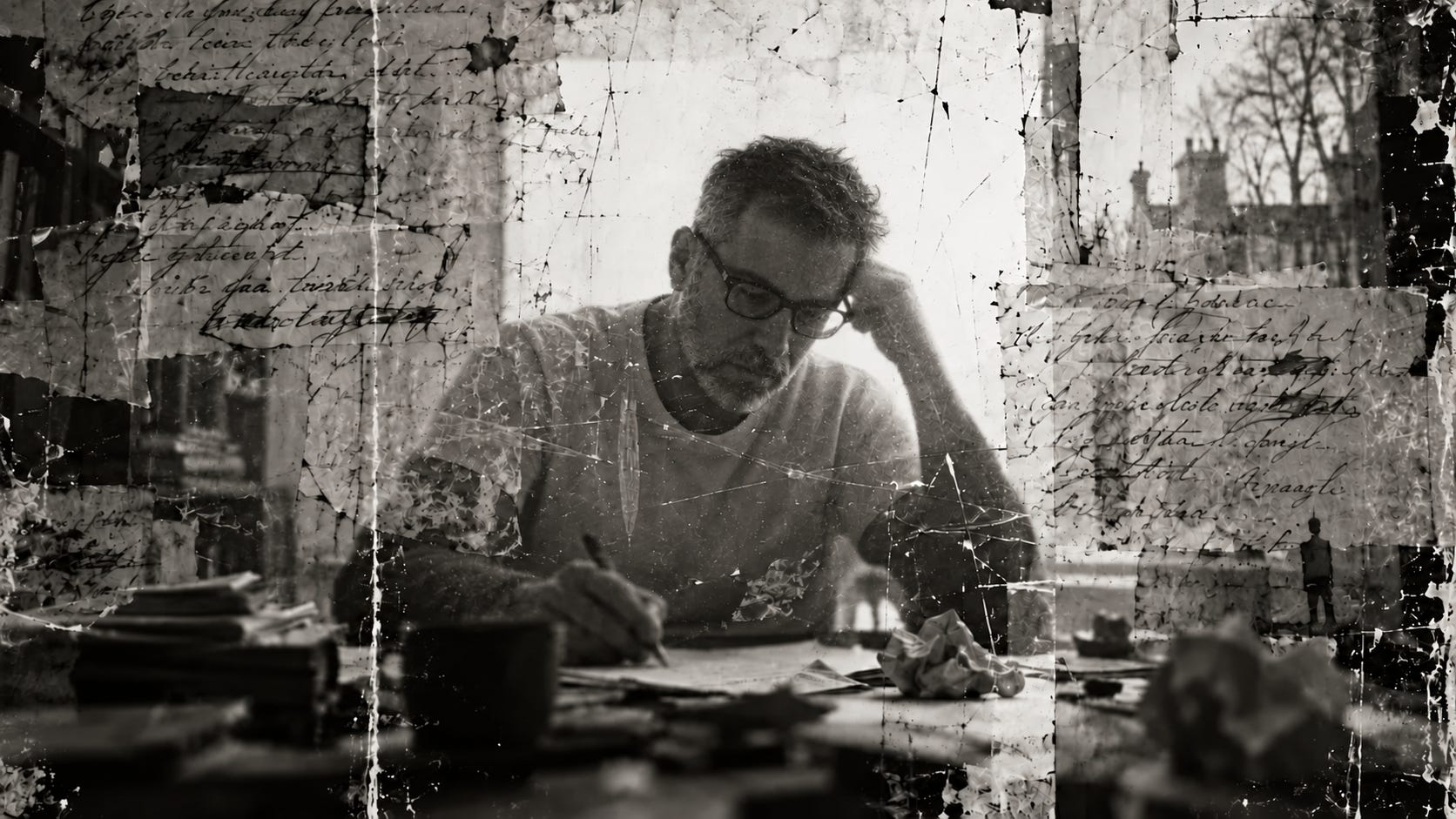
When I wrote Divine Nobodies, I had no idea I was beginning a thirty-year conversation. I was a ** former megachurch pastor** trying to tell the truth about a religious life that had come apart. I knew what it felt like to lose confidence in beliefs that had once explained nearly everything. I was less certain what could be said from the other side.
That uncertainty made its way onto the page. Writing gave me room to stay with questions I could no longer settle on a stage beneath spotlights. It also brought me into contact with people asking their own versions of them. They wrote to me about leaving churches, disappointing families, losing communities, and wondering whether the freedom they had fought for would ever feel like a place to live.
Bestselling novelist ** Anne Rice** once wrote to me, “Thank you Jim for putting into words my own thoughts and doubts, and letting me know that I am not alone in them.” Her words have stayed with me. When I began publishing, I was trying to find honest language for my own experience. I had not fully understood how many other people were searching for it, too.
I have published seven books since that first one. Each grew out of what I was living and what I was hearing. Wide Open Spaces wrestled with theology after certainty began to fail. Being Jesus in Nashville asked whether Jesus could be encountered beyond the religion built around him. Notes from (Over) the Edge and Inner Anarchy turned toward consciousness, identity, and the authority we surrender over our own lives. Later, Life After Religion and How to Have a Great Day without Religion attended more closely to the life a person has to build once leaving is no longer the central event.
The writing sometimes unsettled people. Publishers Weekly called me “a renegade and rebel with a message worth considering.” I understood why. I was questioning beliefs that many people had built their lives around, including beliefs I had once taught with conviction. I could not have known in advance where those questions would lead, and I did not always express them as I would today.
** Rachel Held Evans** once thanked me for “paving the way for the rest of us.” I treasure that, though I have never thought of the path as one I made alone. Other writers and friends were finding their way through the same difficult terrain. What we wrote gave us places to recognize one another.
Some of those pages traveled farther than I expected. ** Paul Byrd**, then a pitcher for the Cleveland Indians, told me he passed my books to teammates. He said my writing had “changed lives in our locker room.” I had never imagined those conversations happening between baseball games, and his words have stayed with me.
Some of the books have also been translated into other languages, including Korean. It is strange and moving to think of words I wrote while trying to find my own footing becoming part of someone else’s conversation in a language I cannot read.
I previously published ** an article** about the journey through these seven books. I see a movement across them now that I could not see at the time. I was simply following whichever question had become urgent enough to demand another page.
For years, religious deconstruction gave me a way to name what was happening. Beliefs that had shaped an entire life were being examined, sometimes for the first time. People needed language for that experience. They needed to know that questioning an inherited account of reality did not make them dishonest or broken.
But leaving religion takes away much more than a set of beliefs. It can unsettle a person’s sense of time, family, moral responsibility, belonging, and future. Even when the decision to leave is right, there is a life to inhabit afterward. The questions once answered by religion remain present when its answers no longer persuade.
I heard this in conversations with readers long before I knew how to describe it. Someone would tell me about losing faith, then speak about grief, marriage, mortality, or the fear of trusting their own judgment. The immediate subject was religion. The deeper struggle concerned how to be a person when the world that had held them no longer did.
My writing began to follow that struggle. I wanted to understand what helps us stay in contact with reality, make choices we can answer for, and find ways to belong without giving ourselves away. Eventually I began calling this work existential health.
That name arrived late. The questions had been there all along.
William P. Young, the bestselling author of The Shack, once called my writing “a game changer.” I was grateful for his encouragement as I followed those questions beyond the religious world in which my books began.
Books taught me patience with a question. Publishing on Substack changed the pace and scale of the conversation. I have now written more than 550 articles there, many of them longform. Looking across them, I see years of thinking taking shape in public: arguments I developed, assumptions I reconsidered, and questions that kept returning in a different form.
A few of you have gently suggested that my articles could be shorter. A few of you have been less gentle. I hear you. In ** Why I Publish So Much**, I explain why I keep returning to the page: I often discover what I think by staying with a question longer than either of us expected.
With so much here, it can be hard to know where to begin. I regularly ** curate article lists** and write a weekly
Your responses have shaped this work, too. Sometimes someone told me I had found language for an experience they had lived for years. At other times, a comment exposed a gap in my argument or challenged an assumption I had carried onto the page. Those exchanges made it harder to mistake a compelling sentence for a complete understanding.
Sports broadcaster ** Ernie Johnson Jr.** compared my writing to opening a window after a long, hot summer and feeling the breeze rush in. I love that image. I hope these articles give people room to breathe and reconsider what they have been told about their lives.
The ** CNRS Existential Health Daily Reader** grew from a related concern. Earlier in my life, the daily devotional had given me a reason to pause and examine how I was living. I valued that practice even after I could no longer accept the religious framework around it. I wanted to write something that preserved the pause while leaving the reader free to question what I had written.
That remains a responsibility for me as an author. People come to a writer looking for language and gradually begin looking to that writer for permission. I know how powerful an authoritative voice can be. If my work helps someone recover trust in their own perception and judgment, it should leave them more able to disagree with me, too.
As existential health took shape, I needed to do more than write from experience. I had to define the work carefully enough that others could examine it, challenge it, teach it, and carry it into settings I would never enter myself.
That has led to a ** published academic paper** on existential health and two volumes of
This writing also informs the practitioner training we are developing through the Center for Non-Religious Spirituality. I am learning what happens when language first worked out on a page becomes part of how another person listens, asks questions, and accompanies someone through a difficult passage. These ideas have to be responsible to the lives in which they are used.
** Brian McLaren** once found “a profound honesty, humanity and depth” in my writing. I am grateful he saw those qualities in the earlier books. I hope they remain present now, even as the language and scope of my work have changed.
For years, The Practice of Being Alive existed as fragments, drafts, conversations, and chapters I kept returning to because they had not yet reached the question beneath them. I thought I was writing about the modern search for meaning. As the manuscript developed, I became more interested in the human capacities required when the structures that once supplied orientation no longer hold.
Readers saw parts of that process. Some joined discussion circles or read early material. They questioned passages, noticed gaps, and helped me see where an idea needed more time. The finished manuscript is different from what I first imagined, as I hope it would be after years of writing and listening.
, wrote the foreword. A professor and academic director at FHM Berlin and founder of the** Institute for Practical ekoPhilosophy**, Jessica brings her own sustained inquiry into what it means to live as part of the world we are trying to understand.
Recently, I held the ** first physical proof of The Practice of Being Alive**. I turned its pages and saw the title on the cover. After years of revising on a screen, I could feel the weight of the work in my hands. Soon, other people would read it in circumstances I could never know.
Holding it brought the earlier volumes to mind. I would change things in every one of them. Some passages belong unmistakably to the person I was when I wrote them, and I am glad they do. What I published then bears witness to questions I could only ask in that season of my life.
The Practice of Being Alive carries those questions further. It asks how we participate in a life we cannot secure in advance: how we love without guarantees, face loss without turning it into a lesson, make commitments while knowing we may change, and remain open to mystery without handing our judgment to someone who claims to possess it.
I could not have written The Practice of Being Alive when I wrote Divine Nobodies. Between them lie seven books, hundreds of articles, academic study, and encounters with people whose lives challenged what I thought I knew. A question that began within my departure from religion had opened into a much wider human conversation.
I wrote my way here, but I also lived my way here. Leaving my ministerial career, losing certainties, building relationships and communities, sitting with people in grief, and facing changes in my own life taught me things I could never have learned at a desk. The writing helped me make sense of those years, even as those years kept changing what I had to say.
The manuscript is finished. Soon it will leave my hands and enter other lives. I wonder what its readers will see in it that I could not see while making it.
If you’ve found something useful in this writing, I invite you to become a paid subscriber. For $50 a year, you’ll have access to the full archive and membership in the Center for Non-Religious Spirituality. Your subscription also gives me the time and independence to keep writing, researching, and building the field of existential health.
If you’re able to support this work more deeply, a Founder subscription is $250 a year. It includes everything above, along with two personal conversations with me each year.
More than 550 articles and seven books brought me here. There is still much I want to ask, write, and build. Your support helps make the next part possible.