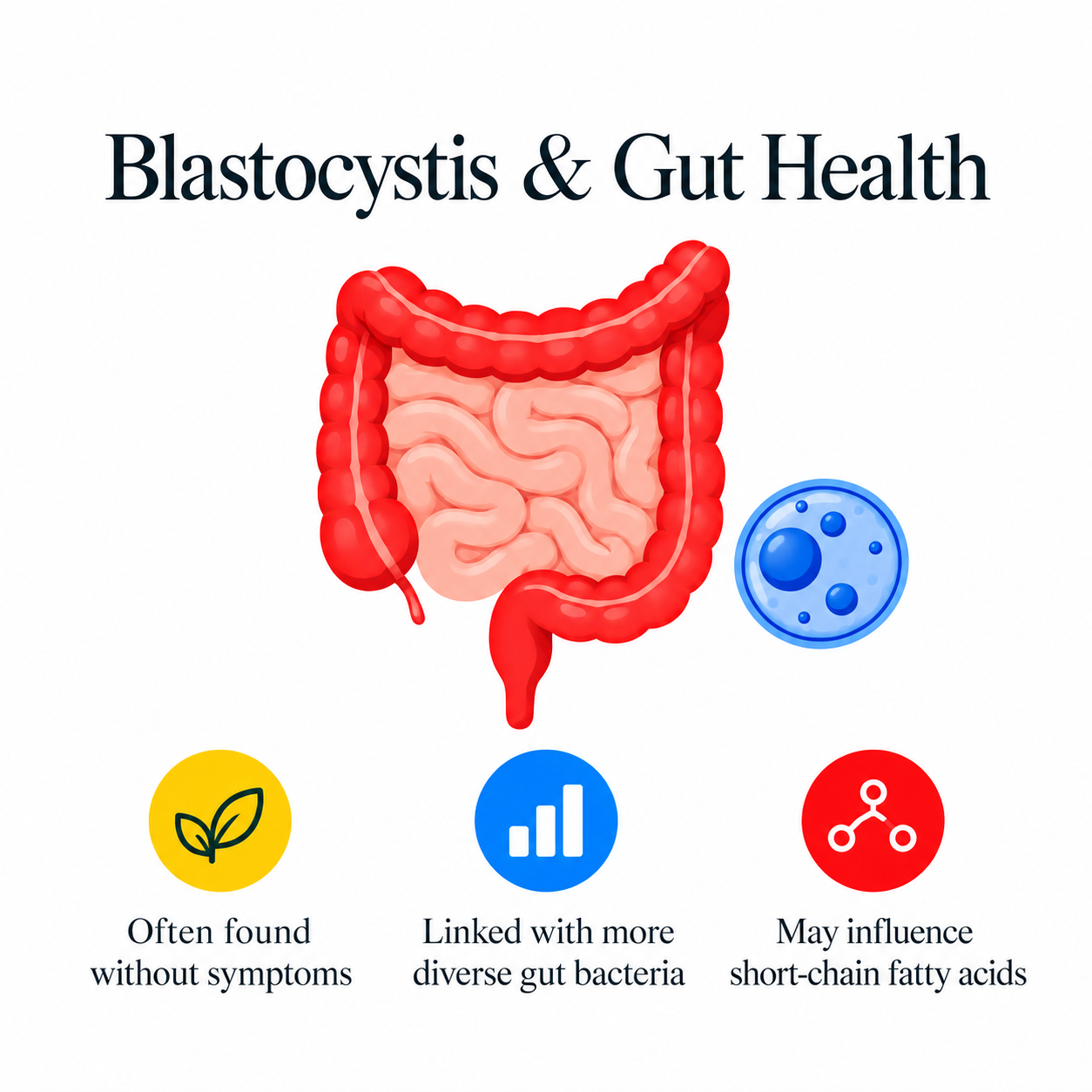
New research is changing how scientists look at Blastocystis, a common gut parasite usually treated as a sign of infection. It turns out this gut parasite may not always be bad news.
Blastocystis is linked in some people to diarrhea, constipation, abdominal pain, gas, and bloating.
But there’s a twist.
In people without gut symptoms, Blastocystis is linked to greater gut bacteria diversity, different microbiome patterns, and changes in important gut metabolites, including short-chain fatty acids.
That matters a great deal because short-chain fatty acids are made when gut bacteria ferment certain types of prebiotic soluble fibers.
That prebiotic effect nourishes the gut lining, supports the immune system, and may play a key role in inflammation and metabolic health.
Large studies have also found Blastocystis more often in people with healthier diet patterns, including more plant foods and fewer ultra-processed foods. Some Blastocystis-positive people also had better blood sugar and lipid markers and lower body mass index.
But this doesn’t mean Blastocystis is always a good thing.
Different subtypes of the parasite may behave differently. And the effects may depend on your diet, gut bacteria, immune system, geography, and overall health.
The takeaway? Your gut microbiome doesn’t simply have “good bugs” and “bad bugs.” It’s all about your entire gut ecosystem.
And more about prebiotics and the IBS gut…
You are not alone.
P.S. If you need help or have questions hit the Green Button below and I’ll try to answer every one of you!
If you need immediate help please join my Private IBS Coaching.
XOXO
Heather
Heather Van Vorous
40+ years of IBS advocacy
Get full help for IBS here
Get Heather’s Tummy Care here