Tens of thousands of people have been killed in conflict so far this year, as countries across West Asia to Eastern Europe are drawn into strife that often isn’t of their own making. As violence deepens in flashpoints involving Israel and the Gaza Strip, and tensions simmer between the United States and Iran, the global order appears increasingly fragmented.
And yet, a recent adaptation of Andy Weir’s Project Hail Mary offers a strikingly relevant idea: survival, in the face of existential threat, may depend less on power and more on the willingness to work together—even with those we do not understand.
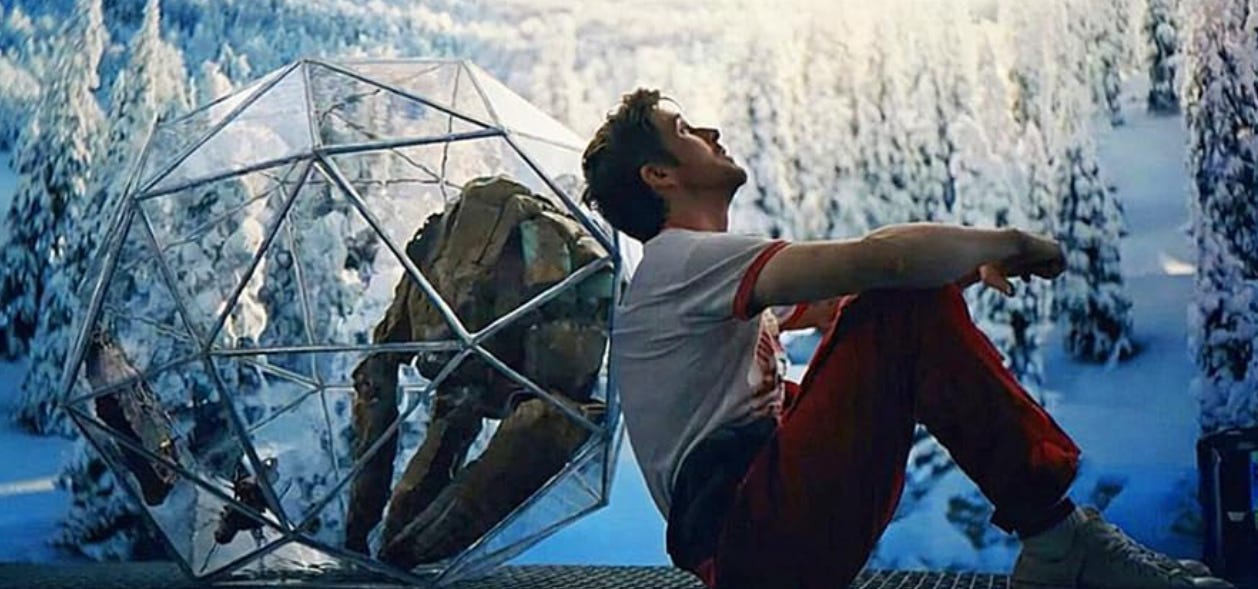
At the heart of * Project Hail Mary* is a simple but powerful relationship: a human and an alien—separated by biology, language, and fear—who slowly learn to cooperate. They begin with suspicion, communicate through mathematics, and build trust through shared goals.
What makes this especially compelling is how cooperation is not immediate or easy. It is built through trial, error, and vulnerability. The two characters must unlearn fear and confront their own biases—a process that mirrors, in many ways, the challenges nations face when dealing with adversaries.
The message is disarmingly clear—if two beings from entirely different worlds can find common ground, so can we. The challenge is not capability, but willingness.
But that message, that camaraderie, that brotherhood is all fiction.
Our reality is starkly different.
We are living through a moment where conflict is no longer an exception—it is a defining feature of the global order. From the devastation in the Gaza Strip to the prolonged war in Ukraine, and the ongoing tensions between the United States and Iran, crises are playing out across multiple fronts at once.
These are not isolated conflicts. Like the interconnected systems in Project Hail Mary, today’s geopolitical tensions are deeply interlinked—through energy dependencies, military alliances, economic pressures, and historical grievances. But unlike the story, where interdependence pushes cooperation, in reality it often intensifies division.
The human cost runs into tens of thousands of lives lost, with millions more displaced, disrupted, or pushed into humanitarian distress. What makes this moment particularly stark is not just the scale of violence, but the fragmentation of global response, where cooperation is limited, consensus is rare, and the burden of conflict continues to fall disproportionately on civilians.
The current strife was triggered by the October 2023 attacks by Hamas, followed by an extensive military response from Israel in the Gaza Strip. But the roots lie decades deeper—territorial disputes, political deadlock, and cycles of retaliation.
The cost has been devastating. Tens of thousands of Palestinians have been killed, with large-scale displacement and a humanitarian crisis affecting millions. On the Israeli side, over a thousand people were killed in the initial attacks, with communities shattered and hostages taken. This is not merely a conflict of territory—it is one of history, identity, and an absence of trust.
The conflict between the US and Iran is not recent—it traces back to the Cold War era, when Washington DC backed the return and consolidation of power of Shah Mohammad Reza Pahlavi in the 1950s. The Western-supported monarchy, seen by many Iranians as imposed and authoritarian, became a key source of resentment.
That resentment boiled over into the 1979 Islamic Revolution, which overthrew the Shah and transformed Iran into a theocratic republic that fundamentally opposed United States. Since then, the relationship has evolved into a decades-long shadow conflict—marked by sanctions, proxy wars, nuclear tensions, and periodic military escalations.
For years it has played out indirectly—through regional actors, maritime incidents, and strategic signalling. But on February 28, US President Donald Trump said he believes Iran is close to developing a nuclear weapon and must be stopped. Proof he gave none, parroting a claim that Israel has been making for decades.
What followed was a ripple effect across the globe. Countries far removed from the conflict are now grappling with energy shocks and economic uncertainty—a reminder that in an interconnected world, conflict is never contained.
It is a conflict sustained not by inevitability, but by entrenched suspicion.
Beyond these flashpoints, conflict continues to define large parts of the world. The war in Ukraine has caused massive casualties and displacement while reshaping global alliances. In Sudan, civil war has uprooted millions, deepening a humanitarian catastrophe. In Yemen, years of fighting have left the population grappling with hunger and disease.
Across these crises, the pattern repeats: political disagreements escalate, violence follows, and civilians bear the heaviest burden.
In the story, the Earth faces an extinction-level threat, and the response—though imperfect—is global. Nations pool resources, scientists collaborate across borders, and the mission becomes collective. Crucially, cooperation in the movie is not driven by goodwill alone, but by necessity. Survival forces collaboration.
That’s where its relevance comes through. The world today faces its own existential risks—from nuclear escalation to climate change—yet continues to treat cooperation as optional, even negotiable.
At a crucial moment, the protagonist faces a choice between saving his own world or helping another. He refuses to see it as a binary.
That decision of placing shared survival above narrow interest is precisely what seems missing in many real-world conflicts, where zero-sum thinking dominates.
The two central characters do not share language or culture. Misunderstandings are constant. Progress is slow. But they persist.
That persistence is perhaps the most realistic part of the story—and the most relevant. Dialogue, whether between individuals or nations, is rarely smooth. But abandoning it altogether guarantees failure.
The story is not naïve. Cooperation comes under pressure. Decisions are forced. Sacrifices are unavoidable. History suggests the same: humanity often unites only when the cost of division becomes unbearable.
The troubling question is whether we will wait for that breaking point again.
In a year marked by war—from Gaza to the Gulf, from Eastern Europe to Africa—he lesson is both simple and difficult: cooperation is not weakness. It is strategy.
The distance between conflict and coexistence is not determined by capability, but by choice. And if a fictional story can imagine collaboration across worlds, it leaves us with a stark, real-world question: what, exactly, is stopping us here on Earth?