Earlier this week I was a guest in a museum studies class at George Washington University. I thoroughly enjoyed my time engaging with the students and listening to their thoughts about a number of historic house homes visited in the Washington, DC area. Eventually, we got around to the challenges and opportunities offered by AI in interpreting these and other historic sites.
I was both surprised and encouraged by their concerns about this emerging technology and what it means to our ability to make meaning and in connecting with others while on site.
It’s a reminder that sometimes the most basic interpretive platform offers the most provocative and helpful entry point into our collective history and historic sites.
Yes, I am thinking of the historical marker.
Historical markers are a ubiquitous presence along many of the nation’s highways and country roads. You can spot their distinctive lettering, background color, and shape without even realizing what they commemorate.
States have celebrated their pasts since the United States was born, but it took more than a century—and the creation of modern roads—for roadside markers to become a tool for public memorialization. Virginia’s historical marker program is one of the oldest, beginning in 1926 with the placement of a small number of signs along U.S. 1 between Richmond and Mount Vernon. A small number of markers were erected in Colorado, Indiana and Pennsylvania even before this date.
By 1930, Massachusetts had 234 markers along its roads—and these early tallies don’t include markers placed by local individuals, organizations and larger heritage groups such as the Daughters of the American Revolution.
The largest number of state-sponsored programs, however, followed World War II.
In the two decades after the war, American families took to the roads on vacations that had as much to do with pleasure as a desire to explore and embrace historic sites that reflected the country’s national identity and democratic values.
In 1954 alone, around 49 million Americans set out on heritage tours of the United States, including Mount Vernon, Gettysburg, Washington, D.C., and Independence Hall in Philadelphia. These sacred places allowed Americans to imagine themselves as members of a larger community bound together by common values—and encouraged good citizenship at the height of America’s ideological struggle against the Soviet Union.
These pilgrimages also reinforced a traditional historical narrative that catered specifically to middle-class white America. Stories of Pilgrims and Puritans, Founding Fathers, westward-bound settlers, and brave American soldiers dominated this consensus-driven picture of the nation’s past.
The vast majority of historical markers reinforced these themes on a local level, pointing out important events or notable residents—most of them white and male—as travelers wound their way to their final destinations.
A narrow and celebratory view of local and national history left little room to highlight stories of minorities. It certainly precluded any references to unpleasant chapters in American history like slavery, racial violence, etc.
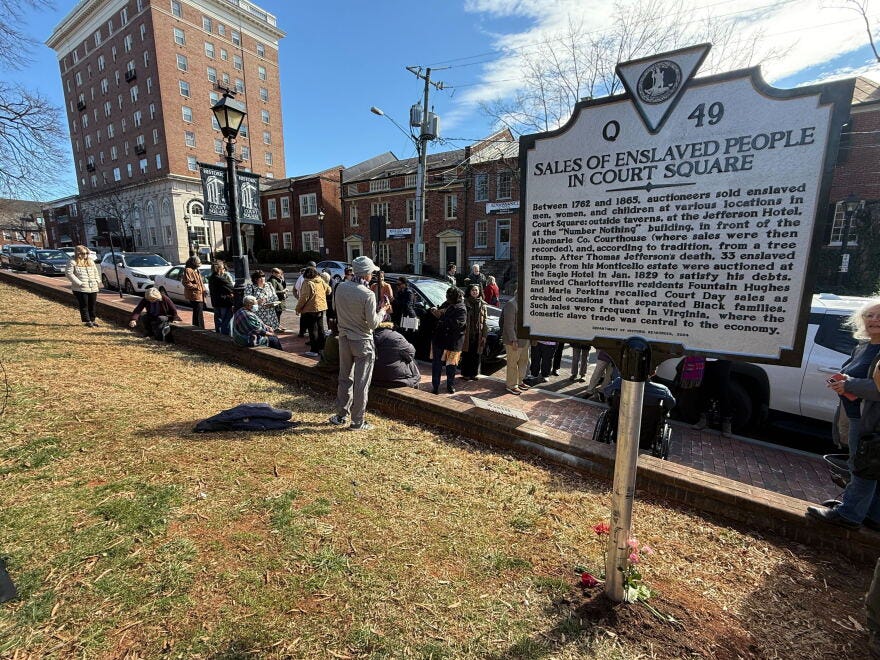
Thankfully, we have seen significant change in the content of historical markers in recent years.
This week the city of Boston announced a new program to help commemorate its upcoming 400th birthday.
The Boston Historic Markers Program is a new initiative from the City of Boston Office of Historic Preservation and the Commemoration Commission. This program seeks to increase the visibility of the full range of stories that make our city unique.
From the nominations received, 25 stories will be selected for this next round of historic markers. The City plans to install dozens of markers every year leading up to Boston’s 400th anniversary in 2030.
Anyone can nominate a marker for consideration. You do not need to be a historian or member of a preservation organization. If there’s a local story that matters to Boston residents, we want to hear it.
I love it. First, it engages the community around its shared past and empowers everyone to see themselves as part of the city’s history. The program acknowledges the importance of perspective and guarantees that the committee in charge will receive stories that matter to Boston’s many close-knit communities.
Historical markers persist, I suspect, because they perform the function of literally marking where something important took place. They are part of the landscape; part of the community itself. The brief narratives offered represent how the community chooses to remember a specific individual, group or event at a specific moment in time.
But how we mark the past and how we remember changes over time. A good friend of mine sent me a wonderful example of this earlier this week from Brandy Station, Virginia.
The first is a marker that dates to 1927 about the opening of the Gettysburg Campaign. The text offers nothing more beyond the fact of a review of the Confederate cavalry by Robert E. Lee and the battle fought the following day.
Notice that this sanitized text doesn’t say anything about the outcome or significance of that engagement. Overall, it’s a pretty tame
Roughly one hundred years later, Virginia’s Department of Historic Resources dedicated this marker, located about 100 yards from the one above.
The contrast couldn’t be clearer. Here we get a glimpse of how the war evolved, with the addition of Black soldiers in Union ranks, as well as the Confederate response. It raises important questions for anyone who takes the time to read:
Why were these men executed?
What did the presence of Black Union soldiers mean to Confederates?
Side by side, these two markers also reflect the evolution of how Civil War scholarship has evolved as well as the kinds of stories that local communities are willing to remember and embrace as important.
Finally, the day before the 2026 midterm election a new historical marker was unveiled in Macon, Mississippi honoring five African American men who represented their county in the state legislature during Reconstruction. Its timing could not have been more fortuitous given the election of Scott Colom—the state’s first African American senator since Reconstruction.
The unveiling highlights both the bravery of these men as well as the violent backlash that was unleashed against the Black community to ensure that the state remained in the hands of whites only.
Writer Dee Dee Baldwin offers this observation of the marker’s importance:
But Mississippi’s history, which includes the revolutionary multi-racial democracy of the early 1870s, is a stark warning and an important reminder to the nation as a whole that civil rights can be taken away. The Fourteenth Amendment itself, ratified as part of Reconstruction, was challenged earlier this year in the Supreme Court by the current presidential administration.
Just as important, however, is the reminder that the people can fight back in the voting booth.
With Colom’s victory, he will follow in the footsteps of the first two African American senators in the state and in the country. He will also make history as the first African American senator directly elected by the people of Mississippi, rather than by the state legislature.
And he will enter the Senate as historical markers go up around his home state to honor the Black legislators who paved the way.
In the battle for historical memory, every word matters—and every historical marker does, too.