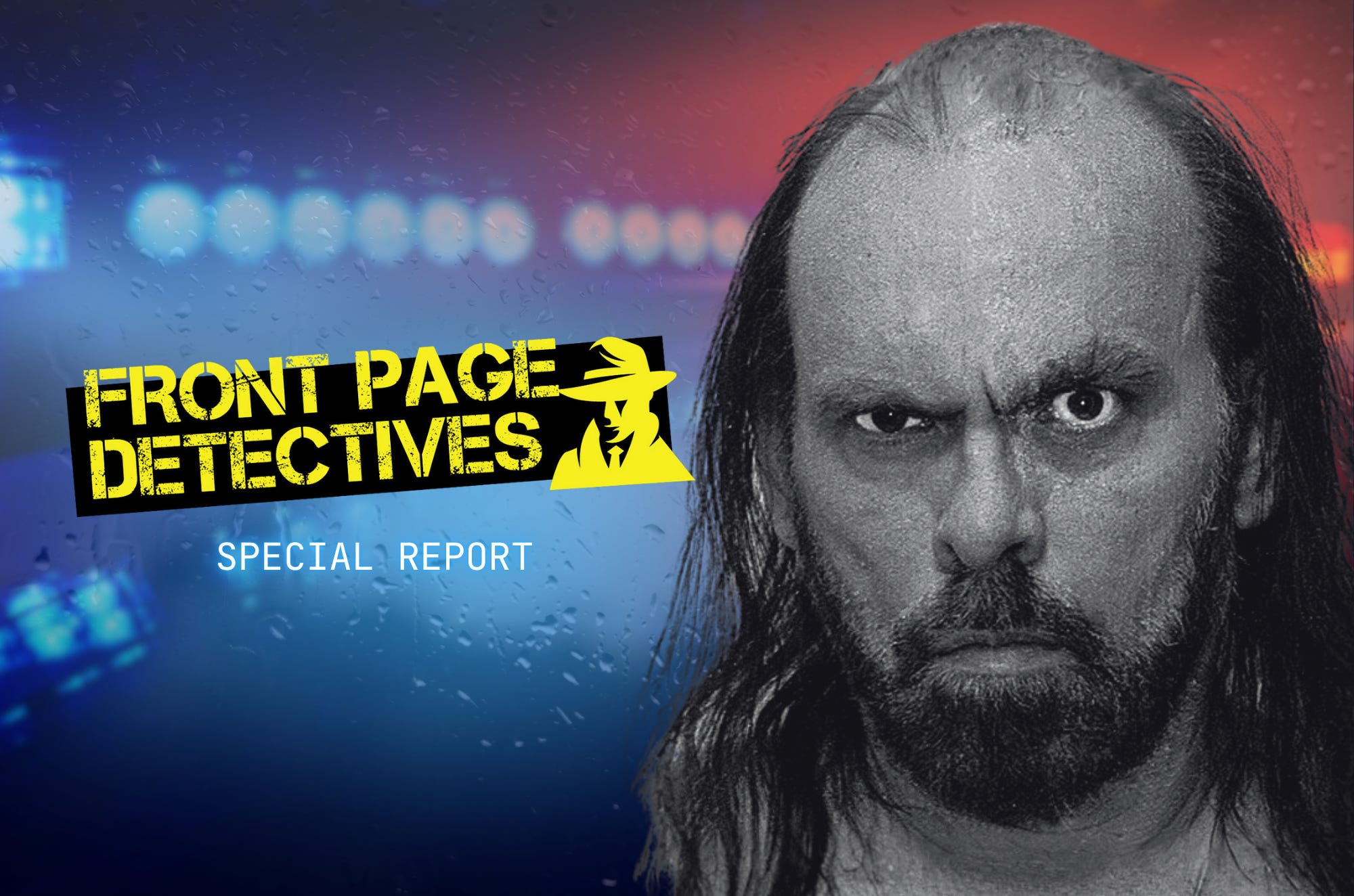
The woman in the black BMW was frightened.
On the morning of June 19, 2026, the car was sitting near Independence Hall in Philadelphia where it had no business being. A U.S. Park Police ranger approached expecting an ordinary encounter in Center City. Instead, the woman inside told him the man behind the wheel was going to hurt her.
The driver was 44-year-old Eugene Horsch.
What police found around him was strange enough on its own. Eugene carried a switchblade and drug paraphernalia. Hidden inside the BMW were loaded guns, narcotics, more weapons, a cattle prod and counterfeit federal credentials identifying him as a Drug Enforcement Administration agent. The woman beside him carried identification too. The photograph was hers. The name was not.
It belonged to Blair Tonzelli, a 35-year-old woman who had disappeared years earlier.
That name led investigators away from the tourist crowds around Independence Hall and toward a decaying three-story twin in Philadelphia’s Olney section. Tonzelli had been linked to the house before she vanished. Eugene lived there. Until his death the previous year, so had his father.
His name was Raymond “R.C.” Horsch.
For decades, Horsch had built a life around pornography, drugs, false identities and increasingly extreme images of women. He photographed addicts and sex workers. He filmed bondage, strangulation, drowning and bodies posed as though dead. He gained access to real corpses. He wrote about serial killers, sometimes presented himself as one and cultivated the persona of a man who enjoyed leaving people unsure whether they were watching fantasy or something far worse.
That ambiguity had always protected him. Violence could be called performance. A disturbing photograph could be called art. A story about murder could be dismissed as fiction. Even Horsch seemed to enjoy the uncertainty, telling people some of what he wrote was true and some of it was invented.
By the time police entered the house on West Chew Avenue, Raymond Horsch had been dead for more than a year.
What he left behind was enormous.
Investigators found rooms filled with evidence, hidden compartments, chemicals, cremated remains, weapons and an electronic archive containing hundreds of thousands of photographs and tens of thousands of videos. Women missing for years began appearing in the material. Some were photographed alive inside the house.
Then investigators found other images.
And one recording forced them to confront the possibility that Raymond Horsch had spent decades hiding real death inside work designed to make murder look fake.