There’s a little story that’s a variation on this theme: The world felt guilty about the Holocaust, so the UN signed a piece of paper in 1947, the British handed over the keys, and suddenly—poof—the State of Israel appeared, displacing everyone who was already there.
It’s a convenient narrative. It fits neatly into modern theories about colonialism and western guilt.
There is just one problem. It isn’t true.
Israel wasn’t a gift. It wasn’t a handout. And it certainly wasn’t built overnight.
The establishment of the State of Israel wasn’t a singular event in 1948; it was the result of a sixty-year construction project carried out against overwhelming odds, restrictive laws, and impossible terrain.
Here is the history that usually gets left out of the carousel posts.
To understand 1948, you have to go back to 1882.
Long before the UN existed, the Zionist movement was already at work. This wasn’t just about a religious longing or a “vision” of returning to the ancestral homeland (though that was the foundation). It was about survival.
Between the pogroms in Europe and the persecution in Muslim countries, it became clear that Jewish safety required more than just tolerance; it required sovereignty.
But you cannot eat sovereignty. You cannot live in a “vision.”
So, while the world debated the “Jewish Question,” the Jews in the land were busy answering it. They weren’t waiting for permission. They were building a state from the mud up.
One of the most persistent lies is that Jews “stole” the land. The ledger tells a different story.
Between 1882 and 1948, the Jewish population in the land grew from 25,000 to 650,000. This didn’t happen by conquest. It happened by purchase and immigration.
By 1948, Jews had legally purchased two million dunams of land. And let’s be clear about what kind of land this was. It wasn’t the prime real estate. It was often malaria-ridden swamps or uncultivable sand dunes sold at exorbitant prices—often with additional bribes paid to Ottoman officials just for the right to sign the check.
They bought the land that no one wanted, and they did the impossible: they made it bloom.
By the time the 1940s rolled around, the Jewish community (the Yishuv) hadn’t just built houses. They had built an entire parallel infrastructure necessary for a nation:
**Economic:**They built a banking system and trade unions.**Social:**They established schools, universities, and hospitals.**Physical:**They laid roads and water infrastructure.**Defense:**They organized self-defense units because the local authorities wouldn’t protect them.
By 1939—before the horrors of the Holocaust were fully realized—the geographic and demographic skeleton of Israel already existed. It wasn’t a theory. It was a functioning society waiting for a flag.
Another misconception is that the British Empire paved the way for Israel. In reality, they often stood in the way.
While the 1917 Balfour Declaration promised a “national home” for the Jewish people, British policy on the ground was far different. As Arab opposition grew (fueled by events like the 1929 Hebron massacre), the British pivoted.
They issued “White Papers” that severely restricted Jewish immigration.
Think about the timing. In the late 1930s, as the shadow of Nazism fell over Europe and Jews were desperate for a lifeboat, the British locked the doors to Palestine.
At the same time, Arab immigration into the land from neighboring countries continued, often unchecked. The Jews were fighting for survival with one hand tied behind their backs by the very mandate that was supposed to help them.
By 1947, the situation was unsustainable. The British wanted out. The UN proposed a solution: The Partition Plan.
It was a proposal to divide the land into two states: one Arab, one Jewish.
The map was not favorable to the Jews. The proposed Jewish state was tiny, fragmented, and difficult to defend. It excluded Jerusalem.
But the Jewish leadership said yes. They recognized that sovereignty—even on a sliver of land—was better than the alternative. They were ready to build.
The Arab leadership said no. They rejected the very idea of a Jewish state of any size. They rejected the partition, they rejected the compromise, and they threatened war.
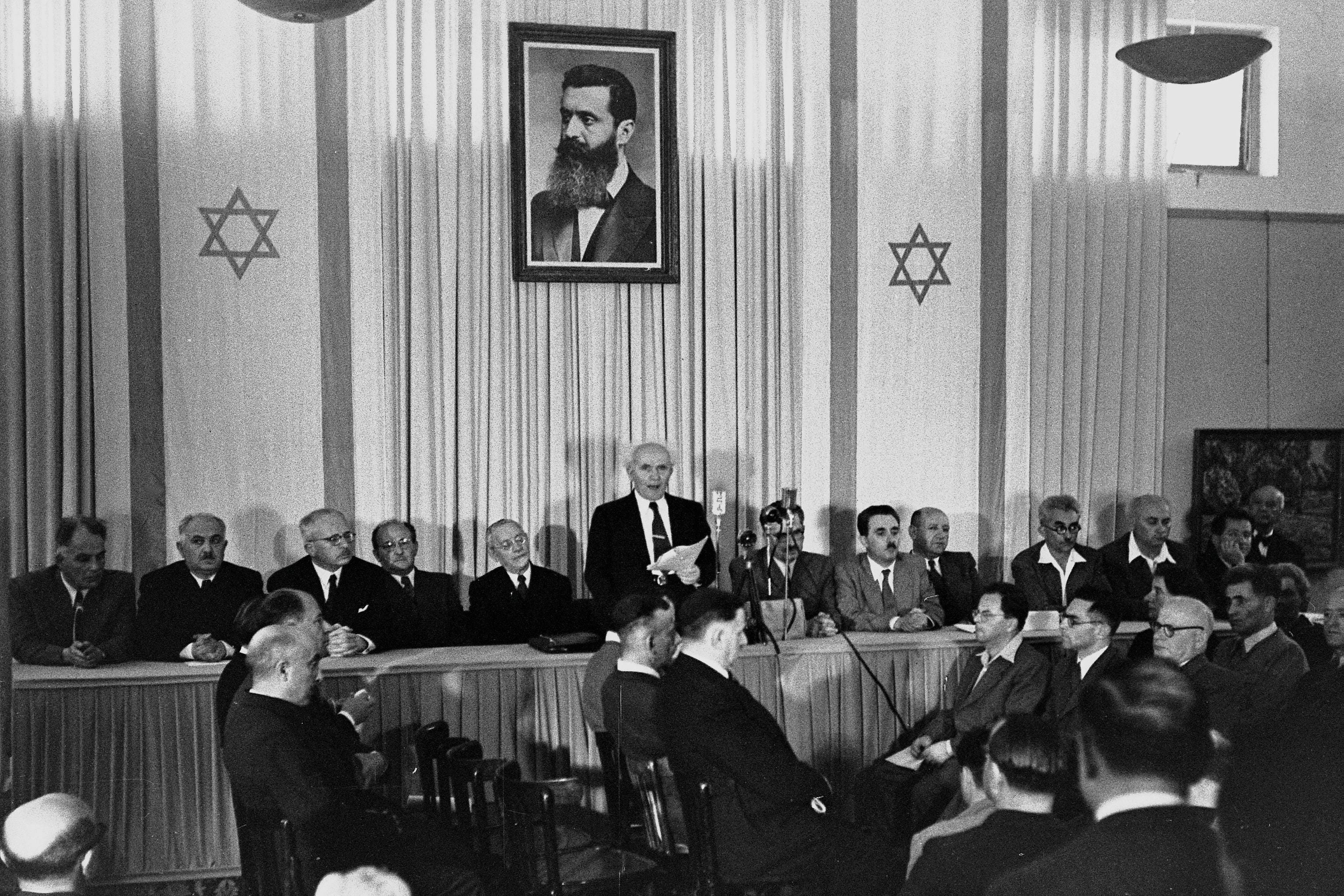
On May 14, 1948, the British Mandate expired.
The Jewish leadership had a choice. They could wait, fearing the gathered armies of the surrounding Arab nations, or they could declare independence.
They chose independence.
They didn’t choose it because they had a guarantee of safety. They chose it because they knew the window of opportunity might never open again.
What followed was an invasion by five Arab armies. The “Nakba” (catastrophe) that is often cited today was the direct result of a war that the Arab leadership chose to start, aimed at annihilating the new state.
Had the Arab leadership accepted the partition plan in 1947, there would have been a State of Palestine for the last 78 years. There would have been no refugees. There would have been no war.
The tragedy of the region isn’t that a Jewish state was established. The tragedy is the consistent refusal of the other side to accept that state’s existence.
Even after the war, Israel was ready to negotiate borders in exchange for peace. The response came in the form of the Khartoum Resolution from the Arab League:
No peace with Israel.
No recognition of Israel.
No negotiations with Israel.
When people today chant slogans about “colonialism,” they are erasing history.
Colonialism is when a foreign power arrives to exploit resources for a motherland. Zionism was the return of an indigenous people to their ancestral land, bought dunam by dunam, developed with their own hands, and defended with their own blood when every offer of peace was rejected.
Israel exists today not because the world gave it to the Jews. It exists because the Jews refused to wait for the world to save them.