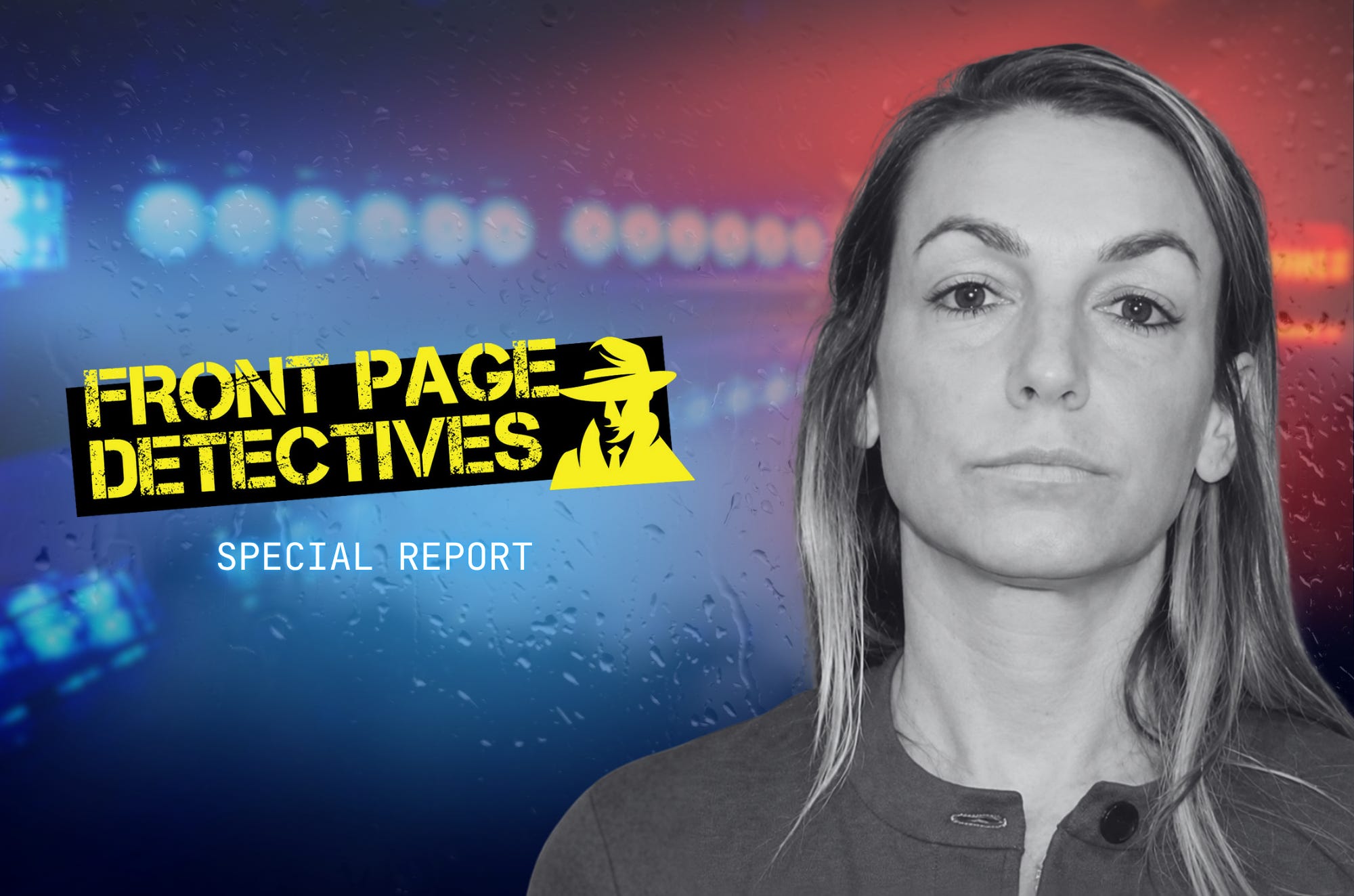
John O’Keefe was found dying in the snow outside another Boston police officer’s home. His girlfriend, Karen Read, was among the people desperately trying to save him. Within weeks, prosecutors would accuse her of killing him. Within two years, her defense team would accuse police officers, federal agents and witnesses of helping conceal a murder.
O’Keefe was 46 years old. A veteran Boston officer, he had taken responsibility for his niece and nephew after the deaths of their parents. He had become the center of a family already familiar with devastating loss. On January 28, 2022, he went out drinking with Read and friends in Canton, Massachusetts. He never came home.
The prosecution’s explanation was brutal. Read, intoxicated and furious after an argument, reversed her Lexus SUV into O’Keefe outside a fellow officer’s house and abandoned him in freezing temperatures. Investigators recovered pieces of her broken taillight near his body. Witnesses recalled her screaming, “I hit him.” Vehicle data appeared to support a high-speed reverse maneuver.
But the evidence also raised questions the prosecution struggled to answer.
O’Keefe suffered catastrophic head injuries and unusual wounds along his right arm. Experts disagreed over whether a vehicle had struck him. The investigation was marred by contaminated evidence, missing surveillance footage and the conduct of a state trooper whose messages revealed contempt for Read and an apparent determination to protect the homeowner from scrutiny.
Read’s lawyers presented a radically different account. They alleged O’Keefe entered the house, became involved in a violent confrontation and was left outside to die. The people inside denied he ever crossed the threshold. The defense accused investigators of manipulating evidence to frame Read, while prosecutors maintained the conspiracy allegations were an elaborate attempt to divert attention from a guilty woman.
Both accounts attracted passionate supporters. Both faced difficult questions. No eyewitness had seen Read strike O’Keefe. No eyewitness had seen anyone attack him inside the house.
What followed became one of America’s most divisive murder cases. A police investigation collapsed into scandal. A federal investigation exposed serious misconduct. Two criminal trials subjected everything from a Google search to a damaged taillight to extraordinary scrutiny. Witnesses became targets of public fury, O’Keefe’s family demanded justice and Read became the face of a movement convinced the police had framed an innocent woman.
In June 2025, a jury acquitted Read of the charges connecting her to O’Keefe’s death. The verdict freed her from the threat of a murder conviction. It did not establish how her boyfriend suffered his fatal injuries.
More than four years after O’Keefe died, his family and Read remain on opposite sides of an increasingly bitter legal fight. The civil courts now face allegations of wrongful death, defamation, conspiracy and investigative misconduct.
Behind the verdicts, the accusations and the competing reconstructions lies a short journey through a snowstorm. John O’Keefe arrived outside 34 Fairview Road shortly after midnight. By morning, he was dead. The central question has never changed.
What happened to him during those missing hours?